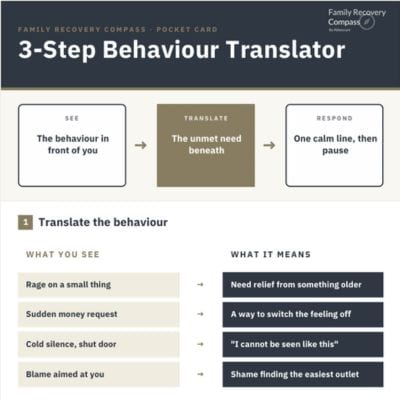



KEY TAKEAWAY
Addiction often functions as an unconscious survival strategy, soothing unresolved emotional pain rather than causing intentional harm.
Is it possible that their addiction is not a deliberate attempt to:
- avoid consequences
- create chaos
- drain resources
...but instead, an attempt at self-soothing - a way of helping them deal with feeling repeatedly triggered, on an old issue?

Survival Requires Quick, Unconscious Choices
When we're very young, and we believe our survival is called into question, we'll react in whatever means necessary, that works.
Often this can mean:
- Repeatedly sacrificing our own needs and wants, because we got the message that our needs don't matter
- Feelings of inadequacy, when we didn't receive acknowledgement of our strengths and abilities
- Being hypercritical or demanding - of ourselves - if we learned that it's the only way to survive in the world.
This doesn't mean we never received these things, or we had bad parents, but we made conclusions about what happened in the outside world, in order to survive. This is how we chose to react, at that time.
These conclusions are carried into adult life, if left unchallenged.

A Way To Feel Better
The belief that expressing feelings is dangerous, is usually built on a single moment from the past, when we felt like we HAD to suppress things.
And so we're set up to believe things like:
- The only way to survive, is to sacrifice myself endlessly
- I'm a failure, nothing I do works out, why bother?
- I'm unacceptable, misunderstood, no-one understands me.
If daily life triggered you into these beliefs endlessly, would you look to ease the pain somehow? Me too.
So addiction becomes **a way to feel better**.
Is it real to you now, that the addiction itself is probably not:
- deliberate
- malevolent
- ill-intentioned?
There are consequences, yes. No one can deny this.

But is it possible that it's an attempt - albeit misguided - to meet their needs, and survive.
No matter how physically dependent someone is, no matter how chaotic the circumstances around you and them... in our experience, this underlies the pattern you're seeing play out now.
Of course, knowing all this, doesn't make the experience any easier. I get it.
But if you explained the ideas behind this, would they be willing to take a closer look at the underlying issues?
Food for thought.
Hope it helps.