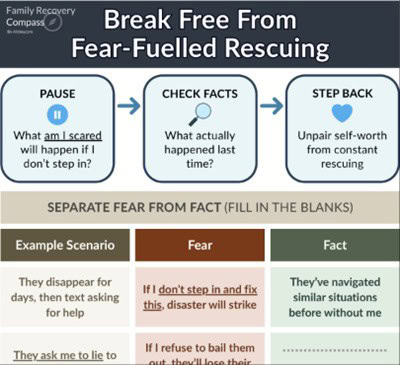



KEY TAKEAWAY
Learn to separate fear from facts, stop rescuing, and support without sacrificing yourself.
Every time they have a problem, I feel an overwhelming need to fix it. Sometimes, I've stepped in before I've even realised I've done it...
Sound familiar?
If you step back and allow natural consequences to happen, you're a bad person... or they act out.
If you don't fix everything, you're not needed, or appreciated.
We need to step back, evaluate based on evidence, and play a supporting role.

How To Help... Without Fixing
If I don't help, something bad will happen to them, and they'll blame me. I'll be rejected.

None. They've always found their way out of the situation that they're in.
I'm imagining something that hasn't happened, and jumping to a conclusion about not feeling accepted, as a result.
If there is no evidence, what should I do instead?
Ask:
- What am I afraid might happen if I don't lie for them?
They'll shout and rage at me, because their needs always come first. I don't matter. Am I prioritising their needs to avoid the anger?
- What evidence do I have (in the real world), that this will happen?
None...the last time I refused to lie, they raged, but calmed down later, and I'm still ok. They felt the consequences from their boss, not me.
- If there is no evidence, what should I do instead?
Maybe I need to continue allowing them to learn this lesson from external consequences, and stop sacrificing myself.

Scenario: They ask you to speak to a flat-mate, to de-fuse an argument about their addiction.
- What am I afraid might happen if I don’t help smooth things over?
Our flat-mate will leave and we won't be able to afford rent. I need security, and feel lost. Others feel unreliable.
- What evidence do I have (in the real world) that this will happen?
None. They've argued before but we've resolved it later. An argument doesn't necessarily mean my safety is in question.
- If there is no evidence, what should I do instead?
Maybe I'm sensitive to instability, from my own past experiences.

Reality testing your own reaction, then allowing consequences to play out, while uncomfortable, helps decondition your own past AND reset boundaries.
When triggered by their actions, pause:
When repeated over time, and you witness that NOT stepping in, doesn't result in disaster after all, you'll gradually unpair your self-worth, from the idea of helping constantly.
Hope it helps.