


KEY TAKEAWAY
Understand addiction as coping and use compassion instead of blame to support recovery.
"Why aren't they TRYING to get sober?"
"Why aren't they trying MORE?"
It can look like that, for sure.
Underneath it all:
- What do you think the addiction is helping them achieve? Avoid?
- What is the addiction doing FOR them?
At some point in their life's experiences, they've learned that addiction to this coping mechanism they use, is the only way to avoid pain...of some kind.

Addiction might be the way to:
...stop feeling triggered on old unmet needs like belonging, acceptance, or safety
...suppress recurring emotions like guilt, regret, or a specific trauma
...help them feel adequate, competent, or good enough again
It Feels Like Their Behaviour Is Deliberate
I get that. But the chaos that you see around you, in your life, and theirs, is not intended. Difficult though that is to believe.
There's a part of them that doesn't want to lose the blanket relief that addiction provides, knowing they would have to face up to the things they've done, people they've hurt, and the consequences of all of this.
It's easier to stay in denial.

But as you and I know - staying in perpetual cycles of short term relief, makes it harder to resolve addiction long-term. And the consequences rack up.
So What Do I Do?
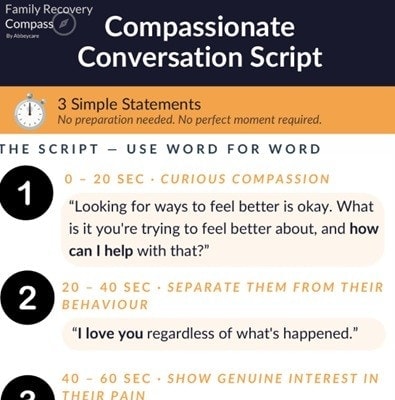
- Move from interrogation to curious compassion - "Looking for ways to feel better is ok - what is it you're trying to feel better about, and how can I help with that?"
- Separate who they are, from their behaviour - "Mistakes and regrets are normal. I love you regardless."
- Show genuine interest in their pain, not their behaviour - "Is there a recurring pattern in all this, every time you feel the need to escape?"
These approaches change things:
- from interrogation to compassion
- from blame to curiosity
- from enemy to friend

Knowing how to speak to someone about the potential of removing something they depend on to cope, is never going to be easy. I think you know that.
But what you're really doing here is demonstrating your positive underlying intention, and willingness to separate them, from their actions of the past.
Will this fix everything overnight? Sadly, no. A pattern of years won't be broken in one conversation.
But, done **consistently**, you'll begin to see hairline shifts in their demeanour, openness, and conversations will open up, that you never thought possible.
Look for these shifts, no matter how small. They're there.
Hope it helps.