


KEY TAKEAWAY
Both loved ones get their needs met through healthier outside connections.
You've noticed that another family member has started to:
- Cover for your loved one's addictive behaviour
- Provide money despite negative consequences
- Take on responsibilities that your loved one should be managing themselves
You can see that they're trying to help, but sometimes it seems like they depend on each other too much, and you have no idea what to do about it.
First, we need to understand what they are GAINING from the relationship itself.
Understanding The Relationship Dynamic
These behaviours occur because your family member is not having their needs fulfilled independently, outside this relationship.

Meaning they *depend* on the relationship with your loved one for (e.g.):
- Sense of belonging: Their current position ensures that they're always needed, have regular contact, and helps them feel less lonely or rejected.
- Feeling valued: They may feel loved or appreciated when your addicted loved one relies on them for money, emotional support, or everyday responsibilities. Maybe your loved one praises them when they help out (a little too much...)
Similarly, your addicted loved one gets to maintain access to their coping mechanism, as your family member continues to overcompensate and protect them from the consequences of their addiction.
This cycle continues because *both* people are getting something from the relationship.
Your family member gets their needs - unrelated to addiction - met by your addicted loved one.
Your addicted loved one gets the substance they depend on, because they continually reinforce your family member's efforts.
So... how do we dismantle this?

Breaking The Cycle
In a healthy relationship, needs are met from external sources outside the family, rather than relying on somebody inside the family.
Ask yourself: What other resources could I foster *for both parties*, that fill the gap in their needs that they are currently getting from each other?
For your loved one in addiction, consider whether your family member could:
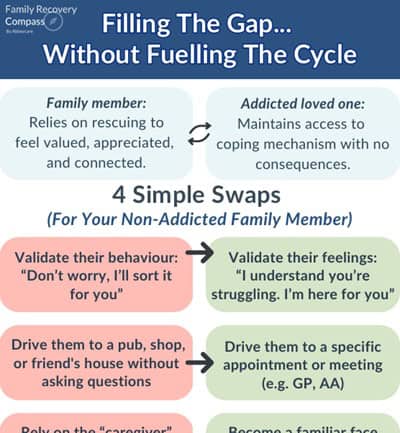
- Validate their feelings without validating their behaviour. E.g. “I understand you're struggling” rather than “I'll sort this out for you”.
- Drive them to a specific appointment instead of driving them to a pub, shop, or friend's house with no questions asked.
- Provide basic groceries or a capped supermarket gift card instead of giving them cash they say is for essentials.
And for themselves, your family member could:
- Become a familiar face at a recurring local event like a quiz night, Parkrun etc - this begins breaking the sense of belonging only to an insular duo, with no outside reference points.
- Have a meal out with a friend one free evening each week, instead of staying close by “just in case” your loved one needs them.
- Begin making a small contribution to something bigger, e.g. a greeter or tea/coffee maker at a local Al Anon meeting, or helping out at a local animal shelter or food bank. This can help replace feeling valued and appreciated, previously fulfilled by your loved one in addiction.

Now, your family member:
- Feels valued and appreciated through their own contributions, rather than relying on rescuing your loved one in addiction
- Experiences regular companionship and connection outside the relationship
- Feels they belong somewhere for who they are, not just for the care they provide
And your addicted loved one:
- Receives empathy and practical support without their addiction being enabled
- Remains responsible for their own choices and consequences, rather than relying on your family member to manage them
- Has space to develop greater independence, while seeking appropriate third party support for their addiction

Important:
Make sure the support you introduce comes from outside the family.
This way, both your loved ones get what they need, without depleting your resources and becoming dependent on you instead.
Their relationship then becomes a source of genuine love and support, rather than one person needing to rescue and the other needing to be rescued.
And for you, less time is spent worrying about both of them.
When everyone's underlying needs are fulfilled in healthier ways, the day-to-day maladaptive behaviours begin to fall away.
You're tackling both the addiction, and the codependency, at the root.
Hope this helps.