


KEY TAKEAWAY
Trauma bonding in addiction traps families in hope cycles, but healing starts by reclaiming your own needs.
Trauma bonding develops as an intermittent cycle, between us, and our loved one in active addiction:
- Conflict - broken promises, lies, chaos, financial demands; followed by
- Reward - short period of sobriety, remorse, promises, love, reconnection
This is a weird kind of bonding where we get attached to this back and forth process itself, and not another person.
In a way, we get addicted to hope. That the positive moments, can once again become the norm.
And those moments of connection with them are real. But it's all built on a very rocky foundation.

It's confusing, and we end up feeling more emotionally affected than ever, when the negative consequences of addiction, inevitably play out again later.
Here's how we resolve it:
1) Recognise The Illusion You're Emotionally Investing In
Make the distinction between what you're emotionally getting out of this cycle (validation, recognition?), and what it actually delivers long term (ongoing cycle of addiction and failed promises).
Is it wise to continue investing in this?
Is it possible to get your own emotional needs, that this cycle seems to deliver, met in another way? (hopefully, from an external source).
Any positive investment in external ways to meet these needs, disentangles your emotional dependence on this situation, by another notch.
Think: al-anon, fam-anon, therapy for your own historical co-dependence issues, prioritising your own needs during daily life.
Our Quick Framework above gives direct contacts to organisations that can help.

2) Understand Them, By Recognising The True Underlying Intent:
While the off-on nature of their behaviour means it's tempting to conclude it's deliberate, or mal-intentioned, the truth is, in the moment, their promises are actually real... but they don't know how to break the cycle.
Their bigger intention is not to deceive or mislead, but to maintain access to a coping mechanism - in other words, ***they don't know any other way to cope***.

3) Interrupt The Pattern Consciously
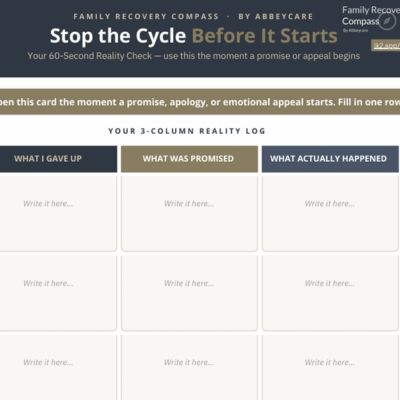
Keep a brief but regular diary with 3 columns: what I gave up, what they promised, and what actually happened.
Referring back to this, during the next emotional appeal mid-crisis, will help ground you to reality, recognise what's really happening, and interrupt it deliberately.
This will take practice, and some errors along the way, but an increasing awareness of this, will eventually send the message that this pattern will no longer be accepted.
Falling into this pattern isn't your fault.
It develops as a way of surviving an extreme situation that many of us know all too well.
But it's possible to break free, slowly. Take it one step at a time.
Hope it helps.