Alcoholism is a disease characterised by continuous heavy drinking. Until people with alcohol use disorder admit to problems with alcohol and stop drinking, the risk of alcohol use disorder continues which affects both physical and mental health.
Alcohol starts to injure the brain once it reaches the bloodstream.
Excessive consumption can lead to Alcohol-Related Brain Damage, or ARBD, which is a type of brain disorder caused by alcohol consumption. Brain shrinkage caused by alcohol abuse is permanent, as alcohol kills brain cells and grey matter.
For more information and effects click ‘Learn More’.
Family Recovery Compass is a newsletter for friends and family members who feel trapped between supporting a loved one in addiction, and protecting their own wellbeing.
Every week, we tackle one specific situation in addiction family dynamics, and deliver practical decision-making frameworks and exact dialogue scripts – that help you respond with confidence instead of reaction.
Every month, we bring you an unfiltered recovery conversation with someone who’s either experienced addiction firsthand, or works closely with those in recovery.
No sanitised success stories – just practical insights on what actually works in recovery, that you can apply, in your life too.
Recovery capital is the internal and external resource used to begin the recovery process and maintain sobriety. This combines personal, social, and community support to provide a joined-up approach that supports the addict through recovery.
Do you or a loved one need addiction treatment for alcohol or drugs? Thousands blindly walk into addiction treatment in expensive rehab centres and find that the reality doesn’t meet expectations.
If you’re considering rehab treatment, first check our ultimate guide for complete instructions on how to find the right rehab centre for you.
Take-home Naloxone kits help families and loved ones respond quickly in an opioid overdose emergency, until emergency services arrive. Kits contain nasal or injectable forms of Naloxone.
Changes in legislation mean Naloxone kits are now more widely available from pharmacies and drug services, including Abbeycare.
For additional information, click ‘Learn More’ below.
Overcoming alcohol addiction means first ceasing alcohol intake, and taking care of physical and chemical withdrawal symptoms.
Detoxing from alcohol means undergoing withdrawal from alcohol, but with the assistance of prescribed medication and detox phase, to substitute in place of the alcohol itself.
Alcohol rehab focuses on tackling the problems underneath alcoholism, such as grief, trauma, depression, and emotional difficulties, in order to reduce continuing drinking after treatment.
Inpatient services at an alcohol rehab programme provides 24 hour access to specialist care.
Alcohol home detox provides a means of semi-supervised addiction treatment in the comfort of your home. It’s often suitable for those with inescapable practical commitments, or where a reduced budget for treatment is available.
An at-home detox is the most basic detox option available from Abbeycare, and assumes you have support available, post-detox, for the other important elements of long-term addiction recovery.
The term alcoholism refers to the consumption of alcohol to the extent that the person is unable to manage their own drinking habits or patterns, resulting in side-effects that are detrimental to the quality of life and health of the alcoholic, or those around them.
An alcoholic is someone who continues to compulsively abuse alcohol in this way, despite the negative consequences to their lives and health.
Immediately following treatment, the early stages of recovery and abstinence are most vulnerable to lapses.
At Abbeycare, a structured and peer-reviewed aftercare plan is usually prepared whilst still in treatment. This comprises social, peer, and therapeutic resources individuals draw upon, following a residential treatment programme for drug or alcohol misuse.
Clinically managed residential detoxification is:
– A structured detox that uses medication-assisted treatment and regular physical health observations
– Takes place in an inpatient rehabilitation unit or hospital
– Typically lasts from 7-10 days, but in Abbeycare, it is incorporated into a 28-day rehab programme
Family Therapy at Abbeycare Scotland or Gloucester is realistic, compassionate, and appropriate for families and loved ones of addicts.
Family therapeutic interventions in residential rehabilitation have been designed to support those living with or caring for participants entering the Abbeycare Programme.
Support for families in a group setting allows for a safe, constructive, and confidential place to listen and share common experiences.
Inpatient rehab is drug and/ or alcohol treatment in a rehab centre, where patients remain on-site for the duration of inpatient rehabilitation.
It includes detoxification from drugs, therapy (group work and 1-2-1 sessions), and aftercare planning. Inpatient rehabs typically last 28 days, but this varies on an individual basis.
Long-term treatment at Abbeycare has been developed for those suffering from alcohol or drug addiction. Completing a long-term drug and alcohol inpatient programme may be the solution to problematic substance use.
Motivational Enhancement Therapy can be used by trained addiction recovery therapists to elicit internal changes within and promote long-term recovery from substance use disorder.
All the answers to addiction can be found within with this comprehensive and successful therapy concept leads to behavioural changes, reflective listening, self-motivational statements, and a comprehensive recovery process.
Outpatient drug or alcohol rehab is daytime treatment as opposed to living in a treatment facility.
Outpatient treatment is similar to inpatient in terms of the methods used to treat substance abuse. Where they differ is in their approach to recovery.
Abbeycare’s prison to rehab is a 12-week structured rehab programme which involves direct transfer from prison. The suitability of the candidate is decided by prison staff.
Short-term residential treatment programmes are the chance to press the reset button and access a therapeutic programme designed to create recovery from the use of alcohol and drugs.
Feeling stuck in a rut. Want to stop but can’t seem to achieve sobriety?
Click below.
The 12-step programme was created by alcoholics anonymous (AA), and is specifically designed to aid addicts in achieving and maintaining abstinence.
The central ethos behind the programme is that participants must admit and surrender to a divine power to live happy lives. Ideas and experiences are shared in meetings, and help is sought in an attempt to achieve abstinence.
Abbeycare’s policy to respect your privacy and comply with any applicable law and regulation regarding any personal information we may collect about you, including across our website and other sites we own and operate.
IMPORTANT: Below, we discuss possible approaches that meet the specific detox needs around ketamine. Not all treatment centres will provide these specific interventions.
For an overview of the Abbeycare programme contents for ketamine detox, click here.
How Is Ketamine Detox Done?
Patients are treated on a case-by-case basis during a detox from ketamine to establish whether withdrawal symptoms require:
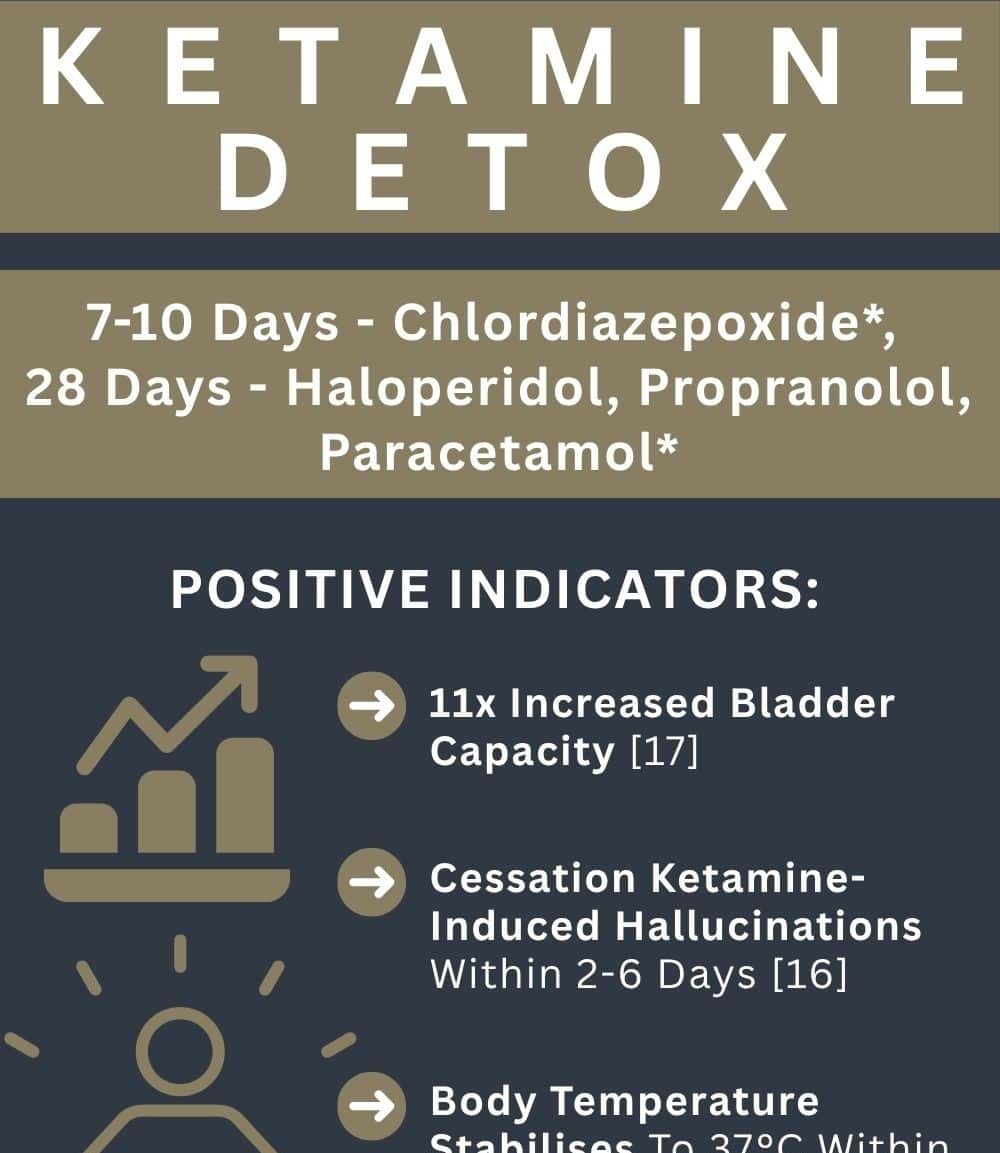
A medical detox using up to 250mg chlordiazepoxide daily for 7 - 10 days and symptomatic treatment for up to 28 days
Symptomatic treatment only using medications such as paracetamol or propranolol to manage abdominal pain and anxiety
To relieve abdominal pain by relaxing gut muscles and easing inflammation/irritation of the bladder lining
An Overactive Bladder
Anticholinergics (e.g. up to 20mg Oxybutynin daily)
Beta-3 Agonists (e.g. 50mg Mirabegron daily)
To control bladder instability and minimise involuntary contractions by relaxing the detrusor muscle
Anxiety
Antihistamines (e.g up to 100mg Hydroxyzine daily)
Beta blockers (e.g. up to 40mg Propranolol daily)
SSRIs (e.g. up to 200mg sertraline daily) if anxiety persists >2 weeks
To regulate mood + ease physical symptoms (e.g. heart palpitations) by enhancing serotonin and lowering heart rate (<100 BPM)
Ketamine-Induced Psychosis
Antipsychotics (e.g. 5 - 10mg Haloperidol or 16mg Risperidone daily)
NMDA-receptor antagonists (e.g. up to 20mg Memantine daily)
To control hallucinations and delusions by regulating dopamine, serotonin, and glutamate activity in the brain
Physical Symptoms During Ketamine Detox
Patients with suspected neurological or physical damage (e.g. eGFR decline >30%) are thoroughly assessed on a case-by-case basis before admission to Abbeycare to establish whether the ketamine rehab programme is suitable to meet the patient's specific needs.
Abdominal Pain
Abdominal pain is a physical symptom of ketamine detoxification because epithelial inflammation of the bladder in 71% of long-term users (≥ 6 months) is exacerbated during the detox process due to [1]:
Vomiting and diarrhoea in 18% of heavy users (>300 times) within 72 hours of cessation, aggravating pelvic floor muscles due to repeated straining and causing stomach pain due to irritation in the gut and surrounding organs (e.g. the bladder) [2]
Persistent ‘K cramps’ resulting in severe abdominal pain in the right upper quadrant, epigastric, and suprapubic regions, worsening symptoms of ketamine-induced cystitis (e.g. dysuria) after 3 years of drug-taking [3]
A loss of electrolytes (e.g. sodium) after vomiting up to 8 times in 2 hours impairs the bladder’s ability to contract, empty, and control urine flow, causing further discomfort due to a buildup of urine and pressure [3]
In a study by Avra, et al, (2024), a 31-year-old man who consumed 1–3g of ketamine daily experienced a 33% reduction in abdominal pain within 2 hours of receiving intravenous fluid therapy and full resolution of abdominal tenderness and dyspepsia within 30 hours of detox [4].
Feeling Cold
Feeling cold is a physical sign of ketamine detoxification because the body struggles to maintain a stable temperature (37°C) due to rebound sympathetic activity, disrupted hypothalamic signalling, and neurotransmitter imbalances, leading to [5]:
Excessive shivering and chills within 24 – 72 hours of cessation, peaking during days 3 – 7 and subsiding within 2 weeks as thermoregulatory responses normalise (e.g. shivering to generate heat) after being blunted during active use
Excessive sweating in the absence of a temperature change or physical exertion in up to 8% of long-term users (36+ months) during week 1 of withdrawal, exacerbated by shaking and heart palpitations in up to 30% [2]
Clinicians regularly check vital signs (e.g. body temperature) and administer the CINA to gauge the severity of temperature fluctuations (e.g. cold/clammy hands, uncontrolled shivering) and monitor patient progress during the ketamine withdrawal process.
Urinary Retention Or An Overactive Bladder
Urinary retention/overactive bladder are physical signs of ketamine detoxification because regular use increases the risk of cystitis by 3-4-fold, and the incidence of lower urinary tract symptoms (e.g. urge incontinence) is 6.2 times higher than in non-users, leading to [7]:
A micturition frequency every 15 – 90 minutes (normal frequency = every 2 – 3 hours) due to detrusor overactivity and a reduced bladder capacity (≤100 ml) in 51%, resulting from severe inflammation of the bladder lining after 3.5 years of ketamine use (check to quantify type of inflammation) [1]
Incomplete bladder emptying, an intermittent urinary stream, nocturia, and urinary urgency in 35 - 67% caused by bladder dysfunction after snorting ketamine daily for 6 years, lasting up to 1 year in some cases [8]
Some users claiming that “I was going a lot more, but when I was going, I wasn’t passing much” and “I kept going to the toilet every 30 minutes” within 7 months of discontinuing ketamine [9]
Urinary retention and an overactive bladder typically develop within 2 years of heavy ketamine use (up to 10g daily), although 48% of users do not seek medical attention and are likely to have advanced ketamine bladder syndrome by the time treatment is initiated [8].
Psychological Symptoms During Ketamine Detox
Cognitive Dysfunction
A 14% reduction in executive functioning is a psychological effect of ketamine detoxification because neural circuits involved in decision-making, planning, and attention in the prefrontal cortex are temporarily disrupted due to NMDA-glutamate imbalances, resulting in [2]:
Around 40% of heavy users (used >200 times) feeling disinhibited, demotivated, “not wanting to do anything”, lacking attention, and being unable to concentrate within 1 week of detoxing from ketamine [2][10]
A 4 – 9% reduction in cognitive flexibility and semantic retrieval skills during the first month of detox, although verbal fluency scores increase by 3% after 12 months of continued abstinence [11]
A 15 - 30% reduction in verbal memory skills (e.g. 30 min delayed recall) occurs during ketamine detoxification due to disrupted glutamate transmission and a 6-12% reduction in cerebral grey matter volume after 3+ years of ketamine misuse, resulting in [2][12]:
Self-reported claims of having a “really bad memory” 3 months after the onset of withdrawal symptoms following 6 – 7 years of heavy ketamine use (consuming up to 1g per session) [13]
Forgetfulness and confusion (e.g. difficulty understanding what people are saying or getting directions mixed up) in 28% of patients within the first 7 days of a detox programme [2]
Long-term verbal recognition memory impairments after 7 years of ketamine use, as prose recall (delayed and immediate) abilities decline by 25% from baseline (1 month ketamine-free) to 12 months after withdrawal symptoms begin [11]
Existential Anxiety
Existential anxiety is a psychological symptom of withdrawal that occurs during ketamine cessation because:
‘Normal’ consciousness returns after the drug wears off, and up to 31% feel depersonalised, anxious, and confused/disoriented after experiencing mind-body dissociation whilst intoxicated [2][10]
NMDA receptor and glutamate imbalances exacerbate feelings of emptiness and detachment as users attempt to establish a sense of self after experiencing “out-of-body experiences with a whole new world and different reality in your head” [13]
Self-referential thinking (identity, time, memory) is distorted, and users feel “gloomy about the future” after 25% claim to feel ‘all-powerful’ and ‘understand the world better’ whilst having an exaggerated self-image/superiority complex whilst high [2][10]
Symptoms of existential anxiety (e.g. worry/confusion about one’s personal identity or the nature of reality) typically begin within 24 hours of ketamine detoxification and may be exacerbated by:
Drug-induced psychosis or co-occurring adjustment, anxiety, or depressive disorders in up to 13% of long-term (3+ years) users [2]
Permanent depersonalisation/derealisation, as dissociative experiences (e.g. standing outside the body or not remembering a car journey) increase by 11% from baseline to 12 months after detoxing from ketamine [11]
Clinicians regularly administer the Mental Status Examination (MSE) and CINA to establish:
The severity of psychological (restlessness) and physical (sweating) symptoms of anxiety with a scoring technique (0-3), e.g. 0 = normal activity vs 2 = moderately fidgety and restless/shifting position frequently
Whether symptoms (e.g. perceptual abnormalities, i.e. delusions) are anxiety-related or caused by an underlying condition such as schizophrenia or drug-induced psychosis
Hallucinations
Post-use hallucinations during a detox from ketamine are psychological withdrawal symptoms caused by excessive glutamate release and a 24% upregulation of dopamine receptors in the dorsolateral prefrontal cortex, as NMDA receptors are no longer blocked [14].
2 – 4% experience hallucinations and delusions during days 1 – 3 of ketamine detoxification, and up to 32% of cases develop into a psychotic disorder after 6+ months of drug abuse [2][15].
In a study by Liang, et al (2015), a man experienced paranoid ideation and auditory hallucinations of a hostile God condemning him to hell during withdrawal from ketamine after previously snorting up to 4g hourly and spending over £3000 a month to fund his addiction [16].
In a study by Liang, et al (2015), a man experienced visual, olfactory, auditory, and tactile hallucinations within 1 – 2 days of abstaining from ketamine, including a demon’s voice commanding and controlling him by “making his ear move” that lasted for 6 days [16].
Positive Indicators Of Ketamine Detox
Bladder Function Recovery
An 11-fold increase (38 to 400ml) in bladder capacity is a positive indicator of ketamine detoxification because [17]:
Satisfactory bladder emptying is achieved within 3 months of abstaining due to the management of inflammation, fibrosis, and detrusor overactivity after 3 – 15 years of ketamine abuse [17]
53.1% of chronic ketamine users (up to 10g daily for 6 years) are relieved of lower urinary tract symptoms (e.g. urinary frequency = 15 – 30 min vs 2 – 3 hours) after receiving oral medication (e.g. 20mg Oxybutynin daily) during detox [18]
Hospital care may be arranged during or after detox for patients with severe ketamine-induced bladder dysfunction to receive cystoscopy with hydrodistension or intravesical injections with botulinum toxin due to the 71 – 100% response rates, although this is managed on a case-by-case basis and depends on the specific needs of the patient [18].
Reduction In Ketamine-Induced Hallucinations
Complete resolution of ketamine-induced hallucinations within 2 – 6 days is a positive indicator of ketamine detoxification as psychotic behaviour (e.g. paranoia, hearing voices) subsides after receiving 4.5mg Haloperidol and 40mg Propranolol daily [16].
Visual/auditory hallucinations continue to decrease by 21% from baseline (1 month of abstinence) to 12 months after detoxing from ketamine due to the restoration of regular glutamatergic and dopaminergic function after 7 years of drug-taking [11].
Ketamine rehabs liaise with specialist mental health services during treatment to establish appropriate care strategies and medication schedules to manage persistent hallucinations in the 32% of patients who develop drug-induced psychosis after 9 years of use [15].
Temperature Regulation Improvements
The regulation of body temperature (37°C) is a positive indicator of ketamine detoxification because thermoregulatory responses stabilise within 2 weeks of cessation after patients excessively shiver and sweat within the first 24 - 72 hours of treatment.
After the first week of ketamine detoxification, temperature fluctuations are no longer exacerbated by tachycardia (>100 bpm), shaking, and palpitations in up to 39% of patients, as for every 10 bpm increase in heart rate, body temperature increases by 1°C [2][19][20].
Ketamine detox assists temperature regulation with daily vital signs checks and administration of the CINA to assess/score symptoms (e.g. uncontrolled shivering) from 0 – 2 to monitor changes and establish any interventions needed (e.g. warm fluids to alleviate chills).
Inpatient Ketamine Detox Vs....
Inpatient Rehab
Hospital
Supervision Level
Daily assessments + hourly monitoring from nurses/physicians
24-hour monitoring + nursing care
Medical Intervention
Symptomatic treatment for up to 28 days (e.g. 20mg Oxybutynin daily for an overactive bladder)
Around £1,500 per week or free on the NHS (3+ week wait time)
Around £2,000 for 2 weeks of at-home monitoring and medication support
Ketamine Detox Combined With Other Drugs
Ketamine And PCP Detox
Ketamine detoxification is altered when combined with PCP because:
Violent behaviour is increased by 1-2-fold, as 36% of ketamine users feel angry, hostile, or act aggressively (e.g. assaulting staff members) during the first week of withdrawal, compared to 80% of PCP users, typically arising within 2 – 3 days of last use [2][21][22]
Chronic PCP users (≥ 3 times per week) typically stay in treatment longer than non-PCP users (e.g. 108 days vs 68 days) due to a 24% increase in cases of drug-induced psychosis with hallucinations and delusions lasting 3 – 6 weeks rather than 7 days [2][21]
10mg Haloperidol is required to manage psychosis, rather than 4-5mg for ketamine alone, and 1 – 1.5mg/kg dantrolene sodium may be administered alongside rapid cooling measures (e.g. ice baths) to reduce high body temperatures (e.g. 40 - 42°C) [21]
Ketamine + PCP patients may be required to complete the detox process in a general/psychiatric hospital because:
Some patients fall into a comatose state for 2 – 24 hours or up to 1 month for heavy users (3+ months of daily use), requiring 24-hour monitoring with airway management and ventilatory support whilst regaining full consciousness [21]
Restraints may be required for the protection of the patient and the staff in extreme cases of psychosis and violence, as up to 80% attempt to assault or make sexual advances towards staff members during treatment [21][22]
Aggressive behaviour is managed during ketamine detoxification by:
Having clear admission protocols to screen potentially aggressive/violent patients and developing a plan to enlist the support of law enforcement or security staff if necessary
Ensuring staff are trained in strategies to de-escalate aggression, including removing the patient away from loud noises or distractions, and speaking in a soft voice to provide reassurance whilst avoiding confrontation, judgment, or an angry tone
Treating aggressiveness symptomatically with close supervision or transporting patients to a psychiatric hospital if necessary to prevent self-harm or danger to others [23]
Ketamine And Alcohol Detox
Ketamine detoxification is altered when combined with alcohol because:
26% are hospitalised within 48 hours due to severe withdrawal symptoms (e.g. seizures) caused by a 51% decrease in GABAergic neurotransmission within 10 days of last drinking alongside the reversal of ketamine-induced NMDA receptor blockade [24][25]
The risk of withdrawal hallucinations increases by 6-fold as both substances are CNS depressants (sedative-hypnotic vs dissociative anaesthetic) and disrupt glutamate signalling in the brain when removed from the body [26]
Withdrawal symptoms develop within 6 – 24 hours of cessation rather than 24 – 72 hours for ketamine alone, and the CIWA-Ar is administered to monitor patient progress and adjust medication as needed (e.g. 50-100mg chlordiazepoxide if score is >8–10) [27]
Delirium tremens may occur during days 2 – 5 of withdrawal, presenting with extreme agitation or restlessness, confusion, and disorientation, requiring 2– 5 L of intravenous rehydration and up to 80mg of diazepam daily for 1 week to achieve sedation [28]
Thiamine (e.g. 100mg 3x daily) is administered for 1-2 weeks to prevent Wernicke’s encephalopathy, and other symptomatic medications (e.g. 10mg metoclopramide every 4 - 6 hours) may be required to manage heightened nausea/vomiting [28]
Ketamine Detox At Abbeycare
Ketamine detoxification at Abbeycare is incorporated into a full 28-day rehab programme to safely begin management of physical and psychological symptoms (e.g. existential anxiety, feeling cold) arising within 24 – 48 hours of cessation by:
Providing a single-occupancy room in the detox wing during days 1 – 7 to receive regular observations, and assigning each client with a key worker to develop an individualised treatment plan.
Administering anti-psychotics (e.g. up to 10mg Haloperidol) and anti-anxiety medication (e.g. 40mg propranolol) to manage ketamine-induced hallucinations, delusions, heart palpitations, and feelings of dread/worry during the first week of withdrawal. These are examples only - all prescribed medications are determined by our medical team upon individual assessment.
Utilising the Clinical Institute Narcotic Assessment to evaluate changes in withdrawal symptoms (e.g. no sweat visible vs beads of sweat obvious on forehead) and adjusting medications/interventions as needed to aid recovery
Abbeycare typically treats ketamine addiction with up to 250mg chlordiazepoxide daily for 7 - 10 days, although this is always reviewed on an individual basis due to variations in personal care plans and medical requirements.
Abbeycare cannot provide medical treatment for ketamine bladder syndrome, although if suspected, GPs are contacted to provide appropriate medical advice and discuss treatment options and onward referral (e.g. oral medications or intravesical injections) during or after withdrawal.
About the author
Mischa Ezekpo
Mischa Ezekpo has a Bachelors degree in Psychology from Northumbria
University, and a Masters degree in Childhood Development and
Wellbeing, from Manchester Metropolitan University. Since 2018, Mischa
has written and published work on Addiction, Mental Health, Depression, and Eating Disorders. Content reviewed by Laura Morris (Clinical Lead).