


KEY TAKEAWAY
Discover specific responses for the "This is your fault" conversations, that break the pattern of shifting responsibility.
"When I learned how to pause, stop over-explaining, and stop chasing agreement, their addiction lost its power over me".
I think we've all been there...
We try (try!) to have a calm conversation with them.
It quickly escalates into "this is why I drink!!"...
And it feels like a punch in the gut.
***

Honestly, they were always going to drink or use. It's a coping mechanism.
No matter what you said, or did, in that moment.
They were actively *looking* for reasons, and they made it fit.
***
Next time you sense this situation recurring, stop chasing agreement. It's that simple.
Release the need to control. It doesn't work.
Resist the idea that they need to do as you say. (They're not going to anyway.)

How?
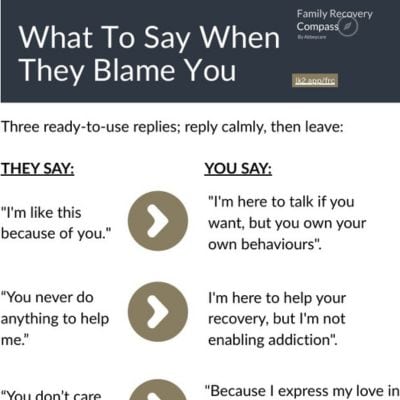
- "I'm like this because of you" --> "I'm here to talk if you want, but you own your own behaviours".
- "You never do anything to help me" --> "I'm here to help your recovery, but I'm not enabling addiction".
- "You don't care about me" --> "Because I express my love for you in ways that don't match your expectations, doesn't mean I don't love you. I love you a lot, and I do care".
Thereafter, it's safe to remove yourself from the situation and redirect your energies and efforts into meeting your own needs instead.

That's it.
No overexplaining.
Just tell them what you need to tell them, and exit the situation.
Are they going to try to start another argument?
Probably.
If you give them a reason, they will take it (...as a means to feel better, rationalise the addiction, etc).
If you expect these things, they are not a surprise (=easier to handle).
You can use this approach as many times as you need to.
When done consistently, their addiction patterns will stop dictating your emotions.
Take care of yourself.