



KEY TAKEAWAYS
Fentanyl addiction:

Physical Indicators Of Fentanyl Addiction
Respiratory Depression
Respiratory depression is a physical indicator of addiction and occurs when a user takes less than 12 breaths per minute, accompanied by shallow breathing.
40µg/kg fentanyl causes respiratory depression within the first minute of use and peaks at 2 minutes, resulting in 15µm lowered oxygen in subcutaneous skin and discolouration [1].
Signs of respiratory depression include weak chest movements, as the chest does not rise and fall with every breath, and wheezy breathing that appears laboured.
Episodes of apnoea, or periods of no breathing, occur in active fentanyl usage, mainly when the user is sleeping or unconscious - this may indicate an overdose.
Less common signs of respiratory depression include confusion and hallucinations, prevalent when hypoxia develops through lack of oxygen.
Pupil Changes
Miosis is a physical indicator of addiction and causes the pupil to constrict to 2.5mm, inhibiting pupillary light reflexes that present with continuous pinpoint pupils [2].
During active fentanyl consumption, users may squint or struggle to focus on objects as the pupil light reflex decreases by 84% following consumption [3].
Temporary blurriness and pupils that start to return to normal after 15 minutes indicate addiction because studies show that, following high-dose opioids, pupils increase by 64% 15 minutes after use [3].
Pupil constriction and atypical eye appearance occur during addiction when fentanyl binds to opioid receptors in the Edinger Westphal (EW) Nucleus, inhibiting neurons responsible for pupillary reflexes.
Pale Waxy Skin
10−6, 3 × 10⁻⁶, or 10−5 mol/L doses of intravenous fentanyl cause vasoconstriction through binding to mu receptors in the vascular endothelium, resulting in pale skin [4].
Studies on dogs demonstrate that 0.006mg/kg of fentanyl reduces cerebral blood flow by 47%, resulting in clammy, pale skin in humans that appears waxy [5].
Fentanyl's effects on cerebral blood flow last for ~30 minutes, so pale skin may indicate addiction and that the user may need professional help [6].
20% of fentanyl users in overdose present with discoloured lips caused by a lack of oxygen from respiratory depression [7].
Weight Loss
Weight loss is a physical indicator of addiction as the drug binds to mu receptors in the hypothalamus, inhibiting the sensation of hunger.
Studies in fentanyl-treated rats indicate that food consumption decreases by up to 70% in active addiction, explaining ongoing unintentional weight loss in fentanyl users [8].
Appetite returns when fentanyl has not been used for 28 days, though weight loss is still apparent and may take 2+ months to restore, depending on how much is lost [8].
Physical signs of weight loss other than a slimmer appearance in active addiction include food avoidance, fatigue and confusion (particularly during use), and thinning hair.

Lack Of Temperature Control
Lack of temperature control is a physical indicator of addiction because of the sedative effects of the drug, leading users not to sense heat or cold appropriately and, therefore, not act to warm up or cool down.
Hyperthermia is caused by fentanyl binding to mu receptors in the hypothalamus, triggering symptoms such as nausea and weakness [9].
Fentanyl users who self-medicate pre-existing pain and injuries present with temperatures >39°C for 33% longer than those with no pre-existing injuries [10].
Psychological Indicators Of Fentanyl Addiction
High-Risk Behaviours
To administer fentanyl, 43% of users inject; this carries the risk of blood-borne diseases, such as HIV and hepatitis, when equipment is shared [11].
32.2% of fentanyl users consume other opioids following the onset of addiction, and 21.6% report also using stimulants alongside fentanyl to achieve euphoria [12].
Denial
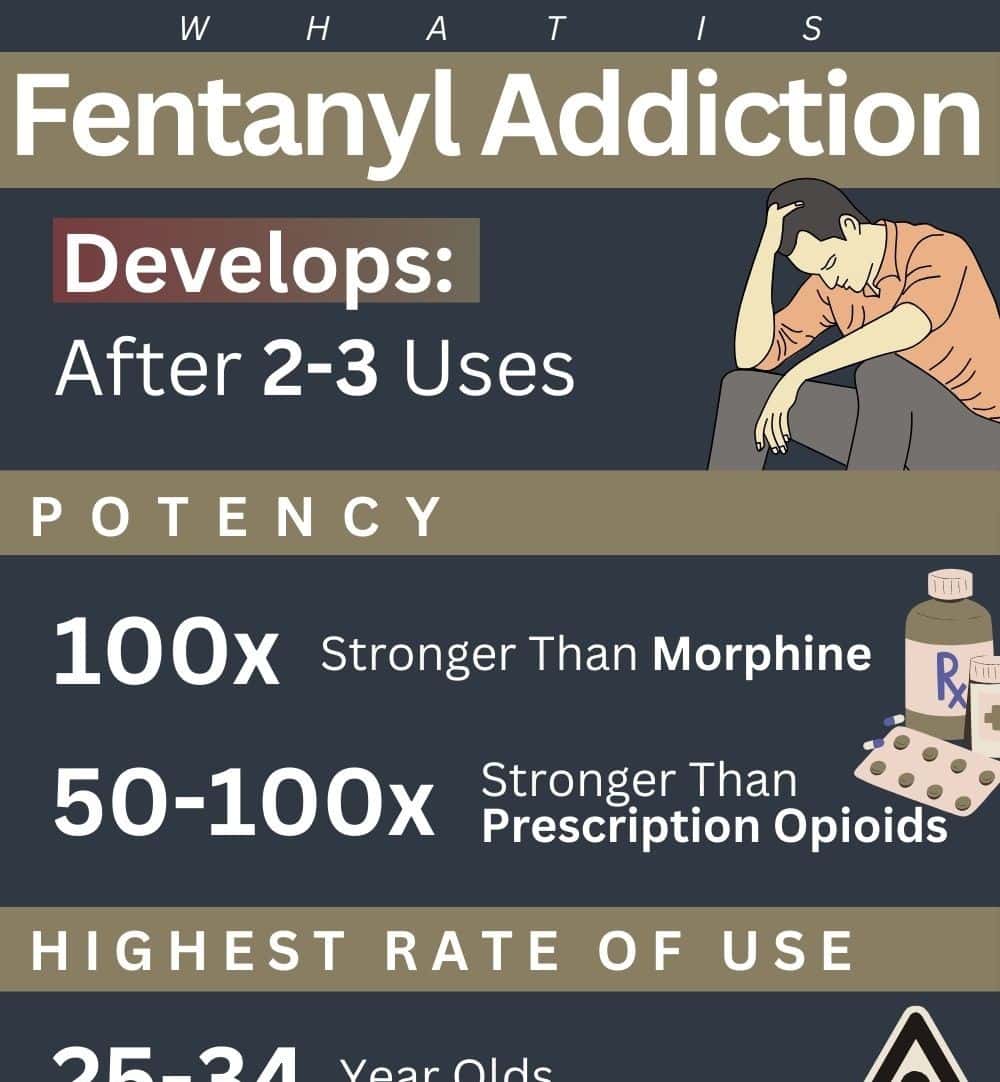
Denial through insisting users can 'handle' fentanyl is a psychological indicator of addiction as users ignore the fact fentanyl's potency is 50 to 100 times more potent than prescription drug opioids.
Some users may deny fentanyl's dangers because of it being a cheaper and more available alternative to other opioids.
Continually discounting facts about fentanyl, (e.g.) 42% of pills containing a supposed lethal dose, indicates denial [13].
As fentanyl is used in clinical settings, some users may justify its use to self-medicate chronic pain and anxiety.
Continuing to use the opioid despite experiencing a drug overdose indicates denial of addiction and the need for professional help.
Fentanyl Addiction Vs Other Drugs
Fentanyl | Heroin | Cocaine | |
|---|---|---|---|
Potency | 50-100 times more potent than morphine | 2-3 times more potent than morphine | 50-70% |
Length Of Action | 30 - 60 minutes (intravenous) | 4-5 hours | 20-90 minutes |
Onset Of Physical Dependence | After 2-3 uses | Immediately | After repeated use over weeks or months |
Physical Effects Of Addiction | Respiratory depression, pinpoint pupils, unconsciousness | Constricted pupils, extreme vomiting, injection-site infection + abscesses | Dilated pupils and heart arrhythmias |
Specific Health Complications | Respiratory arrest | Aspiration of gastric contents, endocarditis | Sudden cardiac arrest, nasal septum damage, seizures |
Marijuana | Diazepam | |
|---|---|---|
Potency | 5 times less potent than lorazepam | |
Length Of Action | 1-3 hours | 4-6 hours |
Onset Of Physical Dependence | Only causes psychological dependence | After repeated use for 4-6 weeks |
Physical Effects Of Addiction | Bloodshot eyes, impaired motor coordination | Slurred speech, weakness and fatigue |
Specific Health Complications | Depersonalisation-derealisation disorder, bronchitis | Memory impairment, hypotension and fainting/loss of consciousness |

Who Is Most Likely To Develop Addiction?
Groups | More/Less Likely? | Why? |
|---|---|---|
Prescribed Opioid For Pain | More likely | Tolerance to prescription opioids leads users to try fentanyl for pain relief |
Pre-Existing Opioid Dependence | More likely | Tolerance to other opioids encourages users to use stronger variants for euphoria |
Desiring Stronger Opioids | More likely | Fentanyl is 100 times stronger than morphine |
Using Fentanyl Mistakenly Believing It Is A Different Opioid | More likely | Counterfeit pills of other opioids contain up to 5.1mg of fentanyl (twice the lethal dose) [16] |
25-34 Year Olds | More likely | The highest rate of opioid use is in this age group |
Males | More likely | Males have a 9.2 times higher rate of overdose than females [17] |
What Changes Addiction?
Being Cut With Other Substances
If fentanyl is cut with other opioids, this unknowingly creates a co-occurring addiction, leading users to take more when the effects of pure fentanyl are not experienced as before.
Fentanyl with diacetylmorphine induces a 10.6-fold increase in hypoxia compared to fentanyl alone, so concurrent addiction exacerbates the risk of respiratory depression [14].
The DEA reports that mixing with xylazine causes amplified rates of soft tissue injuries from injection compared to using fentanyl alone [15].
The "push-pull" effect of mixing this opioid with stimulants causes users to use more as stimulants mask the sedative effects.
Polydrug Use
Polydrug Combination | How This Changes Fentanyl Addiction |
|---|---|
Fentanyl With Alcohol | Combined sedative effects amplify central nervous system depression Causes long-term liver damage |
Fentanyl With Alprazolam | Causes extreme sedation Increases risk of respiratory arrest by up to 5.19 times [16] |
Cocaine masks the sedative effects of fentanyl, causing users to take more Cardiovascular complications (e.g., heart attack, stroke) 58% of cocaine overdoses contain opioids [17] | |
Fentanyl With Gabapentin | Extreme respiratory depression
Increases the risk of overdose by 60% [18] |
Fentanyl With Ketamine | Sedation and drowsiness |
Opioid Naïve Users
Limited opioid use leading up to addiction means that 70% less is needed to cause apneic effects [19].
Opioid-naïve users are 4.3-fold more sensitive to the ventilatory depression effects, making addiction affect respiratory health [20].
Why Is Addiction Increasing?
The 90% reduction in heroin production since 2001 forces the use of other potent opioids [21].
Fentanyl is 97% cheaper than oxycodone, costing £0.90/mcg for patches, making it a relatively inexpensive alternative and a cheap cutting agent for manufacturers [22].
Opioids laced with fentanyl make users unknowingly addicted despite known consequences.
Since 2006, detection has increased 7-fold, indicating it is more readily available for users [23].
Peer influence of others using this opioid causes a "snowball" effect for others to want to try it as it is becoming more widely known.

