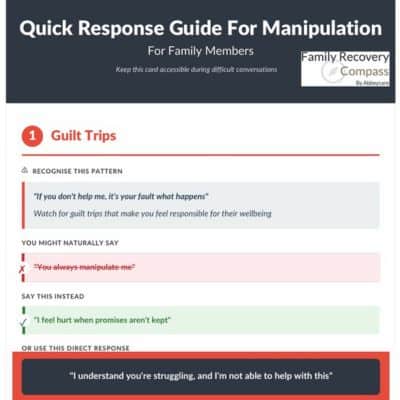



KEY TAKEAWAY
Recognise manipulation, set boundaries calmly, and communicate feelings without blame.
Every conversation leaves you feeling guilty, confused, or emotionally exhausted.
One moment they're angry...
The next they're crying...
Then suddenly they're promising everything will change...
And you're left wondering if you're being unreasonable for not helping "just this once".

Here's what makes this so painful: they probably aren't doing it on purpose.
Addiction rewires the brain to prioritise using above everything else.
Therefore, manipulation becomes an unconscious strategy that keeps the substance accessible.
But you can stop absorbing this manipulation.

Recognising The Signs
Watch for guilt trips that make you feel responsible for their wellbeing: "If you don't help me, anything that happens is your fault".
Notice promises that sound sincere in the moment, but your loved one doesn't follow through: "This is the last time I'll ask" or "I'll look at rehabs tomorrow".
Pay attention to sudden shifts in friendliness; when they're overly affectionate or charming right before asking for something, then distant once they've got it.
These tactics work because they're designed to trigger strong emotional responses that bypass your logical thinking.
Your loved one might genuinely believe what they're saying in the moment, but addiction usually takes over.

Speaking Without Blame
Replace "You always manipulate me" with "I feel hurt when promises aren't kept".
This shift changes everything because it removes the accusation they use to deflect or play victim.
Try "I feel worried when you call late at night asking for money" instead of "You only call when you want something".
Or "I feel uncomfortable lending money without a repayment plan" instead of "You never pay me back".
These "I" statements express your reality without giving ammunition to turn the conversation back on you.
The Response That Changes Everything
When guilt doesn't work, say: "I understand you're struggling, and I'm not able to help with this".
When promises sound convincing, say: "Show me proof when it's done, not before".
When fear tactics appear, offer crisis service numbers instead of yourself.
When they become suddenly charming, notice it without reacting to it.
You're not being cruel; you're refusing to participate in a system that keeps both of you stuck.

The discomfort they feel when you stop responding to manipulation, and they experience the consequences of addiction?
That's the reality their substance use has been protecting them from, and that discomfort is what creates real change.
How does this situation feel different to you now?