



KEY TAKEAWAYS
Tramadol rehab is:

When Is Tramadol Rehab Required?
Tramadol's Dual Mechanism Of Action
Depression decreases by 44% one month into other opioid abstinence, whereas depression increases 1.4-fold one month into tramadol abstinence, indicating late-onset depression from tramadol and the need for extended medical care [1][2].
Anxiety follows a similar pattern in tramadol rehab, where symptoms increase by 75% one month into abstinence and begin to decrease by 21% following two months [3].
Tramadol's dual mechanism of action means tramadol rehab is required as mood instabilities are caused via rebound effects on opioid and serotonergic pathways, making tramadol challenging to stop without professional help.
As the onset of psychological symptoms does not show for 2-4 weeks, rehab is required as it provides continuous monitoring, pastoral care, and medical support if depression does arise.
There is a 41% increase in self-reported social phobia 1-4 weeks into abstinence, so rehab is required to reintegrate patients into group settings through group CBT once detox is complete [4].
Risk Of Seizure
Seizures occur at doses as low as 50-100mg, thus requiring rehab for those addicted to any volume and frequency of usage [5].
Patients experiencing multiple seizures ingest, on average, double the amount of tramadol compared to those experiencing single seizures, highlighting the need for a medicated rehabilitation programme that offers anticonvulsants and relapse prevention strategies [6].
The seizure rate in those addicted to tramadol is 33% higher than in those using it as instructed, highlighting the need for continued medical support found in inpatient rehabilitation environments [7].
Males have a 2.2 times increased rate of getting seizures, making this group particularly susceptible to seizures in withdrawal, thus requiring professional monitoring for this population [8].
Self-Medicating Physical Pain And/Or Trauma
Self-medicating physical pain necessitates dual-focused therapy in tramadol rehab due to the following symptoms that must be treated simultaneously:
Self-medicating pain with tramadol implies that basic needs for pain are not being met, or a diagnosis for chronic pain has not yet been given, requiring the support of a pain specialist referral and psychological/medical management in rehab.
3% of those prescribed tramadol for chronic pain overuse the substance to increase its sedative and pain-relieving effects, indicating tolerance has built, and alternative pain medication and therapy should be sought in rehab [9].
Pain that is self-medicated in tramadol addiction will be explored in rehab to understand the events that may have triggered overusing prescription tramadol or obtaining illicit prescriptions.
Following a complete medical history, rehab may offer the following non-opioid treatments for chronic pain:

Tramadol Detox
Tramadol detox is sometimes completed using buprenorphine-assisted treatment (typically 2-4mg daily for 7-10 days), as this is a total opioid agonist that blocks opiate receptors, managing cravings and withdrawal symptoms.
As buprenorphine is primarily an opioid agonist, it will not treat withdrawal symptoms related to the concurrent action of serotonin-norepinephrine reuptake inhibition, such as anxiety and "brain zaps".
Both tapering and buprenorphine do not control against the risk of seizure in opioid/SNRI substances like tramadol, meaning that rehab incorporates continuous monitoring and anti-seizure medications when appropriate.
Scores on the Clinical Institute Narcotic Assessment decrease by 25% upon a 3-day tramadol taper, and it is a recommended approach, particularly in those concurrently addicted to other opiates using medication-assisted treatment (e.g. methadone) [10].
Suboxone (i.e. buprenorphine/naloxone) is an opiate modulator and antagonist utilised as a treatment in patients with a risk of relapse, as naloxone blocks opiate receptors in the brain.
Tramadol Therapy
Addressing Tramadol Use As Pain Relief
Therapy in tramadol rehab helps address tramadol being used as a pain relief by encouraging self-exploration of unhelpful beliefs around the substance, such as "I need tramadol to cope", indicating a psychological dependence.
Compared to traditional opiate withdrawal, the SNRI component of tramadol causes mood swings and irritation that may mimic pain, so therapy focuses on differentiating physical pain from addictive behaviours.
Psychoeducation is used in therapy to teach patients about the addictive effect tramadol has on the brain and behaviour, enabling users to become self-aware of thinking patterns (e.g. needing to use tramadol even when no longer in pain) that led to former tramadol use.
Non-opiate pain relief is offered alongside therapy for ongoing physical health problems (e.g. chronic pain), including ibuprofen, naproxen, and aspirin.
91.5% of those with a tramadol addiction do not have a prescription to use it for pain, so therapy examines why pain needs are not being met and offers coping strategies and encouragement to seek further support [11].
When help for pain is not being sought, therapists also aim to identify core beliefs that drive a lack of help-seeking behaviour, such as "no one listens to me" or "I am not deserving of help".
As the bioavailability of tramadol increases by up to 20% upon multiple administration (4 times/day), therapy looks to explore dosing patterns and the risk factors driving these, particularly when used for pain [12].
Addressing Tramadol Use In High-Functioning Users
Therapy in tramadol rehab helps address high-functioning users through teaching stress coping mechanisms, such as cognitive restructuring:
- Substance use: Using tramadol due to work-related stress
- High-functioning working professional's thinking pattern: "I have to be perfect at my job and failure means letting down my team."
- CBT session: Patient and therapist detect the unhelpful thought
- Cognitive restructuring: Beliefs are reframed, "we are all human and doing my best is enough. It's okay to make mistakes."
Mindfulness is taught and utilised in CBT for high-functioning tramadol users and is continued in extended care to reduce work-based stress in 68.8% of cases [13].
Adding CBT is 10% more effective in producing opiate-negative tests at 12 weeks for working professionals compared to medication-assisted treatment alone, indicating that continued therapeutic support is more important for abstinence in this population [14].
Aiming To Restore Natural Serotonin And Dopamine Production
Gassinga (1998) suggests that 99% of cognition is implicit, so therapy focuses on group settings to encourage sharing experiences about patients' addiction to tramadol, along with key points that have been learnt [15].
Natural serotonin and dopamine balances are restored through psychoeducation about the importance of not transferring tramadol addiction into other unhelpful addictions, such as gambling.
Following CBT, the balance of dopamine and serotonin production is restored in the medial prefrontal cortex and hippocampus by 5% and 9.5%, and is encouraged by forming daily plans in treatment [16].
Over 3-4 weeks, restoring dopaminergic balance allows previously unrewarding activities (e.g. walking outside) to become rewarding without the need for tramadol.
CBT alone reduces symptoms of social anxiety disorder by 31% through identification and management of risks shared in a group environment, leading to social reintegration [17].

Tramadol Aftercare Planning
Preventing Prescriptions Of Seizure Inducing Medications Post-Rehab
Extended care planning in tramadol rehab includes liaising with GPs to prevent prescriptions of medications that lower the seizure threshold:
Patients are most vulnerable to seizures in the first 7-10 days of detox, though hyperexcitability persists for up to 3 months.
Tricyclic antidepressants have been found to increase the risk of seizure from 0.4 to 1-2% at therapeutic doses, so this is considered and communicated to future prescribers [18].
There is a 5% increased risk of seizure when taking the antihistamine Diphenhydramine, so clinicians discuss the importance of patients making pharmacists aware of former tramadol usage to avoid seizure risk for over-the-counter medication [19].
Direct communication may occur between the rehab clinicians and the patient's GP and local pharmacist to avoid the risk of seizure when prescribing, though this is not always possible.
A family history of seizures and/or epilepsy is taken and logged in patients' medical files - this information is then flagged in future medical appointments to prevent prescribing seizure-risk medication.
The seizure risk varies depending on a patient's health and health history, volume and frequency of former tramadol dosing, and concurrent medications.
Imipenem increases the risk of seizure by 3.3%, so clinicians will discuss appropriate alternatives (e.g. ertapenem with a risk of 1%) when antibiotics are required [20].
Mood Diaries
Follow-up care in tramadol rehab tackles mood fluctuations by teaching how to use mood diaries, encouraging self-instructed use in the first 6-12 months post-treatment.
As 40% of former users experience persistent emotional instability characterised by anxiety and depression cycles, these diaries are encouraged to track mood swings in follow-up care to provide evidence that medications need changing.
Prolonged use of mood diaries for up to one year post-treatment enables clinicians to pinpoint protracted emotional withdrawal symptoms that may require further medical or psychological support:
Mood diaries are an effective way to track progress throughout abstinence, as patients can identify potential risks as these arise (e.g. when collecting prescription drugs).
Tramadol users have a 1.4 times increased rate of anxiety cases, so mood diaries are an effective tool to observe whether anxiety symptoms persist in the absence of tramadol [21].
Mood diaries enable patients to practice self-awareness in relapse prevention, particularly when stress or anger were former risks for tramadol usage, given its sedative properties.

How Do Patterns Of Tramadol Usage Alter Tramadol Rehab Protocols?
Usage Pattern | Changes In Therapeutic Content |
|---|---|
High Dose | - Withdrawal symptoms lasting 7+ days may require longer detox (e.g. 10 days) - For longer detoxes, therapeutic content will begin later - Therapy focuses on psychoeducation surrounding the risks of overdose - Harm reduction skills in therapy |
Long-term Use | - Extended rehab stay (28+ days) to allow more time for therapy - Individual as well as group therapy may be suggested - Includes motivational interviewing to highlight the patient’s identity as a user |
Binge Use | - Continued therapy in aftercare to prevent relapse - Focus on relapse prevention tools (e.g. trigger mapping) |
Intermittent Use (Alongside Another Drug) | - Therapy focuses on patterns underlying polydrug use - Motivational interviewing is used to explore denial and/or underreporting of drug use |
Tramadol Rehab Outcomes
Recovery Success Rate
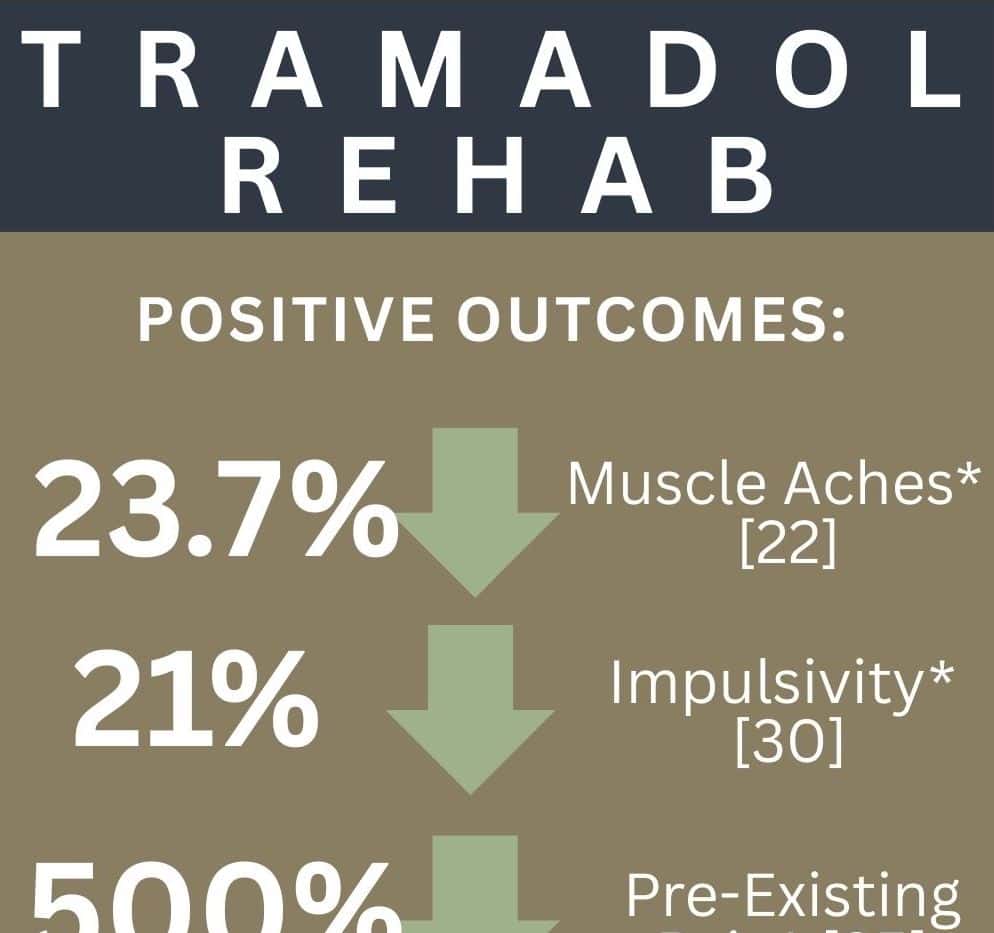
Scores on the Clinical Opiate Withdrawal Scale reduce by 23.7% between pre-and post-treatment in tramadol rehab, indicating a 28-day rehabilitation programme significantly manages muscle aches, nausea, and vomiting [22].
Subjective symptoms of withdrawal reduce by 53%, indicating rehab provides patient-reported improvements in physical and mental well-being [23].
The majority of withdrawal side effects begin to subside within the first week of rehab [24].
Self-reported pain is five times lower following appropriate tramadol tapering compared to using methadone, resulting in sustained treatment efforts [25].
50% of those taking buprenorphine treatment for tramadol dependency maintain abstinence; however, this rate increases when patients stick to allocated care plans and subsequent follow-up care [26].
Arve (2023) showed in qualitative interviews that treatment for tramadol dependence teaches autonomy-supportive skills to promote long-term abstinence over 12+ months [27].
Stable abstinence for 12+ months has been reported in case studies, such as Mukau et al. (2022), when 16/4 mg buprenorphine is taken twice a day in maintenance treatment [28].
Reducing Emotional Blunting Or Overreaction To Emotional Triggers
Emotion regulation training throughout rehab results in 77% combined abstinence alongside appropriate management of emotional responses to anger and upset [29].
Mindfulness-based therapeutic approaches in rehab for tramadol addiction reduce impulsivity by 23% immediately following treatment, indicating patients are less likely to relapse and act on impulse when discharged from rehab [30].
Appropriate management of stress and impulsivity remains evident at the 2-month follow-up, with a 21% decrease on the BIS-11 impulsivity scale [30].
Mindfulness-Oriented Recovery Enhancement for emotional regulation results in a 5% increased accuracy of responding to pain cues in those using tramadol for chronic pain, indicating improved self-awareness and ability to differentiate pain versus emotional cues [31].
Through specialised emotional regulation training (e.g. stress management), patients will build coping mechanisms to prevent stress-induced setbacks and identify risk factors.
Tramadol Rehab At Abbeycare
Tramadol rehab at Abbeycare incorporates a minimum 14 day medicated detox with the remaining programme incorporating therapeutic rehabilitation programme, totalling 28 days, or longer.
The following medications are typically utilised in the tramadol rehabilitation programme at Abbeycare, subject to decisions by our medical team:
Abbeycare's tramadol rehabilitation programme is personalised to each patient after an assessment with our medical team.
Changes to the programme may be made in the following areas:
At Abbeycare, opiate maintenance treatment is typically avoided to become 100% opiate-free; however, symptoms of withdrawal are medically managed appropriately based on medical need.

