Alcoholism is a disease characterised by continuous heavy drinking. Until people with alcohol use disorder admit to problems with alcohol and stop drinking, the risk of alcohol use disorder continues which affects both physical and mental health.
Alcohol starts to injure the brain once it reaches the bloodstream.
Excessive consumption can lead to Alcohol-Related Brain Damage, or ARBD, which is a type of brain disorder caused by alcohol consumption. Brain shrinkage caused by alcohol abuse is permanent, as alcohol kills brain cells and grey matter.
For more information and effects click ‘Learn More’.
Family Recovery Compass is a newsletter for friends and family members who feel trapped between supporting a loved one in addiction, and protecting their own wellbeing.
Every week, we tackle one specific situation in addiction family dynamics, and deliver practical decision-making frameworks and exact dialogue scripts – that help you respond with confidence instead of reaction.
Every month, we bring you an unfiltered recovery conversation with someone who’s either experienced addiction firsthand, or works closely with those in recovery.
No sanitised success stories – just practical insights on what actually works in recovery, that you can apply, in your life too.
Recovery capital is the internal and external resource used to begin the recovery process and maintain sobriety. This combines personal, social, and community support to provide a joined-up approach that supports the addict through recovery.
Do you or a loved one need addiction treatment for alcohol or drugs? Thousands blindly walk into addiction treatment in expensive rehab centres and find that the reality doesn’t meet expectations.
If you’re considering rehab treatment, first check our ultimate guide for complete instructions on how to find the right rehab centre for you.
Take-home Naloxone kits help families and loved ones respond quickly in an opioid overdose emergency, until emergency services arrive. Kits contain nasal or injectable forms of Naloxone.
Changes in legislation mean Naloxone kits are now more widely available from pharmacies and drug services, including Abbeycare.
For additional information, click ‘Learn More’ below.
Overcoming alcohol addiction means first ceasing alcohol intake, and taking care of physical and chemical withdrawal symptoms.
Detoxing from alcohol means undergoing withdrawal from alcohol, but with the assistance of prescribed medication and detox phase, to substitute in place of the alcohol itself.
Alcohol rehab focuses on tackling the problems underneath alcoholism, such as grief, trauma, depression, and emotional difficulties, in order to reduce continuing drinking after treatment.
Inpatient services at an alcohol rehab programme provides 24 hour access to specialist care.
Alcohol home detox provides a means of semi-supervised addiction treatment in the comfort of your home. It’s often suitable for those with inescapable practical commitments, or where a reduced budget for treatment is available.
An at-home detox is the most basic detox option available from Abbeycare, and assumes you have support available, post-detox, for the other important elements of long-term addiction recovery.
The term alcoholism refers to the consumption of alcohol to the extent that the person is unable to manage their own drinking habits or patterns, resulting in side-effects that are detrimental to the quality of life and health of the alcoholic, or those around them.
An alcoholic is someone who continues to compulsively abuse alcohol in this way, despite the negative consequences to their lives and health.
Immediately following treatment, the early stages of recovery and abstinence are most vulnerable to lapses.
At Abbeycare, a structured and peer-reviewed aftercare plan is usually prepared whilst still in treatment. This comprises social, peer, and therapeutic resources individuals draw upon, following a residential treatment programme for drug or alcohol misuse.
Clinically managed residential detoxification is:
– A structured detox that uses medication-assisted treatment and regular physical health observations
– Takes place in an inpatient rehabilitation unit or hospital
– Typically lasts from 7-10 days, but in Abbeycare, it is incorporated into a 28-day rehab programme
Family Therapy at Abbeycare Scotland or Gloucester is realistic, compassionate, and appropriate for families and loved ones of addicts.
Family therapeutic interventions in residential rehabilitation have been designed to support those living with or caring for participants entering the Abbeycare Programme.
Support for families in a group setting allows for a safe, constructive, and confidential place to listen and share common experiences.
Inpatient rehab is drug and/ or alcohol treatment in a rehab centre, where patients remain on-site for the duration of inpatient rehabilitation.
It includes detoxification from drugs, therapy (group work and 1-2-1 sessions), and aftercare planning. Inpatient rehabs typically last 28 days, but this varies on an individual basis.
Long-term treatment at Abbeycare has been developed for those suffering from alcohol or drug addiction. Completing a long-term drug and alcohol inpatient programme may be the solution to problematic substance use.
Motivational Enhancement Therapy can be used by trained addiction recovery therapists to elicit internal changes within and promote long-term recovery from substance use disorder.
All the answers to addiction can be found within with this comprehensive and successful therapy concept leads to behavioural changes, reflective listening, self-motivational statements, and a comprehensive recovery process.
Outpatient drug or alcohol rehab is daytime treatment as opposed to living in a treatment facility.
Outpatient treatment is similar to inpatient in terms of the methods used to treat substance abuse. Where they differ is in their approach to recovery.
Abbeycare’s prison to rehab is a 12-week structured rehab programme which involves direct transfer from prison. The suitability of the candidate is decided by prison staff.
Short-term residential treatment programmes are the chance to press the reset button and access a therapeutic programme designed to create recovery from the use of alcohol and drugs.
Feeling stuck in a rut. Want to stop but can’t seem to achieve sobriety?
Click below.
The 12-step programme was created by alcoholics anonymous (AA), and is specifically designed to aid addicts in achieving and maintaining abstinence.
The central ethos behind the programme is that participants must admit and surrender to a divine power to live happy lives. Ideas and experiences are shared in meetings, and help is sought in an attempt to achieve abstinence.
Abbeycare’s policy to respect your privacy and comply with any applicable law and regulation regarding any personal information we may collect about you, including across our website and other sites we own and operate.
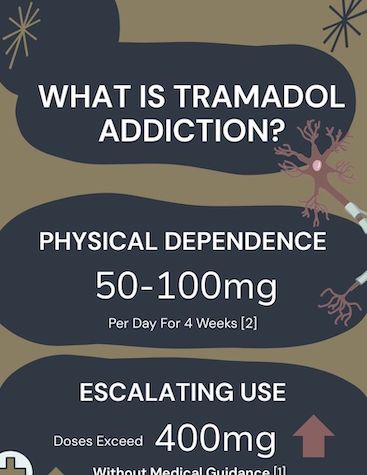
Tramadol causes addiction by triggering serotonin reuptake inhibition, caused by 78.7% occupancy at 5-HTT neuroreceptors in doses from 400mg [1].
Serotonin reuptake inhibition is also triggered at low doses of tramadol (50mg and 100mg), resulting in 34.7% and 50.2% neuroreceptor occupation in the thalamus, demonstrating that physical dependency can begin at lower doses [2].
As use increases from small doses (50mg) in prescription use to over 400mg, serotonin reuptake inhibition rises by 44%, resulting in gradual desensitisation to serotonin, requiring more tramadol to achieve the same effects [1][2].
Psychological addiction to tramadol occurs when the user begins to rely on tramadol to self-medicate anxiety, depression, and/or stress, with physical dependence developing within 1 to 2 weeks (dose-dependent).
Prescription tramadol causes addiction through increased dosing when attempting to manage chronic pain, as opioid and 5-HT neuroreceptors become habituated.
Physical Signs Of Tramadol Addiction
Tremors
Tramadol causes tremors during active use, whereas traditional opioids (e.g., heroin) cause shakes exclusively during withdrawal.
The primary cause of tremors during active use is central nervous system hyperexcitability, resulting from overexcitation of serotonergic pathways.
The rate and duration of tremors depend on polymorphisms of the cytochrome P450 CYP2D6, as these affect tramadol metabolism and its distribution to blood plasma, where protein binding typically occurs at a rate of 20% [3].
Over 50% of those with symptoms of serotonin syndrome concurrently use SSRIs that prevent the reuptake of serotonin, causing tremors [4].
Compared to standard opioids, tramadol causes tremors due to extracellular serotonin, rather than rebound hyperexcitability of opioid neuroreceptors.
When tremors result from serotonin syndrome caused by tramadol toxicity, 42% require admission to an intensive care unit [5].
Traditional opioid withdrawal shakes begin after 24 hours of last drug administration, whereas tramadol tremors start within 1 hour.
The shivering threshold decreases by -4.2 +/- 4 degrees Celsius upon active tramadol use, resulting in uncontrollable shivering and tremors even when not cold [6].
250-2500mg of tramadol can cause the following seizure types [8]:
Tonic/clonic seizures: 54.5%
Single seizures: 45%
Multiple seizures: 55%
Seizures account for 7% of all adverse reactions in tramadol addiction, though this depends on dose volume and frequency within a 24-hour time window [9].
Seizures occur in tramadol addiction due to overloading of serotonergic activity, causing serotonin syndrome in 3% [9].
Seizures in tramadol dependency occur in periods of non-use, caused by rebound neuroexcitability in serotonergic pathways.
There are two primary chemical compounds found in tramadol:
(+)-enantiomer (the R-enantiomer): activates predominantly on opioid neuroreceptors
(–)-enantiomer (the S-enantiomer: activates predominantly on norepinephrine neuroreceptors
The (+) and (-) enantiomers drive seizures by preventing the reuptake of both serotonin and norepinephrine [10].
Most tramadol-induced seizures that occur do so within the first 4-6 hours [11].
Goosebumps Combined With Sweating
Goosebumps combined with sweating are a physical symptom of tramadol addiction due to the converse activity on opioid and 5-HTT neuroreceptors, causing goosebumps and sweating, respectively.
A case study by Takeshita (2009) showed that a woman hospitalised due to tramadol toxicity from taking multiple 50mg tablets presented with a temperature of 38.5 degrees Celsius [12].
Goosebumps and sweating occur during tramadol ingestion, typically within 1-2 hours, but these symptoms usually resolve within 24 hours [13].
The sweating threshold decreases by 1.03 degrees Celsius upon administration of tramadol, causing users to sweat [14].
The sweating-to-vasoconstriction threshold increases two-fold upon large-dose tramadol administration, resulting in the body becoming less sensitive to changes in body temperature [15].
Cold Hands And Feet Despite Normal Body Temperature
The primary cause of cold hands and feet despite a normal body temperature (36.5–37.5 °C) during tramadol addiction results from vasoconstriction of blood vessels, particularly in the extremities.
Tramadol use causes an average reduction in the vasoconstriction threshold of 3.0°C ± 4.0°C, resulting in cold hands and feet, while maintaining a stable core body temperature [16].
Compared to tramadol, traditional opioids (e.g., morphine) increase the sweating to vasoconstriction threshold by up to 20-fold, resulting in a delay of vasoconstriction even in cold temperatures [17].
Upon taking tramadol, blood pressure increases by an average of 3.8 mmHg, caused by vasoconstriction of the blood vessels, leading to cold hands and feet [18].
Scott (2000) states that tramadol producing cold hands and feet stems from its ability to reduce the 'setpoint' for thermoregulatory control [19].
Pupil Dilation
Pupil diameter reduces by 18% following 50mg of tramadol, and 7% following 25mg of tramadol; however, this is typical of prescription use and not addiction [20].
Ruiz et al. (2015) found that following 4-6 mg/kg of tramadol, pupil size increases by 8% from 6.71 mm to 7.22 mm within 30 minutes [21].
After 60 minutes, pupils begin to restrict again, but dilation remains increased by 3% [21].
Conversely, Knaggs et al. (2004) found that tramadol does not cause any changes in pupil diameter until 150 minutes following the administration of 1.25 mg/kg tramadol, indicating a possible dose-dependent effect on the pupillary response [22].
Compared to naloxone, tramadol does not suppress the pupillary light reflex, explaining why pupils appear to dilate compared to traditional opioids [23].
Psychological Signs Of Tramadol Addiction
Sensory Overstimulation
Sensory overstimulation is a psychological symptom of tramadol addiction caused by the combined effects of serotonin and norepinephrine reuptake inhibition, resulting in sensitivity to lights, sounds, and touch 2-4 hours after dosing.
Photophobia, or a sensitivity to light, and phonophobia, or sensitivity to sound, have been reported even from doses as little as 37.5mg/ twice a day [24].
Both photophobia and phonophobia result from hyperexcitability of the central nervous system responsible for sound and light processing (e.g. visual and auditory cortices), causing lights and sounds to appear brighter and louder than normal.
Continuous phonophobia/photophobia despite no longer having a tramadol prescription indicates addiction and shows it is still being taken, especially when these symptoms persist 6+ hours after the last administration [25].
Wearing sunglasses even when it is not bright outside
Turning down TV or console volume
Agitation when overstimulated
Talking quieter than normal
Obsessive Thought Loops
For those using tramadol alone, the risk of cognitive impairment leading to obsessive thinking patterns increases from 28% to 67%, resulting in impaired cognitive flexibility and hyperfixation on daily rituals [26].
The risk of developing cognitive impairment increases 3-fold in those addicted to tramadol and also using other substances, resulting in recurrent thoughts and ideas without full awareness that this is happening [27].
Reaction times are also reduced by 5% in those taking >1000mg/day of tramadol compared to <1000mg/day, making tramadol users slower to respond in conversation, especially when stuck inside repetitive thought loops [28].
Behaviours seen when addicted to tramadol include:
Compulsive time checking when to next redose
Continuous checking for tramadol availability
Hyperfixation on justifying use through repeatedly telling others why it is being used
Agitation when the routine of thinking patterns has been disrupted
Actively avoiding environments where tramadol use is uncertain
Overreaction To Emotional Triggers
Acute levels of tramadol (10 mg/kg) result in 1.33 times increased levels of Trk-B in the amygdala, leading to emotional sensitivity to stimuli that would otherwise be regulated [29].
Chronic administration of tramadol (14+ days) has been found to increase Trk-B levels by 1.18 times compared to 5mg/kg, indicating that the length of time taking tramadol affects emotional regulation, or the ability to remain calm in stressful situations [30].
Tramadol addiction may present with emotional signs such as:
Anger
Mood swings
Violent outbursts
Upset
Irritability
Sensitivity to others' upset
Anger and upset are emotional signs of tramadol dependency, as this indicates frustration when tramadol is not readily available to the user.
Long Term Health Complications Of Tramadol Addiction
Hyperalgesia
Hyperalgesia from tramadol dependency occurs within weeks to months of the first use, and typically depends on the length of time using, as well as the frequency of administration.
Tramadol-induced hyperalgesia has occurred in patients using 300mg/day for 4 years, caused by desensitisation of mu neuroreceptors [31].
Hyperalgesia is less common from tramadol compared to codeine due to a 10-fold reduced binding affinity on mu neuroreceptors, making it less visible as a warning sign of tramadol dependency [32].
Patients report a 50% reduction in cold hyperalgesia following tramadol use; however, this is 1-3 hours following administration and does not always occur after chronic use - this may be a sign of use in early addiction [33].
In tramadol dependency, hyperalgesia looks like:
Sensitivity to pain, even from stimuli that are not normally painful (e.g. touch)
Tramadol no longer provides pain relief
Other pain medications no longer work, especially OTC medications or paracetamol/ibuprofen
Paradoxical pain
Overdose Presenting Without Respiratory Depression
An overdose presenting without respiratory depression occurs in tramadol dependency when higher-than-normal amounts are taken, though this depends on the user's neuroadaptation to the substance.
Tramadol is a partial opiate agonist with weak mu neuroreceptor activation and therefore does not cause respiratory depression, unlike other opiates (e.g. fentanyl), in overdose.
When an overdose occurs, GABA inhibition prevents respiratory depression through overstimulating the medulla oblongata and other respiratory centres in the brain.
Despite a lack of respiratory depression, lethargy is reported in 30% of cases, caused by a "crash" following neural excitation in the prefrontal cortex [34].
6% of overdose cases result in increased levels of creatine phosphokinase, resulting in [35]:
Muscle pain
Rhabdomyolysis
Kidney pain
Kidney injury
One of the most frequently reported symptoms in tramadol dependency includes seizures, occurring in 14.5%, due to the excitatory effect of tramadol, as opposed to the sedatory effect of total opiate agonists [36].
Those taking more than 2000mg of tramadol have a 3.5 times increased rate of developing complications or overconsumption as a result of addiction [37].
Although respiratory depression does not typically occur in tramadol overconsumption, 1126 out of 140,721 cases of tramadol overconsumption state symptoms of respiratory depression; however, this mainly happened in concurrent users of CYP2D6 inhibitors and benzodiazepines [38].
Cardiac Complications
High blood pressure occurs in 1% to 5% of tramadol users, particularly when taking the extended-release variant [39].
15% of tramadol users using between 6 months and 33 months become hospitalised for cardiovascular disease [40].
CK-MB, a biomarker for inflammation in the heart, is 80% more prevalent in tramadol users compared to controls, and may indicate myocarditis [41].
LDH, a biomarker of heart tissue damage, is elevated by 3-fold in tramadol users, indicating tramadol's effects on oxidative stress and heart tissue interference [41].
cTn-I is elevated 1.6-fold in tramadol users, indicating potential heart cell damage and myocardial infarction [41].
Lowered heart functioning and aerobic respiration are compromised in tramadol users, caused by a 75% decrease in mitochondria in heart cells [42].
How Does Tramadol Use Progress Into Addiction?
Developing addiction from prescribed Tramadol use
Developing addiction from illicit Tramadol use
Reason for initial use
Chronic pain
Self-medicate depression and anxiety, or seeking euphoria
Other illicit drugs are not available
How does tolerance build?
- Tolerance builds slowly over weeks to months
- Habituation to serotonin/norepinephrine and mu receptors
Begins as a psychological dependence
- Higher doses are needed for pain relief
- Tolerance builds quickly due to 100mg+ in one dose or 300mg+ in one day
- Purity is not always known unless tested
Dose escalation/ mixing with other drugs
- Higher doses are needed for pain relief over weeks/months as tolerance develops
- Larger doses are taken in a short period of time
- Polydrug use
Denial/ rationalisation
- Holds a prescription for medical use, despite use beyond its original intent
- Users believe use can be stopped when wanted
- Rationalised by self-medicating other symptoms
Physical dependence
- Physical dependence depends on the doses used
- Withdrawal symptoms
- Physical dependence is often more severe, especially when used alongside other substances
- Withdrawal symptoms
How Does Co-Occurring SSRI Use Alter Tramadol Addiction?
10 cases of combined SSRI use with tramadol report serotonin syndrome from <100mg of tramadol, indicating that even therapeutic amounts can cause serotonin toxicity; however, this outcome depends on [43]:
Type and potency of the SSRI
Concurrent use of illicit serotonergic drugs (e.g. MDMA)
Concurrent use of SSRIs with tramadol risks serotonin syndrome due to the combined effects of binding on 5-HTT neuroreceptors, preventing the reuptake of serotonin.
Serotonin syndrome from combined use develops within 12 hours to 40 weeks, depending on the volume and frequency of both substances [44].
Serotonin syndrome results in the following symptoms (but not limited to):
Anxiety
Restlessness
Agitation
Sweating/fever
Tachycardia
Seizures
Kidney failure
Combined tramadol (0.5-20mg/kg) and the SSRI fluoxetine (5-40 mg/kg) concurrently produce antinociception in a dose-dependent manner, making this an addictive combination for those with chronic pain [45].
Those using SSRIs alongside tramadol require 68% less tramadol to experience the same effects compared to those not using SSRIs, causing users' dependency to build more rapidly when measures over the prescribed amount are consumed [46].
How Does Pre-Existing Diabetes Alter Tramadol Addiction?
Co-occurring diabetes alters tramadol dependency by causing hypoglycaemia, found in 5% of studies (out of 761) that researched the effects of tramadol on those with pre-existing diabetes [47].
Similarly, Shang-Yi Li (2018) found that those with pre-existing diabetes have a 1.34 times increased risk of developing hypoglycaemia upon using tramadol, resulting in [48]:
Hunger
Tremors
Sweating
Shaking
Pale skin
Blood glucose levels drop to an average of 15.9 ± 1.8 mmol/l following 4 days of tramadol administration, resulting in the above symptoms alongside addiction vulnerability [49].
Juba (2019) shows that the risk of hypoglycaemia is exacerbated in those taking tramadol with diabetes when anti-diabetic medications are not taken, making tramadol particularly dangerous in those with undiagnosed diabetes [50].
The rate of tramadol-induced hypoglycaemia ranges from 1% to 5%; however, a case study by Venkatesvaran (2022) demonstrated that hypoglycaemia can occur even in the absence of diabetes, indicating that tramadol itself disrupts blood glucose concentrations [51].
About the author
Philippa Scammell
Philippa Scammell MSci holds an integrated Master's degree in Psychology
from the University of York and has completed undergraduate statistical studies at Harvard University. Philippa has substantial experience in inpatient psychiatric care (Foss Park Hospital York), Research in Psychology at University of York, and group therapy facilitation (Kyra Women's Project). Philippa writes on clinical psychology and addiction recovery. Content reviewed by Laura Morris (Clinical Lead).