



KEY TAKEAWAYS
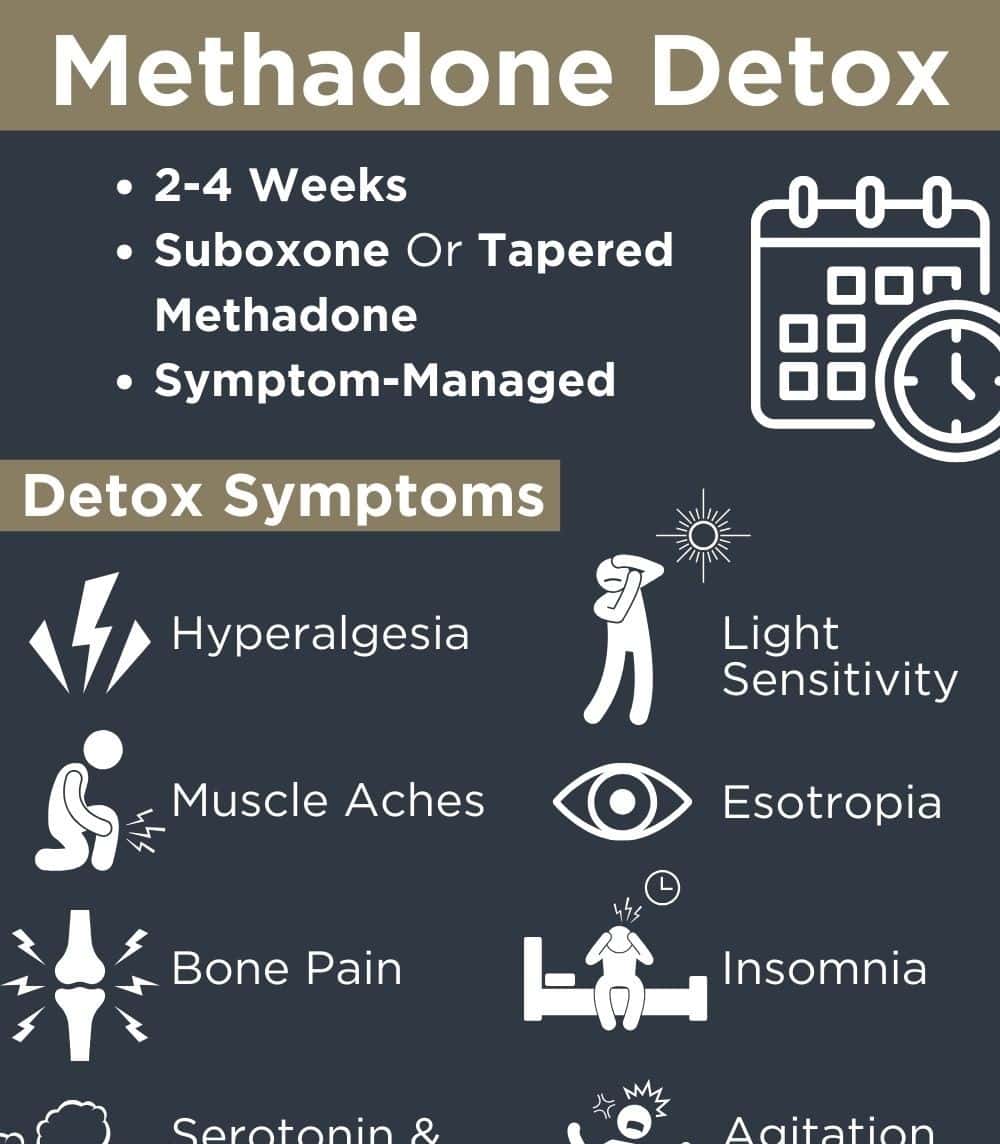
Methadone detox is:

IMPORTANT: Below, we discuss possible approaches that meet the specific [detox/rehab] needs around methadone. Not all treatment centres will provide these specific interventions.
For an overview of the Abbeycare programme contents for methadone detox, click here.
How Is Methadone Detox Done?
At Abbeycare, methadone detox typically utilises suboxone, and is tailored to individual needs.
Detox is completed using the methadone treatment suboxone, a partial opioid agonist that prevents methadone from binding to opioid receptors.
When suboxone is not used, methadone use of 10-30mg/day is tapered by 20% every two weeks.
The taper rate for 40mg+ doses, where suboxone is not used, is 13% every two weeks [1].
For patients who experience severe methadone withdrawal symptoms, such as severe body aches and pain, the tapering schedule is decreased (~5%).
Physical Symptoms Of Methadone Detox
Physical symptoms of withdrawal are managed during a medicated detox programme at inpatient rehab facilities.
Pain And Sensory Disturbances
Hyperalgesia, or a rebound effect, occurs during methadone withdrawal as the body is no longer able to regulate pain signals, resulting in sensitivity to painful stimuli.
Delusional beliefs and auditory hallucinations have occurred in detox patients who quit methadone "cold turkey" caused by sudden hyperactivity of the central nervous system [2].
Light sensitivity and visual snow, a condition where sufferers see flickering dots, occur in methadone withdrawal due to the methadone no longer suppressing the central nervous system.
Esotropia has been reported in patients withdrawing from heroin and methadone, caused by a lack of opioids affecting binocular vision; however, this returns post-detox [3].
Prolonged muscle aches and bone pain manifest in methadone withdrawal because there is 13-20% less available methadone to provide analgesic effects in tapering.
Sleep And Restlessness
46.5% of patients detoxing from methadone report chronic pain during sleep caused by hyperalgesia in detox [4].
The prevalence of insomnia increases by 25% over days 1 - 3 of detox in patients using Naltrexone [5].
Methadone's 36-hour duration of action means that insomnia and restlessness occur later in the withdrawal phase compared to heroin, typically between days 3-7.
Sleep improves from an average of 4 hours per night after 14 days to an average of 6 hours after 1 month of detox from methadone [6].
Methadone withdrawal triggers the flight-or-fight response, resulting in agitation, restlessness and anxiety that prevent sleep.
Agitation typically arises 48 hours after the last dose of methadone, compared to only 8-12 in heroin detox.
Cardiovascular Effects
Detox causes the heart rate to increase by 6.2%, caused by the rebound effect of noradrenaline [7].
One case of methadone withdrawal had a 96% increase in heart rate caused by stress-induced cardiomyopathy; however, adverse events are managed in the treatment plan with slow dose tapering [2].
In naloxone-precipitated detox, blood pressure increases from 82±4 to 108±3 mm Hg, resulting in headaches, dizziness and chest pain but these are managed with Nifedipine in the withdrawal process [8].
Heart rate and blood pressure abnormalities typically resolve two weeks into addiction treatment and are closely monitored by medical professionals.

Psychological Symptoms Of Methadone Detox
Psychological symptoms of withdrawal from methadone misuse are managed during a medicated detox programme at an inpatient rehab facility.
Emotional Dysregulation
Anxiety occurs in the withdrawal process due to a 62% reduction in dopaminergic activation 36-72 hours into the detox process before administering treatment options [9].
Those in methadone addiction treatment have an 18% reduction in β-phenylethylamine, a naturally occurring antidepressant, resulting in a depressed mood [10].
Patients report anxiety surrounding methadone medical detox due to limited knowledge about what to expect in withdrawal [11].
During methadone withdrawal, anxiety and mood imbalances result from lowered endorphin release as the body cannot appropriately manage the stress response.
Methadone withdrawal results in 20+ days of anxiety compared to 7-10 days for heroin in cases of limited protracted withdrawal symptoms.
Withdrawal from methadone results in a 14% increase in beta-endorphin levels, improving anxiety, depression and physical pain levels [12].
Cognitive Impairment
Short-term memory problems occur during methadone withdrawal due to neuronal cell death in the hippocampus [13].
Brain fog is experienced in the first week of detox as patients struggle to concentrate.
The lack of circulating dopamine results in poor executive functioning between days 1 and 14 of withdrawal.
Serotonin and dopamine dysregulation persists for up to 4 weeks, causing poor concentration and self-motivation, especially when anxiety and depression are also present.
Patients undergoing methadone tapering exhibit a 27% reduction in verbal fluency compared to those not in treatment, caused by impaired ability to recollect and process words; however, this resolves in the recovery process [14].
Poor verbal fluency in detox is caused by frontal lobe damage that occurred during active addiction, though this damage is reversible with adequate care.
Psychological Distress
Emotional numbness is experienced in methadone withdrawal due to lowered activation of the reward and motivation pathways.
Suicidal ideation manifests during methadone withdrawal due to limited capacity for emotional regulation, but this is appropriately managed with SSRIs in treatment.
50% of patients detoxing from methadone experience mood disturbances and psychological distress with scores of over 20 on the Profile of Mood States (POMS) test [15].
In detox, dysphoria accompanies poor appetite and insomnia, worsening psychological functioning and energy levels.
72% of psychological stress in withdrawal is caused by a combination of anxiety, depression, a lack of social support, poor self-control (i.e., not resisting cravings), and benzodiazepine use [16].
Where Detox Takes Place
Hospital | Rehab | |
|---|---|---|
Medical Supervision Level | 24/7 supervision | Staff available, obs as needed |
Medications Used | Methadone, buprenorphine, suboxone, clonidine, naloxone | Methadone, buprenorphine, suboxone, clonidine, naloxone |
Cost | Free (NHS) | £12,000/ 28 days |
Support Staff | Medical doctors, psychologists, and healthcare support workers | Drug addiction consultants, therapists, and healthcare support workers |
Environment | Structured, clinical, and medical | Structured and therapeutic |
Outpatient | Unsupervised | |
|---|---|---|
Medical Supervision Level | 4 x 15-minute visits per day at home 1 x visit per day in clinic | No medical supervision |
Medications Used | Methadone tapering | None |
Cost | Free (NHS) | Free |
Support Staff | Drug addiction support nurse or drug specialist | None |
Environment | Semi-structured and supportive | Unstructured, support depends on family involvement |
Needs Vs Wants In Detox
Wants To Detox Voluntarily | Detox Is Required When | |
|---|---|---|
Motivation | To be methadone free Tackle root causes of addiction | Respiratory depression Relationships are personally affected Professional recommendation to detox |
Health Status | Emotionally stable Experiences some withdrawal symptoms 36 hours after last use | Emotionally unstable Experiences severe withdrawal symptoms 36 hours after last use |
Inpatient Or Outpatient | Less need for supervision | Inpatient is needed for withdrawal management Medical monitoring if in a hospital |
Level Of Dependence | Low level of dependence, typically up to 3 months of use | Highest level of dependence (3+ months use) |
Methadone Tapering
Methadone tapering is only used when suboxone cannot be used, such as for patients with allergies to suboxone and its ingredients.
Tapering from methadone begins with a detailed professional assessment of current usage, including volume and frequency of use, as well as how long the patient has been using the drug.
In the assessment, the consultant also takes a record of any other illicit or prescribed drugs that are being used, for example, benzodiazepines or alcohol, that necessitate a poly-drug detox.
In cases where suboxone cannot be used, medical professionals develop a personal tapering strategy in methadone rehab, typically a 5-10% weekly reduction, though this changes on a case-by-case basis.
Close monitoring of vital signs and withdrawal symptoms occurs after each dose taper, and symptoms are managed accordingly.
Tapering is slowed when patients experience severe withdrawal, such as diarrhoea and vomiting, to ensure comfort throughout detox and rehab.
Detox Timeline
Specific medications and timeline used in individual cases are determined by the overseeing medical professional.
Methadone Detox Timeline | How Patients Present | Medical Interventions |
|---|---|---|
Days 1-3 | Euphoria, drowsiness/sedation and poor respiration Initial anxiety about withdrawal Methadone craving | Naloxone, if overdose is observed Clonidine Suboxone |
Days 7-14 | Diarrhoea Nausea and vomiting Depression and anxiety Muscle pain and aches High blood pressure | Loperamide Hydrochloride (Imodium) Ondansetron Selective Serotonin Reuptake Inhibitors (SSRIs) Anti-inflammatories (e.g., Ibuprofen) ACE inhibitors, Thiazine |
Weeks 2-4 | Sleeping problems Brain fog and low concentration | Melatonin supplements Multivitamin supplements, including Omega 3 and 6 |
What Changes Detox?
Genetic Predispositions
Suboxone is preferred for patients genetically predisposed to QT prolongation, as high-dose methadone may cause Torsades de Pointes, a type of heart arrhythmia [17].
Combining paroxetine and trazodone with buprenorphine increases the QT interval to >450ms, so patients with psychosis in withdrawal require more ECGs and medication adjustments [18].
The A118G polymorphism in the OPRM1 gene causes a 2.3-times-increased blood plasma concentration of methadone, resulting in drowsiness and nausea that require symptom management [19].
Patients with the CYP2B6 variants, including *6 and *9 have higher rates of methadone-induced mortality, necessitating the use of suboxone instead of tapering [20].
Cross Tolerance
Cross-tolerance to multiple opioids necessitates a more extended detox period because the body has developed a tolerance to various opioids, causing detox to take up to 6 months [21].
Methadone-tolerant patients show 67% increased blood concentration levels of morphine with minimal analgesic effects, necessitating other types of non-opioid pain relief [22].
Not responding to sertraline due to cross-tolerance of methadone and methamphetamine requires higher doses of SSRIs during the treatment programme for methadone addiction.
Not responding to withdrawal medication results in combinations of drugs, for example, clonidine and gabapentin, to treat anxiety and withdrawal aches and pain.
Detox includes concurrent use of psychotherapy when patients do not respond to medication, as this helps to ease psychological distress caused by withdrawal.

Methadone Withdrawal Syndrome
The methadone withdrawal timeline is 3 times longer than short-acting opioids, with physical and psychological symptoms lasting from 4 weeks to 6+ months, case dependent.
Experiencing post-acute withdrawal symptoms necessitates extensive aftercare planning to ensure patients have access to psychological therapy, counselling and medication after rehab.
Co-occurring psychiatric disorders, such as psychosis, complicate withdrawal and necessitate a more individualistic approach to prevent relapse and ensure all symptoms are being managed.
Chronic Pain
Managing chronic pain is complicated in withdrawal as opioid-type analgesics are not used, necessitating the use of gabapentin, but this causes fatigue and mood swings.
When severe chronic muscular and joint pain occurs in methadone treatment, gabapentin is increased from 900mg/day to 1600mg/day with increased monitoring [23].
If patients were using methadone as a way to self-medicate chronic pain, other pain medications such as NSAIDs and naproxen are considered, but the quantity and frequency of doses depend on the patient.
20.1 % of chronic pain patients self-medicate with illicit drugs, so detox includes multi-drug testing to ensure an appropriate polydrug detox as required [24].
Methadone Detox At Abbeycare
Methadone detox is offered at Abbeycare in either a 28 day or 12 week programme.
The Abbeycare admissions team will provide a medical assessment prior to detox, and discuss and concerns about potential withdrawal symptoms with you to alleviate your concerns.

