


KEY TAKEAWAYS

What Is Heroin Rehab?
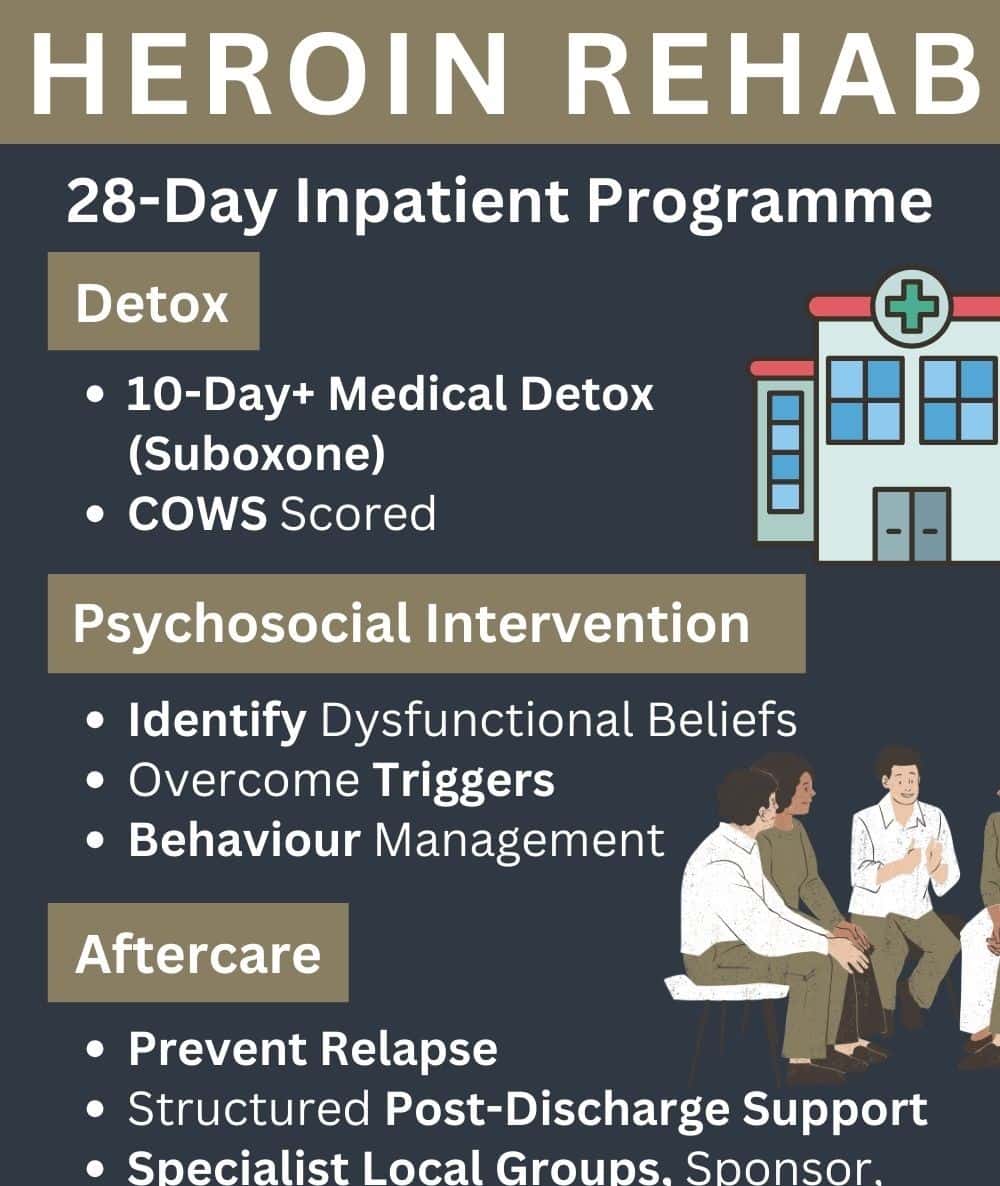
Heroin rehab is a treatment programme for heroin addiction that includes medical heroin detox, psychosocial interventions and aftercare to ensure abstinence and relapse prevention.
The heroin addiction rehab treatment at Abbeycare is a 28-day inpatient treatment that works by eliminating heroin from the body, leading to sobriety.
At Abbeycare, suboxone is offered as a medical replacement and doses are slowly lowered over 10 days.
After the initial 10 days, patients undergo cognitive behavioural therapy to identify dysfunctional beliefs causing heroin addiction and learn behavioural management to overcome triggers.
Committing to aftercare for 8 months following rehab for heroin addiction increases the chances of sobriety by 50% - Abbeycare offers aftercare for up to 16 months [2].
When Is Heroin Rehab Necessary?
Rehab is necessary for heroin addiction when users continue to use heroin despite the desire to quit or attempts made to stop use.
66% of users experience an overdose during active heroin addiction, necessitating rehab to prevent long-term brain and lung complications [3].
Combined use of heroin with benzodiazepines increases the risk of needing hospital treatment by 8.5% compared to heroin alone, necessitating rehab [4].
Physical complications of heroin addiction, such as abscesses from injections and endocarditis from injection-induced infections are a physical sign that rehab is needed.
Heroin Rehab Process
Detox
The use of Suboxone reduces the length of stay in an inpatient addiction facility by 60% compared to using methadone [5].
50% of patients switching from buprenorphine to suboxone experience adverse side effects in detox; however, these are appropriately managed throughout the heroin rehab programme [6].
Buprenorphine at doses >8mg/day in detox improves cravings and is also used for long-term medication-assisted treatment (MAT).
Rehab
The use of CBT, as well as medication in heroin addiction rehab, improves symptoms of alexithymia by 27.9% compared to using medication alone [7].
40% of those who remain abstinent consistently use cognitive, distraction and avoidance strategies in heroin addiction treatment [8].
Mindfulness in CBT helps to mitigate cravings in heroin rehab by noting thoughts and feelings, allowing users to avoid these actively. (OMIT)
The act of 'noting' as a mindfulness-based strategy in CBT allows users to identify and mitigate cravings.
Openly discussing needle sharing and HIV/Hepatitis risks of heroin in group therapy educates participants, reduces stigma and enables members to relate to one another.
Simplifying CBT homework used for heroin addiction improves completion rates by 7% [9].
Aftercare Planning
Relapse prevention programmes in heroin addiction treatment improve symptoms of anxiety by 86.4% and abstinence rates by 20.5% [10].
Aftercare educates patients about keeping injection paraphernalia and its potential to cause relapse in heroin addiction.
For heroin addiction patients where methadone is necessary, MAT with methadone improves treatment retention by 28% 4 months post-rehab compared to using suboxone [11].
Using CBT alongside long-term MAT following heroin rehab improves medication compliance rates by 22% [12].
Long-term symptom management mitigates symptoms during long-term recovery, such as using SSRIs for depression or melatonin supplements for sleep disturbances.
Heroin Rehab Vs Other Drugs
Heroin | Alcohol | |
|---|---|---|
Detox | Medically supervised | Medically supervised |
Therapy Focus | Triggers causing physical addiction | Trauma-informed therapy when alcohol is used for masking |
MAT Used? | Yes | Yes |
Support Groups | Narcotics Anonymous |
Cocaine | Methamphetamines | |
|---|---|---|
Detox | Symptom managed for withdrawal symptoms | Medically supervised and symptom-managed |
Therapy Focus | Triggers causing psychological addiction | Cognitive impairments |
MAT Used? | No | Yes |
Support Groups | Cocaine Anonymous | Crystal Meth Anonymous |
Withdrawal Symptoms
Heroin | Alcohol | |
|---|---|---|
Onset | 3 - 6 hours | 6 - 24 hours |
Peak | Days 1 - 3 | Days 1 - 3 |
End | Days 5 - 7 | Day 10+ |
Cocaine | Methamphetamines | |
|---|---|---|
Onset | < 24 hours | < 24 hours |
Peak | Days 3 - 5 | Day 3 |
End | Day 10+ | Day 5+ |

Heroin Rehab Vs Other Treatment Approaches
Heroin Rehab | Maintenance Medication | |
|---|---|---|
Setting | Inpatient | In clinic, then at home |
Detox | Yes, medically supervised | No |
Structure | Highly structured | Semi-structured |
Routine | Regular therapy sessions, medication and health observations | Daily self-administration of medication Therapy as required |
Relapse Management | Relapse prevention with 24/7 available support Aftercare planning | Counselling and psychotherapy |
Duration | 7-10 days | Months to years |
Public Or Private Treatment? | Public and private - insurance funds detox | Public and private |
Narcotics Anonymous | Outpatient Treatment | |
|---|---|---|
Setting | Community group meetings | Outpatient clinic |
Detox | No | No, but MAT is supervised |
Structure | Semi-structured | Semi-structured |
Routine | Weekly/monthly group meetings Regular mentor check-ins Workload is self-determined | Regular medication in the clinic Therapy/counselling as required |
Relapse Management | Relapse prevention is offered through peer support | |
Duration | Months to years | Depends on treatment type |
Public Or Private Treatment? | Public and available to all | Public and private - depends on the insurance provider |
What Changes Heroin Rehab?
Pregnancy
One baby is born with neonatal abstinence syndrome every 25 minutes, highlighting the importance of referrals for maternal care in heroin addiction treatment [13].
Integrating prenatal care in heroin addiction treatment allows pregnant women to get ultrasound scans and prenatal check-ups to mitigate pregnancy complications.
As 76% of heroin users present with vitamin deficiencies, pregnant women in recovery are offered nutritional support to emphasise the importance of folic acid and vitamin D in foetal development [14].
Teaching pregnant women about the importance of a drug-free home prevents child exposure to heroin, breaking the cycle of addiction.
Interacting Medications
In cases where quetiapine and suboxone are used together in heroin addiction treatment, close monitoring and observations are completed to reduce the risk of heart complications [15].
Combined use of protease inhibitors and buprenorphine increases buprenorphine levels in the blood by 57.4%, so buprenorphine doses are adjusted accordingly [16].
Combining haloperidol with buprenorphine results in an irregular heart rhythm that is potentially fatal in some cases, so patients taking both drugs require 15-minute check-ups in rehab [17].
History Of Non-Compliance
Individuals with a history of non-compliance require mouth checks to ensure tablets are appropriately swallowed and follow-up checks to ensure no tablets have been vomited.
Patients with a history of non-compliance may be allowed to take medication at the same time every day so that medication rounds are as expected.
The use of naltrexone decreases the drop-out rate from 23% 6 months post heroin use, but only in cases where doses are not missed [18].
Behavioural Naltrexone Therapy integrates contingency management with naltrexone maintenance and increases treatment retention by 13% compared to naltrexone alone [19].

Heroin Rehab Outcomes
Women are 5 times more likely to remain abstinent 24 months post-rehab treatment; however, supplementary aftercare support is available for those more at risk of relapse [20].
Residential rehab is 71% effective in achieving abstinence for 24 months, given appropriate aftercare practices are in place [21].
The rate of non-fatal heroin overdoses decreased from 22% to 7% following 1 year following residential rehabilitation [22].
Average mean heroin use days decrease by 62% following residential rehabilitation, in turn reducing the risk for potential overdose [23].
Overdose Prevention After Heroin Rehab
Rehab educates patients on tolerance reduction during abstinence, as this results in overdose if the same doses are taken as before if in relapse.
10% of dispensed naloxone is used in emergency overdose situations, making it an appropriate preventative medication for those at risk of overdose [24].
Intranasal naloxone is 82% effective at reversing the effects of heroin overdose, so educating users on how to use this medication is potentially life-saving [25].
Naloxone is offered in cases where overdose is both apparent or even just suspected to prevent respiratory depression and hypoxia.
Heroin Rehab At Abbeycare
Heroin rehab at Abbeycare involves:
- A 10 day combined suboxone and symptom managed detox
- A full therapeutic programme tackling the underlying causes of heroin addiction
At Abbeycare, overdose prevention kits of naloxone and overdose prevention training are offered to the patient and family members to mitigate the risk of overdose post rehab.

