Alcoholism is a disease characterised by continuous heavy drinking. Until people with alcohol use disorder admit to problems with alcohol and stop drinking, the risk of alcohol use disorder continues which affects both physical and mental health.
Alcohol starts to injure the brain once it reaches the bloodstream.
Excessive consumption can lead to Alcohol-Related Brain Damage, or ARBD, which is a type of brain disorder caused by alcohol consumption. Brain shrinkage caused by alcohol abuse is permanent, as alcohol kills brain cells and grey matter.
For more information and effects click ‘Learn More’.
Family Recovery Compass is a newsletter for friends and family members who feel trapped between supporting a loved one in addiction, and protecting their own wellbeing.
Every week, we tackle one specific situation in addiction family dynamics, and deliver practical decision-making frameworks and exact dialogue scripts – that help you respond with confidence instead of reaction.
Every month, we bring you an unfiltered recovery conversation with someone who’s either experienced addiction firsthand, or works closely with those in recovery.
No sanitised success stories – just practical insights on what actually works in recovery, that you can apply, in your life too.
Recovery capital is the internal and external resource used to begin the recovery process and maintain sobriety. This combines personal, social, and community support to provide a joined-up approach that supports the addict through recovery.
Do you or a loved one need addiction treatment for alcohol or drugs? Thousands blindly walk into addiction treatment in expensive rehab centres and find that the reality doesn’t meet expectations.
If you’re considering rehab treatment, first check our ultimate guide for complete instructions on how to find the right rehab centre for you.
Take-home Naloxone kits help families and loved ones respond quickly in an opioid overdose emergency, until emergency services arrive. Kits contain nasal or injectable forms of Naloxone.
Changes in legislation mean Naloxone kits are now more widely available from pharmacies and drug services, including Abbeycare.
For additional information, click ‘Learn More’ below.
Overcoming alcohol addiction means first ceasing alcohol intake, and taking care of physical and chemical withdrawal symptoms.
Detoxing from alcohol means undergoing withdrawal from alcohol, but with the assistance of prescribed medication and detox phase, to substitute in place of the alcohol itself.
Alcohol rehab focuses on tackling the problems underneath alcoholism, such as grief, trauma, depression, and emotional difficulties, in order to reduce continuing drinking after treatment.
Inpatient services at an alcohol rehab programme provides 24 hour access to specialist care.
Alcohol home detox provides a means of semi-supervised addiction treatment in the comfort of your home. It’s often suitable for those with inescapable practical commitments, or where a reduced budget for treatment is available.
An at-home detox is the most basic detox option available from Abbeycare, and assumes you have support available, post-detox, for the other important elements of long-term addiction recovery.
The term alcoholism refers to the consumption of alcohol to the extent that the person is unable to manage their own drinking habits or patterns, resulting in side-effects that are detrimental to the quality of life and health of the alcoholic, or those around them.
An alcoholic is someone who continues to compulsively abuse alcohol in this way, despite the negative consequences to their lives and health.
Immediately following treatment, the early stages of recovery and abstinence are most vulnerable to lapses.
At Abbeycare, a structured and peer-reviewed aftercare plan is usually prepared whilst still in treatment. This comprises social, peer, and therapeutic resources individuals draw upon, following a residential treatment programme for drug or alcohol misuse.
Clinically managed residential detoxification is:
– A structured detox that uses medication-assisted treatment and regular physical health observations
– Takes place in an inpatient rehabilitation unit or hospital
– Typically lasts from 7-10 days, but in Abbeycare, it is incorporated into a 28-day rehab programme
Family Therapy at Abbeycare Scotland or Gloucester is realistic, compassionate, and appropriate for families and loved ones of addicts.
Family therapeutic interventions in residential rehabilitation have been designed to support those living with or caring for participants entering the Abbeycare Programme.
Support for families in a group setting allows for a safe, constructive, and confidential place to listen and share common experiences.
Inpatient rehab is drug and/ or alcohol treatment in a rehab centre, where patients remain on-site for the duration of inpatient rehabilitation.
It includes detoxification from drugs, therapy (group work and 1-2-1 sessions), and aftercare planning. Inpatient rehabs typically last 28 days, but this varies on an individual basis.
Long-term treatment at Abbeycare has been developed for those suffering from alcohol or drug addiction. Completing a long-term drug and alcohol inpatient programme may be the solution to problematic substance use.
Motivational Enhancement Therapy can be used by trained addiction recovery therapists to elicit internal changes within and promote long-term recovery from substance use disorder.
All the answers to addiction can be found within with this comprehensive and successful therapy concept leads to behavioural changes, reflective listening, self-motivational statements, and a comprehensive recovery process.
Outpatient drug or alcohol rehab is daytime treatment as opposed to living in a treatment facility.
Outpatient treatment is similar to inpatient in terms of the methods used to treat substance abuse. Where they differ is in their approach to recovery.
Abbeycare’s prison to rehab is a 12-week structured rehab programme which involves direct transfer from prison. The suitability of the candidate is decided by prison staff.
Short-term residential treatment programmes are the chance to press the reset button and access a therapeutic programme designed to create recovery from the use of alcohol and drugs.
Feeling stuck in a rut. Want to stop but can’t seem to achieve sobriety?
Click below.
The 12-step programme was created by alcoholics anonymous (AA), and is specifically designed to aid addicts in achieving and maintaining abstinence.
The central ethos behind the programme is that participants must admit and surrender to a divine power to live happy lives. Ideas and experiences are shared in meetings, and help is sought in an attempt to achieve abstinence.
Abbeycare’s policy to respect your privacy and comply with any applicable law and regulation regarding any personal information we may collect about you, including across our website and other sites we own and operate.
The most dangerous combinations of cocaine polysubstance abuse are:
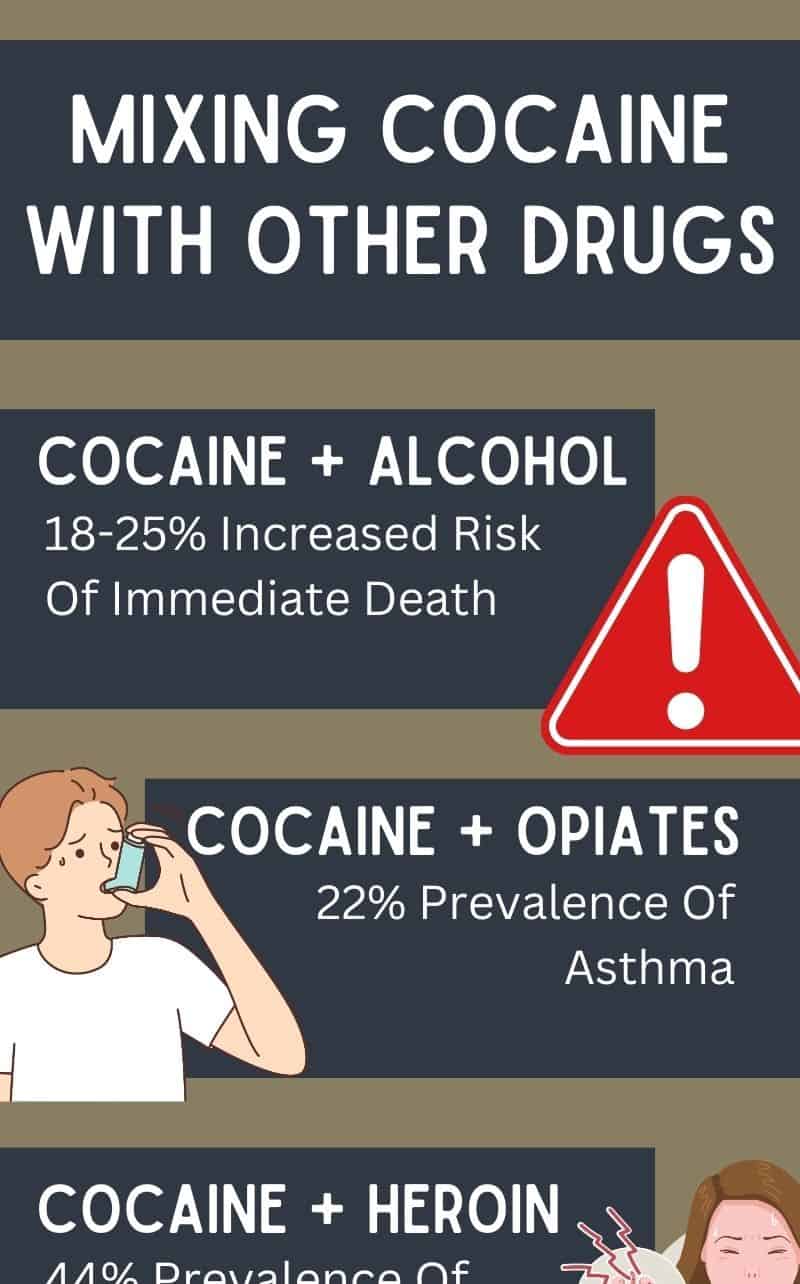
Cocaine and alcohol - create cocaethylene as a by-product that leads to seizures, liver damage, compromised immune systems and an 18-25% increased risk of immediate death vs cocaine alone [3]
Simultaneous use of cocaine and cannabis increases heart rate by up 37 beats per minute [1]
Polyuse of cocaine and alcohol produces cocaethylene, which incurs an 18-25% increased risk of immediate death vs cocaine alone [3].
Short-Term Effects Of Combining Cocaine And Alcohol
32% of cocaine and alcohol users reported being physically violent [4]
48% increased tolerance to cocaine - causing a higher requirement for cocaine to achieve the original level of euphoria [5]
Long-Term Effects Of Combining Cocaine And Alcohol
Cognitive impairment - cocaine and alcohol users have 50% more impairment in memory, problem-solving, learning and executive function than cocaine users [6]
Cardiovascular diseases - cocaethylene is 10 times more cardiotoxic than cocaine [7]
Mixing Cocaine And Heroin, Fentanyl, Methadone, Or Other Opiates
Risks Of Mixing Cocaine And Opiates
Cocaine and heroin cause combined rhabdomyolysis and ventricular fibrillation, leading to multi-organ failure [8].
Short-Term Effects Of Mixing Cocaine And Opiates
Amnesia caused by hippocampal lesions when combining cocaine and fentanyl [9]
Long-Term Effects Of Mixing Cocaine And Opiates
Brain damage from overdose - if fentanyl is added unknowingly
22% prevalence of asthma and 44% prevalence in bronchial hyperactivity when combining cocaine and heroin [10]
Mixing Cocaine And LSD
Risks Of Mixing Cocaine And LSD
Cocaine and LSD cause a combination of simple hallucinations, pseudo-hallucinations and illusions [11].
Short-Term Effects Of Mixing Cocaine And LSD
Reduced psychedelic experience of LSD
Switching from hyperaware to an out-of-body experience
Long-Term Effects Of Mixing Cocaine And LSD
Risk of seizure due to overstimulation
Serotonin syndrome - between 2-12% increased risk of death compared to cocaine alone [12]
Increased heart rate and blood pressure - increased by up to 37 beats per minute [1]
Long-Term Effects Of Mixing Cocaine And Cannabis
Overdose - cannabis stops blood vessel constriction caused by cocaine, causing cocaine to enter the bloodstream more quickly
Schizophrenia - cocaine and cannabis cause a 6.3% increased risk of schizophrenia [14]
Mixing Cocaine And Ecstasy/MDMA
Risks Of Mixing Cocaine And Ecstasy/ MDMA
Cocaine is used with MDMA to create an immediate high (15 minutes vs 35 minutes). These combined short highs lead to continued use of both substances sequentially, causing overdose.
Short-Term Effects Of Mixing Cocaine And Ecstasy/ MDMA
Hallucinations - cocaine exacerbates the hallucinogenic effects of MDMA/ecstasy compared to cocaine alone
Long-Term Effects Of Mixing Cocaine And Ecstasy/ MDMA
Hyperthermia - both drugs increase body temperature, which can lead to hepatic liver injury, kidney failure, and brain swelling [15]
Long-Term Effects Of Mixing Cocaine And Benzodiazepines
Increased sensitivity to benzodiazepines from cocaine use [18]
Hides symptoms of a cocaine overdose (e.g. increased heart rate, sweating, or shaking) that are typically recognised externally
Mixing Cocaine And Amphetamines And/Or Crystal Meth
Risks Of Mixing Cocaine And Amphetamines And/Or Crystal Meth
Combined cocaine and methamphetamine use decreases activity of frontal limbic moral processing, causing an inability to recognise and process other's emotions [19]
Short-Term Effects Of Mixing Cocaine And Amphetamines And/Or Crystal Meth
Tweaking - behaviours such as jaw clenching, teeth grinding or obsessive organising
Short-term effects of serotonin syndrome - elevated heart rate, sweating and high body temperature
Long-Term Effects Of Mixing Cocaine And Amphetamines And/Or Crystal Meth
Sleep deprivation - our clients have reported being awake for up to 18 hours
Long-term effects of serotonin syndrome - tremors and seizures
Cocaine and nitrous oxide combined to cause a breakdown in the nasal respiratory epithelium and the septal and nasal mucosa, leading to nasal collapse [20] [21].
Short-Term Effects Of Mixing Cocaine And Nitrous Oxide
50% reduction in withdrawal symptoms from cocaine use [22]
Long-Term Effects Of Mixing Cocaine And Nitrous Oxide
Emphysema and pneumorrhachis [23]
Suffocation - via nitrous oxide intake through a plastic bag or balloon
Reasons Behind Mixing Cocaine With Other Drugs
Prolonged High
A cocaine high is shorter than other stimulants (e.g. ecstasy 3-6 hours; LSD 12 hours), causing cocaine users to combine with other stimulants to prolong a high [24].
Users combine cocaine with depressants such as benzodiazepines and cannabis to avoid side effects when coming down from euphoria.
Our clients report that poly usage may cause:
Either increased or decreased high (dependent on the drug)
Feeling more placid/ less likely to act out on violent thoughts
Fewer cocaine withdrawal symptoms
Reduced craving for cocaine
Increased ability to function through day-to-day life
Experimenting
Reasons for experimenting with poly-drug usage include:
Increased tolerance for cocaine alone
Speedballing - believing that concurrent cocaine and heroin use will reduce the side effects of each substance
Peer pressure - drug addicts develop strong social bonds between themselves and rationalise each other's usage
Who Is Most Likely To Mix Cocaine With Other Drugs?
Early Exposure To Alcohol And Drug Use
11-14-year-olds who have been previously exposed to smoking or drinking are 104% more likely to poly use cocaine [25].
Risk factors that predict polydrug abuse include:
Family dysfunction - divorced/absent parents or abuse
Neurodiversity - autism, ADHD or dyslexia
Low-income families [26]
Alcoholics
Chronic alcoholics may mix cocaine to:
To experience longer periods of euphoria from alcohol
Counteract fatigue caused by alcohol
Cocaine abuse in alcoholics is symptomatic of those who are attempting to hide alcohol abuse by appearing to have more energy.
This may lead to developing a cross-addiction [27].
LGBTQ+
LGBTQ+ individuals may use multiple substances:
Those participating in the LGBTQ+ club culture enjoy mixing stimulants and depressants to counteract side effects and balance the effects of each substance [28]
Social stigma and prejudice due to sexual orientation may lead to experimentation
The increase of Chemsex amongst the LGBTQ+ due to peer pressure, the normalisation of taking drugs for Chemsex and Chemsex encouraging high-risk sexual behaviours [29]
Psychological Effects Of Combining Cocaine With Other Drug Use
Poly cocaine use results in sensation-seeking behaviour such as:
Sharing needles, syringes or other injecting equipment
Greater readiness to commit crimes for drugs
Polysubstance abuse of stimulants causes delusional parasitosis, also known as cocaine bugs, due to the user believing that insects are crawling over their body.
Patients of delusional parasitosis experience feelings of isolation, low self-esteem and depression, which can continue after treatment.
Cocaine Alongside Substance Use Internationally
In the USA, there is a 5-fold increase in death rates due to poly use of cocaine and fentanyl as opposed to cocaine alone. Fentanyl is added due to it being cheaper and easier to obtain than cocaine [30].
62.58% of Albanian cocaine users also use cannabis, and 15.02% also use heroin [31].
This comparatively low amount of polydrug use is due to Albanian gangs smuggling cocaine into the country [32].
In Iran, 51% of those who died from drug abuse had two forms of opiates, stimulants or antidepressants detected in post-mortem samples [33].
Polydrug use is attributed to the high amounts of opium produced in Iran.
95% of regular users in Nigeria poly use cannabis, cocaine, heroin or tranquilisers.
As 46% of Nigerians live below the poverty line, polydrug use is caused by looking for cheaper alternatives to use with cocaine, such as tranquilisers [34].
In Australia, 95% of drug-induced deaths involving 4 or more substances included cocaine. Polydrug use is due to accidentally mixing multiple substances [35].
Reasons for cocaine poly drug abuse internationally are:
The legalisation of cannabis - 44.7% of legal cannabis users progress to another illicit drug [36]
Difficulty smuggling cocaine into countries - causing drug dealers to cut together supplies with other drugs
The lower price of producing crystal meth and fentanyl vs cocaine - lowering prices by mixing man-made lab-based drugs and selling them as pure cocaine
When Using Cocaine Combined With Other Drugs Is Not Intentional
Cocaine is 'cut' with other street substances or agents to increase the amount of cocaine that can be sold, thus increasing profit; these include:
Flour
Paracetamol
Talcum powder
Baby powder
Boric acid
Chalk
Baking soda
Potential side effects indicating other substances have been added to cocaine are:
Methadone, Buprenorphine, suboxone and lofexidine (opiate withdrawal)
In polydrug users, the rate of seizures and DTs is increased by 1.1%, and the rate of infections or cardiac complications is increased by 1.8% [37].
Based on our clinical observations, when professionally managed, polydrug detox presents similar risks to detoxing from one drug, assuming professional oversight.
The average detox for polydrug abuse takes between 14-28 days, significantly longer than the average of 7 days for singular drug/alcohol detox.
How Using Cocaine With Other Substances Affects Recovery Attempts
Higher brain function improved by 10% in those who had been abstinent from polydrug use for 1 year. Whereas brain function levels were 5% lower than those who had never taken drugs [39].
When Using Cocaine With Other Substances Actually Reduces Risk
Cocaine And Cannabis
The polyuse of cocaine and cannabis reduces latency of cocaine's effects by 1.34% and reduces duration of side effects by 1.34% [40].
Cocaine And Antidepressants
Those who take fluoxetine or desipramine detoxed from cocaine with fewer depressive symptoms and cravings compared to those who did not use any form of antidepressants [41].
Cocaine And Peyote
Combining cocaine with peyote (a cactus with psychoactive properties) causes a reduction in anxiety caused by cocaine use [42].
About the author
Harriet Garfoot
Harriet Garfoot BA, MA has an Undergraduate degree in Education Studies and English, and a Master's degree in English Literature, from Bishop Grosseteste University. Harriet writes on stress & mental health, and is a member of the Burney Society. Content reviewed by Laura Morris (Clinical Lead).