



KEY TAKEAWAYS
Methadone rehab is:

When Is Methadone Rehab Necessary?
Methadone rehab is necessary when:
Methadone Rehab Process
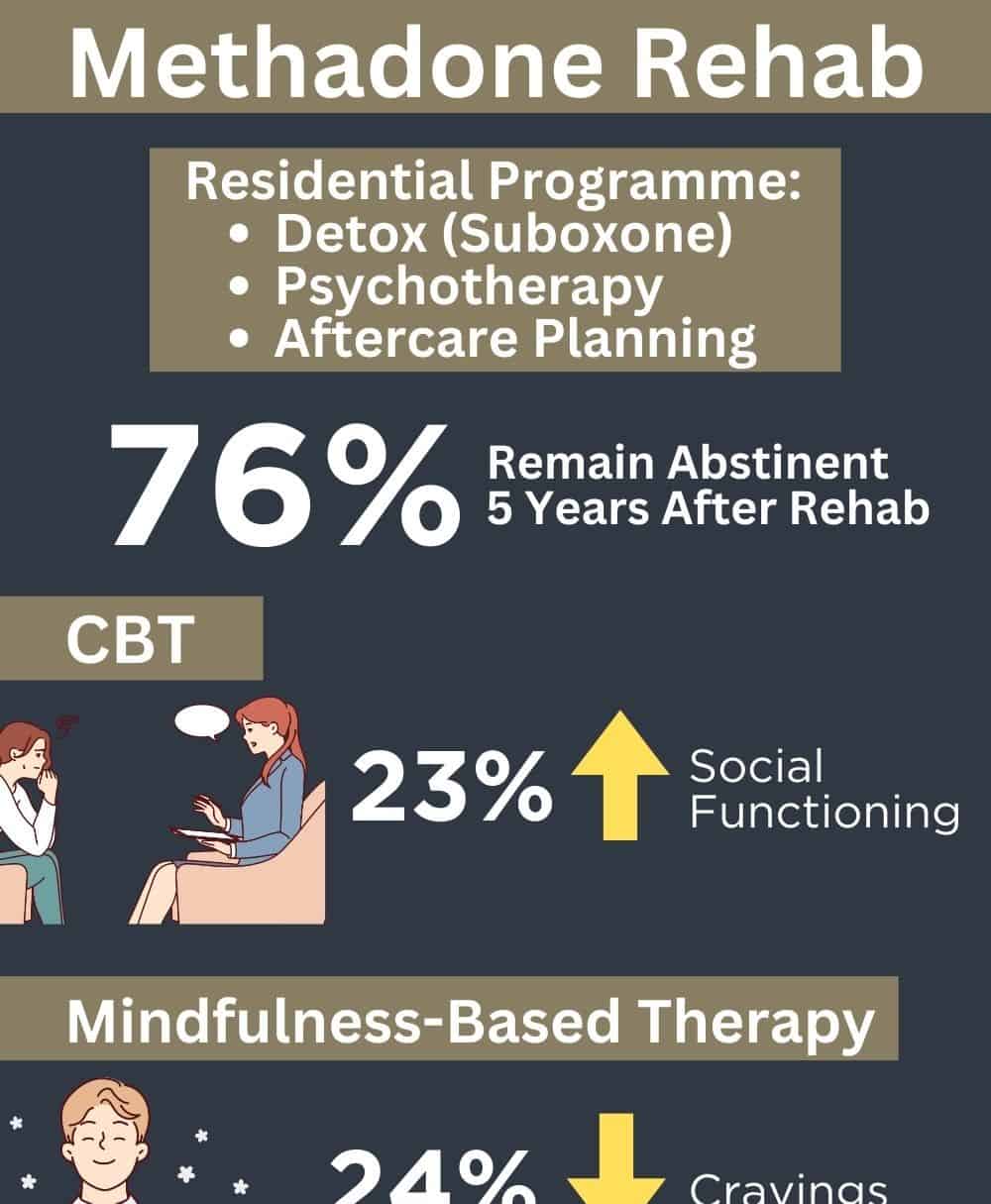
Detox
Methadone detox comprises medication-assisted treatment using Suboxone, a partial-opioid agonist that binds to mu receptors in place of methadone.
In cases where suboxone cannot be used, methadone tapering is completed, where doses are lowered by ~10% every two weeks.
Patients begin methadone detox with a Suboxone induction phase, where titration occurs over days 1-3.
The first Suboxone dose is not given until withdrawal symptoms, such as nausea and vomiting, occur at around 24-36 hours after last use [3].
Rehab
Methadone addiction developed from prescription use to manage heroin use disorder requires relapse prevention therapy in rehab, as discontinuing methadone may result in heroin relapse if not appropriately managed.
Challenging core beliefs surrounding the illicit use of methadone allows psychotherapists to reduce stigma in therapy, resulting in therapy retention.
Motivational interviewing in methadone rehab decreases craving by 18%, leading to improved treatment adherence in rehab [4].
Motivational interviewing reduces relapse rates by 11.25%, reducing the need for a prolonged rehabilitation timeframe [4].
Promoting physical exercise throughout methadone rehab is vital as it reduces feelings of hopelessness and depression by 29% over two weeks [5].

Aftercare Planning
Peer support is essential in aftercare as it provides patients with a non-judgemental role model to ask questions about methadone recovery, e.g post-acute methadone withdrawal symptoms.
As methadone withdrawal symptoms can last from 6 months to 1 year, rehab introduces patients to groups such as Narcotics Anonymous so that ongoing support is available.
CBT in methadone rehab aftercare increases social functioning by 23%, helping users improve communication skills in order to share emotions and manage cravings openly [6].
Mindfulness-based relapse prevention throughout aftercare reduces craving by 24%, leading to a long-term commitment to methadone abstinence [7].
Methadone Rehab Vs...
Narcotics Anonymous | ||
|---|---|---|
Primary Goal Of Treatment | Medicated detox, improving psychological and physical wellbeing | Provide ongoing pastoral care Peer support |
Standalone Treatment Option? | Yes | No |
Treatment Duration | 28 days | Indefinite |
Inpatient Or Outpatient? | Inpatient | Outpatient |
Relapse Prevention Strategies | Motivational Interviewing, Relapse prevention planning, medication management, goal setting, group therapy | Peer support, Journalling, Group Meetings, trigger identification |
Cost | £12,000/ 28 days | Free |
Outpatient Therapy | Private Therapy | |
|---|---|---|
Primary Goal Of Treatment | Improve psychological well-being | Improved psychological well-being, methadone relapse prevention |
Standalone Treatment Option? | Yes | No |
Treatment Duration | 6- 8 weeks | Indefinite |
Inpatient Or Outpatient? | Outpatient | Outpatient |
Relapse Prevention Strategies | Cognitive Behavioural Therapy, Mindfulness, family involvement | Cognitive Behavioural Therapy, Mindfulness, family involvement |
Cost | Free (NHS) | £35-£100 / 50-minute session |
Who Is More Likely To Need Methadone Rehab?
User A - Maintenance medication (heroin use), wishes to detox from methadone | User B - Used methadone as a primary illicit addiction | |
|---|---|---|
Methadone As Primary Addiction? | No | Yes |
Requires Full Rehab Programme? | No, unless addicted to methadone | Yes |
Sees Methadone As A “Safety Net” against future heroin relapses? | Yes | No |
Previously Familiar With Rehab Treatment Protocols? | Yes | No |
Dual Recovery For Heroin And Methadone? | No | No |
User C - Has developed a cross addiction to methadone after using it for maintenance medication (heroin use) | User D - Methadone user who tops up with heroin when methadone is unavailable | |
|---|---|---|
Methadone As Primary Addiction? | No | No |
Requires Full Rehab Programme? | Yes | Yes |
Sees Methadone As A “Safety Net” against future heroin relapses? | Yes | Yes |
Previously Familiar With Rehab Treatment Protocols? | Yes | No |
Dual Recovery For Heroin And Methadone? | Yes | Yes |
What Changes Methadone Rehab?
Medical Conditions
Combined use of lithium and suboxone changes methadone rehab by requiring medication adjustments and monitoring to avoid serotonin syndrome [8].
Co-occurring mania requires 15-minute observations in methadone rehab, as manic episodes can cause patients to become non-compliant with suboxone and therapy sessions.
Psychotic episodes in schizophrenia complicate rehab, as patients are not mentally stable enough to engage with therapeutic tasks - in these cases, staff accommodate patients' needs.
Concurrent use of fluoxetine or fluvoxamine for depression increases methadone blood concentration by 200%, necessitating the need for suboxone in rehab instead of dose tapering [9].
Chronic pain patients require physiotherapists in rehab, as methadone is no longer available to manage pain.
Methadone rehab patients taking antiretrovirals for HIV/AIDS results in adverse events in 7%, so rehab changes to include monitoring for fever and fatigue so medication can be changed [10].

Tapering From Methadone
Methadone tapering causes agitation and restlessness that disrupt group therapy, so rehab schedules group therapy sessions later in recovery when patients are more stable.
Methadone-seeking behaviour in clients tapering triggers patients in therapy who are also managing personal cravings, so rehab employs de-escalation to avoid disruptions.
Methadone in the body during tapering reduces therapeutic gains in rehab by causing lethargy and poor concentration, meaning rehab changes to schedule therapy sessions when patients are more alert (e.g., before taking methadone).
Denial
Physical injury victims addicted to methadone often believe that addiction stems from events beyond personal control, meaning rehab includes motivational interviewing to educate patients about regaining control over personal addiction.
Physical injury victims reliant on insurance claims managers rather than rehabilitation itself are preoccupied with the claims process and do not focus on rehab, causing staff to encourage patients to focus on personal recovery.
When physical injury victims foster dependency on insurance provider managers to fix financial problems and methadone addiction, there is a lack of ownership of recovery, so rehab includes CBT to encourage active participation in the methadone treatment programme.
Methadone Rehab Outcomes
76.3% remain abstinent for 5 years following methadone rehab, and aftercare planning ensures that patients are in a drug-free environment to maintain this abstinence [11].
2% of methadone-free patients resort to alcohol misuse post-rehab; however, this is prevented in rehab through psychoeducation on the harms of substituting methadone addiction for alcohol [12].
Only 23.7% relapse 5 years following treatment; however, when appropriate aftercare, such as continued psychotherapy, is given, this risk is mitigated [11].
0% of fatalities occur 12 months after treatment [13].
Methadone Rehab At Abbeycare
The methadone rehab programme at Abbeycare:
- Includes a medically assisted detox using either suboxone or medical tapering of methadone
- Challenges core beliefs about the different underlying causes of methadone addiction (e.g initially medical use, illicit, alongside other substances) to remove psychological dependency

