Alcoholism is a disease characterised by continuous heavy drinking. Until people with alcohol use disorder admit to problems with alcohol and stop drinking, the risk of alcohol use disorder continues which affects both physical and mental health.
Alcohol starts to injure the brain once it reaches the bloodstream.
Excessive consumption can lead to Alcohol-Related Brain Damage, or ARBD, which is a type of brain disorder caused by alcohol consumption. Brain shrinkage caused by alcohol abuse is permanent, as alcohol kills brain cells and grey matter.
For more information and effects click ‘Learn More’.
Family Recovery Compass is a newsletter for friends and family members who feel trapped between supporting a loved one in addiction, and protecting their own wellbeing.
Every week, we tackle one specific situation in addiction family dynamics, and deliver practical decision-making frameworks and exact dialogue scripts – that help you respond with confidence instead of reaction.
Every month, we bring you an unfiltered recovery conversation with someone who’s either experienced addiction firsthand, or works closely with those in recovery.
No sanitised success stories – just practical insights on what actually works in recovery, that you can apply, in your life too.
Recovery capital is the internal and external resource used to begin the recovery process and maintain sobriety. This combines personal, social, and community support to provide a joined-up approach that supports the addict through recovery.
Do you or a loved one need addiction treatment for alcohol or drugs? Thousands blindly walk into addiction treatment in expensive rehab centres and find that the reality doesn’t meet expectations.
If you’re considering rehab treatment, first check our ultimate guide for complete instructions on how to find the right rehab centre for you.
Take-home Naloxone kits help families and loved ones respond quickly in an opioid overdose emergency, until emergency services arrive. Kits contain nasal or injectable forms of Naloxone.
Changes in legislation mean Naloxone kits are now more widely available from pharmacies and drug services, including Abbeycare.
For additional information, click ‘Learn More’ below.
Overcoming alcohol addiction means first ceasing alcohol intake, and taking care of physical and chemical withdrawal symptoms.
Detoxing from alcohol means undergoing withdrawal from alcohol, but with the assistance of prescribed medication and detox phase, to substitute in place of the alcohol itself.
Alcohol rehab focuses on tackling the problems underneath alcoholism, such as grief, trauma, depression, and emotional difficulties, in order to reduce continuing drinking after treatment.
Inpatient services at an alcohol rehab programme provides 24 hour access to specialist care.
Alcohol home detox provides a means of semi-supervised addiction treatment in the comfort of your home. It’s often suitable for those with inescapable practical commitments, or where a reduced budget for treatment is available.
An at-home detox is the most basic detox option available from Abbeycare, and assumes you have support available, post-detox, for the other important elements of long-term addiction recovery.
The term alcoholism refers to the consumption of alcohol to the extent that the person is unable to manage their own drinking habits or patterns, resulting in side-effects that are detrimental to the quality of life and health of the alcoholic, or those around them.
An alcoholic is someone who continues to compulsively abuse alcohol in this way, despite the negative consequences to their lives and health.
Immediately following treatment, the early stages of recovery and abstinence are most vulnerable to lapses.
At Abbeycare, a structured and peer-reviewed aftercare plan is usually prepared whilst still in treatment. This comprises social, peer, and therapeutic resources individuals draw upon, following a residential treatment programme for drug or alcohol misuse.
Clinically managed residential detoxification is:
– A structured detox that uses medication-assisted treatment and regular physical health observations
– Takes place in an inpatient rehabilitation unit or hospital
– Typically lasts from 7-10 days, but in Abbeycare, it is incorporated into a 28-day rehab programme
Family Therapy at Abbeycare Scotland or Gloucester is realistic, compassionate, and appropriate for families and loved ones of addicts.
Family therapeutic interventions in residential rehabilitation have been designed to support those living with or caring for participants entering the Abbeycare Programme.
Support for families in a group setting allows for a safe, constructive, and confidential place to listen and share common experiences.
Inpatient rehab is drug and/ or alcohol treatment in a rehab centre, where patients remain on-site for the duration of inpatient rehabilitation.
It includes detoxification from drugs, therapy (group work and 1-2-1 sessions), and aftercare planning. Inpatient rehabs typically last 28 days, but this varies on an individual basis.
Long-term treatment at Abbeycare has been developed for those suffering from alcohol or drug addiction. Completing a long-term drug and alcohol inpatient programme may be the solution to problematic substance use.
Motivational Enhancement Therapy can be used by trained addiction recovery therapists to elicit internal changes within and promote long-term recovery from substance use disorder.
All the answers to addiction can be found within with this comprehensive and successful therapy concept leads to behavioural changes, reflective listening, self-motivational statements, and a comprehensive recovery process.
Outpatient drug or alcohol rehab is daytime treatment as opposed to living in a treatment facility.
Outpatient treatment is similar to inpatient in terms of the methods used to treat substance abuse. Where they differ is in their approach to recovery.
Abbeycare’s prison to rehab is a 12-week structured rehab programme which involves direct transfer from prison. The suitability of the candidate is decided by prison staff.
Short-term residential treatment programmes are the chance to press the reset button and access a therapeutic programme designed to create recovery from the use of alcohol and drugs.
Feeling stuck in a rut. Want to stop but can’t seem to achieve sobriety?
Click below.
The 12-step programme was created by alcoholics anonymous (AA), and is specifically designed to aid addicts in achieving and maintaining abstinence.
The central ethos behind the programme is that participants must admit and surrender to a divine power to live happy lives. Ideas and experiences are shared in meetings, and help is sought in an attempt to achieve abstinence.
Abbeycare’s policy to respect your privacy and comply with any applicable law and regulation regarding any personal information we may collect about you, including across our website and other sites we own and operate.
A 28-day programme that includes physical detox, CBT, and group therapy to overcome physical and psychological dependence for crystal meth addiction
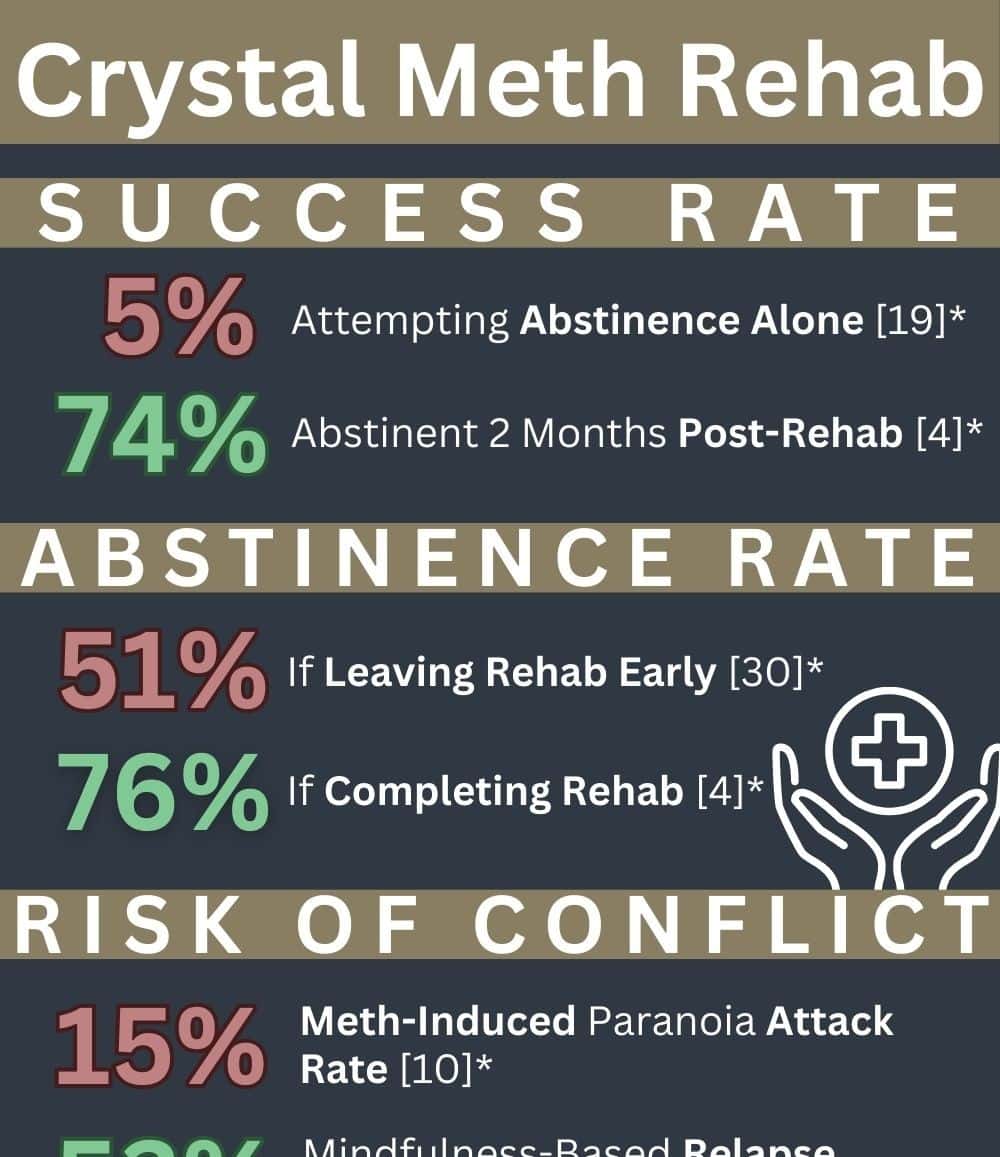
An extensive treatment regime focusing on aftercare planning for 6+ months after discharge for crystal meth addiction as 73.6% remain abstinent 2 months after rehab [4] [5]
When Is Crystal Meth Rehab Needed?
Crystal meth rehab is needed when:
Symptoms of Parkinson's, such as tremors and slow body movements, are evident due to dopaminergic neurodegeneration [6]
Cognitive impairment is evident as this is a sign of Parkinson's disease - meth users have a 76% increased risk of developing Parkinson's [7]
Methamphetamine-induced heart attack occurs, as this evidences coronary heart disease that causes death if left untreated [8]
Meth-induced psychosis is experienced, as this leads to a 2-fold increased chance of hospitalisations per year [9]
Meth-induced paranoia occurs, as research shows that 11% use a weapon and 15% attack others [10]
Legal consequences are involved - being caught in possession of crystal meth results in "up to 7 years in prison, an unlimited fine or both" [11]
Crystal meth is being used to function in day-to-day life, covering up underlying traumas that require psychological therapy to resolve
2mg+ of haloperidol daily for 4 weeks results in remission of meth-induced psychosis in 84% of detox patients [12]
Two-month prescription of 200mg/kg modafinil results in improved self-reported sleep quality for patients in meth detox [13]
Phenobarbital is the primary substance used to treat meth-induced seizures, typically given in volumes 15–20 mg/kg [14]
Rehab
Effects of crystal meth, including cognitive impairment, change cognitive behavioural therapy by simplifying activities, such as using visual cues, to meet patients' needs and abilities
In cases of cognitive deficits and short attention spans caused by meth addiction, CBT sessions shorten to 30 minutes from 60
Activity scheduling is done in CBT for those with cognitive impairments so that activities are not forgotten
Removing patterns of aggressive behaviour creates a safe and structured space for all patients in rehab to engage in addiction treatment
Removing violent behaviour in residential rehab increases abstinence to 45%, as this enables relationships to develop [15]
Aftercare
Given a relapse rate of 61% one year after treatment, relapse prevention plans focus on environmental triggers that lead to meth use, such as stress [16]
For those in addiction treatment with minimal family support, aftercare planning focuses on peer groups such as Change Grow Live
74% of meth users are unemployed at the time of treatment, so financial assistance is vital in aftercare to ensure independent living [1]
Legal assistance following rehab treatment enables patients to navigate probation requirements or ongoing criminal records that hinder societal reintegration
Employment support after treatment for crystal meth addiction helps to provide daily structure so the individual does not resort to meth use
Sober living homes increase abstinence by 35% in meth-dependent individuals, forming an essential part of aftercare where there is a risk of relapse [2]
Sober living homes provide a safe environment for recovery post-rehab in case of homelessness and unstable living conditions
Crystal Meth Rehab Vs...
Crystal Meth Rehab
Narcotics Anonymous
Standalone Treatment Option?
Yes
No
Treatment Duration
28 days
Indefinite
Inpatient/ Outpatient
Inpatient
Outpatient
Medications Used?
Yes - as required
No
Cost
~£7000 - £12,000
Free
Success Rate
73.6% [5]
21% [17]
Outpatient Treatment
Detox At Home
Standalone Treatment Option?
Yes
Yes
Treatment Duration
28+ days
28+ days
Inpatient/ Outpatient
Outpatient
Outpatient
Medications Used?
Yes - as required
Yes - as required
Cost
~£3000 or free (NHS)
~£1000 or free (NHS)
Success Rate
62.2% [18]
5% without treatment [19]
What Changes Crystal Meth Rehab?
Mental Health Issues
Combined haloperidol/samidorphan prescriptions require more medical supervision in as blood pressure drops by 2.63 mm/Hg on average [20]
Anti-depressant medication causing emotional blunting changes rehab by focusing on reframing negative thoughts in cognitive behavioural therapy
Anti-depressants used in crystal meth addiction treatment increase the risk of suicide attempts by 2.38 times, so rehab focuses on suicide prevention [21]
Using psychiatrist-led crisis management allows for immediate changes to treatment plans and the implementation of continually updated risk assessments
8% of those recovering from crystal meth addiction attempt suicide, so rehab removes tools that could be used for self-harm [22]
Suppressed appetite during crystal meth addiction adapts rehab to incorporate food care plans to support nutrition in detox
Co-Occurring Medical Conditions
Cellulitis patients wanting to detox from meth use require cellulitis treatment alongside rehab as this condition results in death in 1.1% [23]
In case of severe infection in cellulitis and abscesses, occurring in 20% of meth users, hospitalised treatment is required before rehab can begin [24]
Severe meth mouth will delay rehab if patients require jaw reconstruction surgery, as this takes place in a hospital and is not provided as part of a rehab programme
Pain and psychological stress caused by invasive dental procedures prevent a patient from fully engaging in the programme, so physical recovery is required before meth rehab starts
Ongoing medical appointments for chronic conditions, such as diabetes, require travel outside of rehab, as specialist medical professionals are not available on-site
For stroke/cardiac arrests occurring in rehab clinics, patients go to hospital to get help while crystal meth treatment is paused
History Of Violence
The admissions process considers violent criminal history as violent behaviour is hazardous to other patients
Assessing violence before drug rehab admission allows staff to know how frequently to observe patients and become aware of any triggers that could cause violence - these are minimised where possible
In cases of extreme violent behaviour and a criminal history, a high-security rehab facility is more appropriate, so this is decided upon before admittance
Rehab becomes a point of referral in violent cases that require 24/7 observation so the correct facility is chosen
Mindfulness-Based Relapse Prevention is 53% effective at reducing violent behaviour in crystal meth users [25]
At Abbeycare, all history of violence and aggressive behaviour is assessed on a case-by-case basis
Cognitive Deficits
In cases of severe cognitive deficits, informed consent cannot be given as the patient does not have the mental capacity to agree to the meth rehab programme - further assessment is needed
Poor attention span results in relapse in 69%, so rehab changes to incorporate shorter therapy sessions and a reduced timetable [27]
An 80% prevalence of cognitive deficits in meth users necessitates assessment during pre-admission to gauge if the programme is suitable and if any adaptations are required [26]
Using visual aids and more straightforward language in CBT for those with cognitive deficits helps improve comprehension and engagement
Those with an IQ <50 show no improvements following a CBT anger management course, so rehab involves IQ assessments before deciding on specific treatment [28]
Crystal Meth Related Dental Treatment
NHS does not provide free treatment for those who have damaged teeth due to crystal meth. However, some may qualify for free treatment due to:
Insurance policies for crystal meth rehab do not cover crystal meth-related dental work as standard - individual policies must be checked with the insurance provider.
Following detox and rehab, ongoing therapy is required to ensure that patients do not relapse
Leaving rehab early results in an abstinence rate ranging 51-52%, whereas undergoing full-length rehab increases abstinence rates to 76-78% [30]
Attempting abstinence alone has a success rate of 5%, so forgoing interventions is unlikely to result in sobriety [19]
Crystal Meth Rehab At Abbeycare
The crystal meth rehab programme at Abbeycare is a 28-day programme, ensuring a period of up to 10 days for detox.
Close monitoring for pain, sweating and fever is completed during the inpatient programme and presenting symptoms are managed medically if necessary.
Pastoral support is given throughout the programme, and once detox is complete, patients are provided with psychotherapy to explore triggers and causes for crystal meth use.
Abbeycare will help you establish personal routines, including daily activities to help you rebuild the structure you may have lost during crystal meth addiction, including mealtimes, hobbies and self-care.
Our multidisciplinary teams manage co-occurring drug addictions and psychological withdrawal symptoms; however, for severe conditions (e.g., schizophrenia), we will signpost you to more specialised care.
About the author
Philippa Scammell
Philippa Scammell MSci holds an integrated Master's degree in Psychology
from the University of York and has completed undergraduate statistical studies at Harvard University. Philippa has substantial experience in inpatient psychiatric care (Foss Park Hospital York), Research in Psychology at University of York, and group therapy facilitation (Kyra Women's Project). Philippa writes on clinical psychology and addiction recovery. Content reviewed by Laura Morris (Clinical Lead).