



KEY TAKEAWAYS
Crystal meth addiction is defined as:

Physiological Indicators Of Crystal Meth Addiction
Peptic ulcers occur in 75% of crystal methamphetamine consumers compared to non-users [1].
15% of individuals who inject methamphetamine report injection site abscesses [2].
Meth induces cell death in the dopaminergic system.
Methamphetamine consumption releases dopamine while inhibiting norepinephrine uptake, causing hypertension, cardiac arrhythmia, and tachypnea [3].
The combination of high acidity in meth and its ability to cause xerostomia leads to tooth decay, or "meth mouth" in users.
Methamphetamine consumption leads to systolic ventricular dysfunction that causes idiopathic congestive cardiomyopathy.
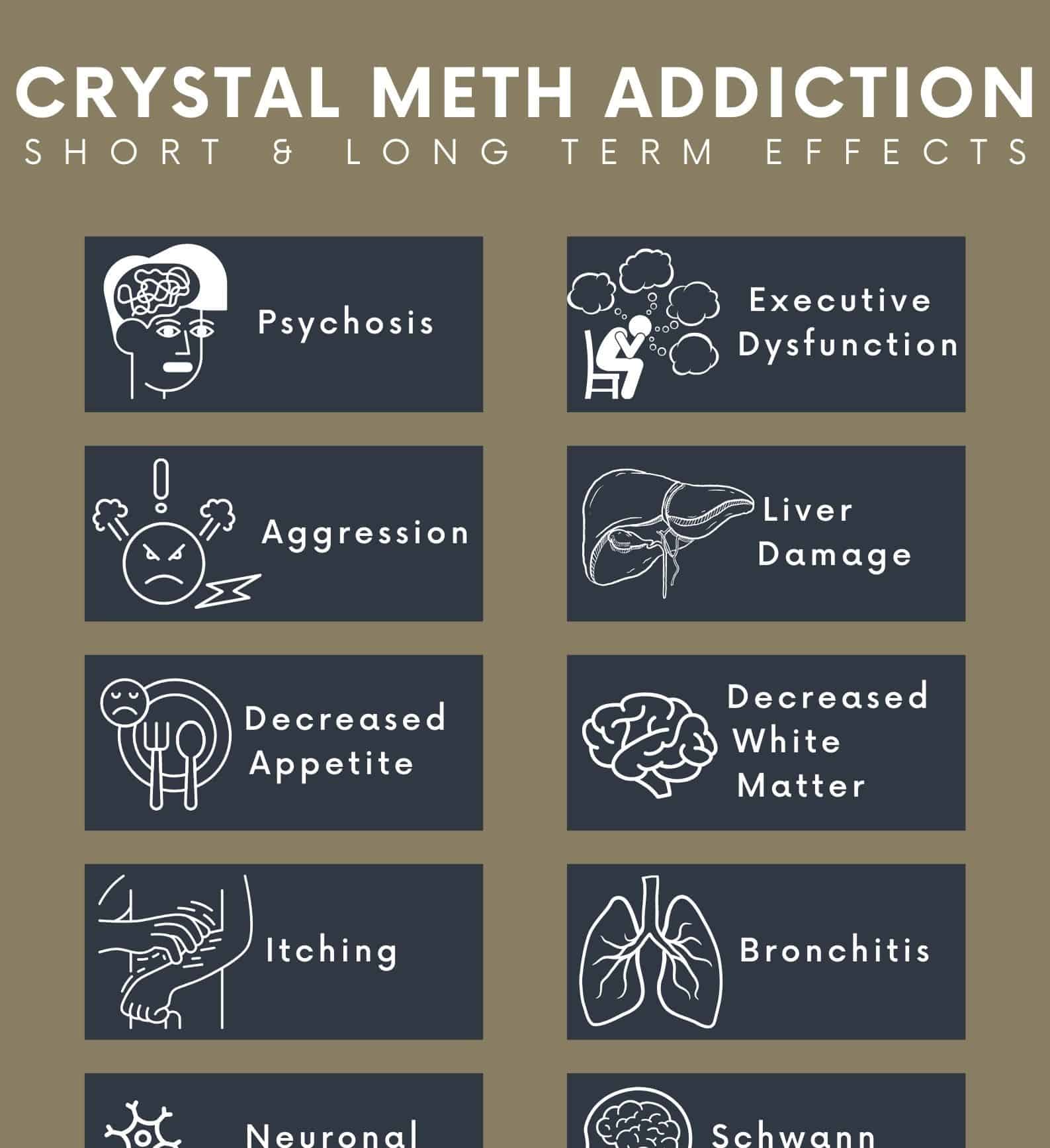
Having methamphetamine-associated Pulmonary Arterial Hypertension increases the chances of visiting the emergency department because of the condition by 230% compared to the idiopathic variation [4].
2mg/kg of meth alters the liver cell structure, with damage being observed 24 hours or more after the last drug use [5].
20% of crystal methamphetamine users have rhabdomyolysis [6].
Psychological Indicators Of Crystal Meth Addiction
Crystal meth induces euphoric effects that are felt for 6-12 hours [1].
21% of meth-associated hallucinations are tactile [7].
Auditory and visual hallucinations account for 85% and 46% of all reported meth-related psychosis [7].
The dose range for causing psychosis during consumption is 55–640 mg and is induced up to 34 hours post-drug use [7].
Tactile hallucinations lead to formication and skin-picking because individuals feel crawling insects that are not real [7].
2mg/kg of meth leads to a 40% decrease in GABAergic neuronal firing 24 hours after injecting the drug, reinforcing meth cravings [8].
Behavioural Indicators Of Crystal Meth Addiction
Being addicted to crystal meth leads to a 50% increase in sexual behaviour compared to non-users [9].
A 2013 case study by Mckenna evidenced that alertness and vigilance are behavioural indicators of meth substance abuse [10].
A self-report study by Newton and colleagues reported that 56% show pleasure-seeking behavior in meth use, while 27% exhibit impulsive behavior [11].
Repetitive limb movements (i.e., stereotype) are caused by acute administration of >3.0mg/kg methamphetamine [12].
Violence is a common behavioural indicator of active crystal meth addiction, caused by meth-induced psychosis in 22-33% [13].
Crystal Meth Addiction Vs Addiction To Other Drugs
Addiction Potential
Meth | Marijuana | Heroin | Ecstasy | |
|---|---|---|---|---|
Half-Life | 9-12 hours | 1.6–59 hours | 8-22 minutes | 3.6 - 8 hours |
Alcohol | Oxycodone | Benzodiazepines | |
|---|---|---|---|
Half-Life | 4.0–4.5 hours | 3.2 - 5.6 hours | 1.5 - 200 hours |
Withdrawal Symptoms
Meth | Marijuana | Heroin | Ecstasy | |
|---|---|---|---|---|
Fatigue | Yes | No | Yes | Yes |
Memory Problems | No | No | No | Yes |
Fever | No | Yes | Yes | No |
Yawning | No | No | Yes | No |
Tremors | Yes | No | Yes | No |
Paranoia | Yes | No | No | Yes |
Muscle Pain | No | No | Yes | No |
Alcohol | Oxycodone | Benzodiazepines | |
|---|---|---|---|
Fatigue | No | Yes | No |
Memory Problems | Yes | No | Yes |
Fever | Yes | No | No |
Yawning | No | Yes | No |
Tremors | Yes | No | No |
Paranoia | No | No | Yes |
Muscle Pain | No | Yes | Yes |

Short Term Effects
Meth | Marijuana | Heroin | Ecstasy | |
|---|---|---|---|---|
Increased/ Decreased Appetite | Decreased | Increased | Decreased | Decreased |
Psychosis | Yes | Yes | Yes | Yes |
Itching | Yes | No | Yes | No |
Drowsiness | No | Yes | Yes | No |
Aggression | Yes | Yes | No | Yes |
Alcohol | Oxycodone | Benzodiazepines | |
|---|---|---|---|
Increased/ Decreased Appetite | Increased | Decreased | Decreased |
Psychosis | No | Yes | Yes |
Itching | Yes | Yes | No |
Drowsiness | Yes | Yes | Yes |
Aggression | Yes | No | Yes |
Long Term Effects
Meth | Marijuana | Heroin | Ecstasy | |
|---|---|---|---|---|
Bronchitis | Yes | Yes | Yes | No |
Executive Dysfunction | Yes | Yes | Yes | Yes |
Constipation | No | No | Yes | No |
Liver Damage | Yes | No | No | Yes |
Alcohol | Oxycodone | Benzodiazepines | |
|---|---|---|---|
Bronchitis | No | No | No |
Executive Dysfunction | Yes | No | Yes |
Constipation | No | Yes | Yes |
Liver Damage | Yes | No | No |
Neurological And Brain Changes
Meth | Marijuana | |
|---|---|---|
Neurotransmitter Behaviour | Blocks dopamine re-uptake | Activates CB1 receptors |
Changes In Brain Regions | Increased neuronal death in the striatum, prefrontal cortex, and hippocampus | Reduced grey matter in: Medial temporal cortex Orbitofrontal cortex |
Neurobiological Changes | Decreased gliogenesis and damage to oligodendrocytes and Schwann cells Decreased white matter | Induces CB1 receptor downregulation Synaptic pruning in GABAergic pathways Desynchronization of PFC neuronal networks |
Heroin | Ecstasy | |
|---|---|---|
Neurotransmitter Behaviour | Mu opioid activation | Increased SERT transmission |
Changes In Brain Regions | Reduced white matter in the Nucleus Accumbens | Serotonergic system Dopaminergic system GABAergic system |
Neurobiological Changes | Changes to the locus ceruleus Suppressed release of noradrenaline | Reduced serotonin levels Degeneration of serotonin terminals Reduced serotonin transporters |
Alcohol | Oxycodone | Benzodiazepines | |
|---|---|---|---|
Neurotransmitter Behaviour | Increased inhibitory transmission (GABA, adenosine) | Increased dopamine levels during use | Enhanced GABA at GABA-A receptor |
Changes In Brain Regions | Frontal lobe damage Widespread cerebral atrophy | Frontal lobe damage Decreased amygdala transmission | Reduced white matter Reduced prefrontal cortex functioning |
Neurobiological Changes | Widespread neural degeneration Reduced limbic system function | Reduced medial orbitofrontal cortex transmission Reduced striatal dopamine transmission | GABA-A uncoupling after short-term and long-term |
When Crystal Meth Use Becomes Crystal Meth Addiction
Usage
Crystal Meth Use | Crystal Meth Addiction | |
|---|---|---|
Effects From Low Doses | Yes | No |
Frequent Use | No | Yes |
Method | Smoking and snorting | Injecting |
Dependence
Crystal Meth Use | Crystal Meth Addiction | |
|---|---|---|
Type Of Dependence | Psychological | Physical and psychological |
Needs Meth To Function? | No | Yes |
Withdrawal
Crystal Meth Use | Crystal Meth Addiction | |
|---|---|---|
Attempts To Stop | Easier to stop Does not require detox | More difficult to stop
Requires detox |
Cravings | Immediate psychological craving | Physical and psychological cravings |
Withdrawal Symptoms | Acute symptoms 1 - 2 days | Chronic symptoms Up to 7 days |
Relapse | Triggers are unknown | Greater awareness of triggers |
What Factors Change Crystal Meth Addiction?
Method Of Usage
68.1% of first-time meth consumers choose smoking, with an absorption rate of 37.4%, leading to physical addiction and symptoms of withdrawal [14] [15].
When users begin to snort meth, there is a 79% bioavailability rate leading to physical dependence more quickly [16].
62% of injection-related overdoses are caused by unknown meth potencies, becoming a warning for dependent individuals to get help and support for meth addiction [17]
Crystal meth addiction changes with transrectal use, as this causes fatal concentrations of crystal meth to accumulate in the femoral vein [18].

Potency Of Batch
Low-potency (<93%) crystal meth does not elicit immediate severe addiction, though users become psychologically addicted to the euphoria.
A new variation of crystal meth, called P2P meth, is over 93% potent, making it more addictive than standard crystal meth [19].
First-time users who consume very potent doses (~97%) of crystal meth become addicted more quickly than someone who uses less potent doses.
Meth potency and purity of ~97% also lead to impulsive behavior, where sporadic use escalates into compulsive addiction.
The average potency of meth has increased from 95.1% to over 97% between 2012 and 2019 since 2015, making crystal meth more addictive [20].
Crystal meth addiction becomes unpredictable when it is cut with fentanyl, as this substance is 100 times stronger than morphine and not always declared by distributers.
Early Exposure To Crystal Meth
Meth exposure in utero causes a 3.9% reduction in white matter connections in the left orbital-frontal cortex, leading to poor future decision-making and drug-seeking behaviour [21].
Prenatal exposure to meth causes smaller subcortical volumes, resulting in poor education and negative health habits relating to meth use [22].
55% of children exposed to crystal meth in home-based meth labs test positive for toxic levels of chemicals used in production, causing delayed neurological development and desensitization to meth [23].
Children who are exposed to meth from an early age are more likely to exhibit intergenerational patterns of meth abuse and neglectful parenting compared to unexposed children [24].
Combined With Other Drugs
Combining meth with other drugs leads to habituation of the combined effects; users no longer take meth by itself due to being physically addicted to more than one drug.
Mixing meth with other stimulants, such as MDMA, increases tolerance to meth, so individuals consume more meth to feel the same effects as before polydrug use.
(Read about detox from ecstasy here, or about ecstasy rehab here.)
Polydrug use in meth addiction further complicates the onset of withdrawal symptoms and subsequent detox from the drug, as not all substances are known or declared to healthcare professionals.
Cocaine use during active meth addiction enhances the stimulant effects of both drugs, leading to enhanced euphoria and addictive potential.
59% of active meth consumers use marijuana to overcome meth's side effects, resulting in a higher risk of depression compared to non-users [25].
52% of combined meth and marijuana users experience psychotic symptoms, but users continue using meth to self-medicate [26].
Violence
25% of meth users break entry to properties to steal money for drugs, but this limits family support, causing addiction to persist without intervention [27].
53% of meth users exhibit violent behaviour, leading to disengagement with social support, enabling addiction to escalate [28].
Incarceration for meth-related violence leads to a 37.8% increased risk of meth relapse to occur when leaving prison [29].
Cases with a violent criminal history are not permitted in meth rehab facilities; this is a barrier to receiving addiction support, where health deteriorates when help is not sought quickly enough.
A 2015 study by Hobkirk and colleagues showed that all cases of meth-related violence are associated with symptoms of PTSD, further reducing the ability to seek drug addiction support [30].

