Alcoholism is a disease characterised by continuous heavy drinking. Until people with alcohol use disorder admit to problems with alcohol and stop drinking, the risk of alcohol use disorder continues which affects both physical and mental health.
Alcohol starts to injure the brain once it reaches the bloodstream.
Excessive consumption can lead to Alcohol-Related Brain Damage, or ARBD, which is a type of brain disorder caused by alcohol consumption. Brain shrinkage caused by alcohol abuse is permanent, as alcohol kills brain cells and grey matter.
For more information and effects click ‘Learn More’.
Family Recovery Compass is a newsletter for friends and family members who feel trapped between supporting a loved one in addiction, and protecting their own wellbeing.
Every week, we tackle one specific situation in addiction family dynamics, and deliver practical decision-making frameworks and exact dialogue scripts – that help you respond with confidence instead of reaction.
Every month, we bring you an unfiltered recovery conversation with someone who’s either experienced addiction firsthand, or works closely with those in recovery.
No sanitised success stories – just practical insights on what actually works in recovery, that you can apply, in your life too.
Recovery capital is the internal and external resource used to begin the recovery process and maintain sobriety. This combines personal, social, and community support to provide a joined-up approach that supports the addict through recovery.
Do you or a loved one need addiction treatment for alcohol or drugs? Thousands blindly walk into addiction treatment in expensive rehab centres and find that the reality doesn’t meet expectations.
If you’re considering rehab treatment, first check our ultimate guide for complete instructions on how to find the right rehab centre for you.
Take-home Naloxone kits help families and loved ones respond quickly in an opioid overdose emergency, until emergency services arrive. Kits contain nasal or injectable forms of Naloxone.
Changes in legislation mean Naloxone kits are now more widely available from pharmacies and drug services, including Abbeycare.
For additional information, click ‘Learn More’ below.
Overcoming alcohol addiction means first ceasing alcohol intake, and taking care of physical and chemical withdrawal symptoms.
Detoxing from alcohol means undergoing withdrawal from alcohol, but with the assistance of prescribed medication and detox phase, to substitute in place of the alcohol itself.
Alcohol rehab focuses on tackling the problems underneath alcoholism, such as grief, trauma, depression, and emotional difficulties, in order to reduce continuing drinking after treatment.
Inpatient services at an alcohol rehab programme provides 24 hour access to specialist care.
Alcohol home detox provides a means of semi-supervised addiction treatment in the comfort of your home. It’s often suitable for those with inescapable practical commitments, or where a reduced budget for treatment is available.
An at-home detox is the most basic detox option available from Abbeycare, and assumes you have support available, post-detox, for the other important elements of long-term addiction recovery.
The term alcoholism refers to the consumption of alcohol to the extent that the person is unable to manage their own drinking habits or patterns, resulting in side-effects that are detrimental to the quality of life and health of the alcoholic, or those around them.
An alcoholic is someone who continues to compulsively abuse alcohol in this way, despite the negative consequences to their lives and health.
Immediately following treatment, the early stages of recovery and abstinence are most vulnerable to lapses.
At Abbeycare, a structured and peer-reviewed aftercare plan is usually prepared whilst still in treatment. This comprises social, peer, and therapeutic resources individuals draw upon, following a residential treatment programme for drug or alcohol misuse.
Clinically managed residential detoxification is:
– A structured detox that uses medication-assisted treatment and regular physical health observations
– Takes place in an inpatient rehabilitation unit or hospital
– Typically lasts from 7-10 days, but in Abbeycare, it is incorporated into a 28-day rehab programme
Family Therapy at Abbeycare Scotland or Gloucester is realistic, compassionate, and appropriate for families and loved ones of addicts.
Family therapeutic interventions in residential rehabilitation have been designed to support those living with or caring for participants entering the Abbeycare Programme.
Support for families in a group setting allows for a safe, constructive, and confidential place to listen and share common experiences.
Inpatient rehab is drug and/ or alcohol treatment in a rehab centre, where patients remain on-site for the duration of inpatient rehabilitation.
It includes detoxification from drugs, therapy (group work and 1-2-1 sessions), and aftercare planning. Inpatient rehabs typically last 28 days, but this varies on an individual basis.
Long-term treatment at Abbeycare has been developed for those suffering from alcohol or drug addiction. Completing a long-term drug and alcohol inpatient programme may be the solution to problematic substance use.
Motivational Enhancement Therapy can be used by trained addiction recovery therapists to elicit internal changes within and promote long-term recovery from substance use disorder.
All the answers to addiction can be found within with this comprehensive and successful therapy concept leads to behavioural changes, reflective listening, self-motivational statements, and a comprehensive recovery process.
Outpatient drug or alcohol rehab is daytime treatment as opposed to living in a treatment facility.
Outpatient treatment is similar to inpatient in terms of the methods used to treat substance abuse. Where they differ is in their approach to recovery.
Abbeycare’s prison to rehab is a 12-week structured rehab programme which involves direct transfer from prison. The suitability of the candidate is decided by prison staff.
Short-term residential treatment programmes are the chance to press the reset button and access a therapeutic programme designed to create recovery from the use of alcohol and drugs.
Feeling stuck in a rut. Want to stop but can’t seem to achieve sobriety?
Click below.
The 12-step programme was created by alcoholics anonymous (AA), and is specifically designed to aid addicts in achieving and maintaining abstinence.
The central ethos behind the programme is that participants must admit and surrender to a divine power to live happy lives. Ideas and experiences are shared in meetings, and help is sought in an attempt to achieve abstinence.
Abbeycare’s policy to respect your privacy and comply with any applicable law and regulation regarding any personal information we may collect about you, including across our website and other sites we own and operate.
Providing CBT to aim to reduce cravings and depression by 58-76% [2]
Providing ongoing co-ordinated care with psychiatrists, GPs, and social services to aid recovery [3]
Below, we discuss possible approaches that meet the specific rehab needs around amphetamines. Not all treatment centres will provide these specific interventions.
For an overview of the Abbeycare programme contents for amphetamines rehab, click here.
When Is Amphetamine Rehabilitation Necessary?
Psychological Addiction
Psychological addiction to amphetamines means rehab is necessary as 56% are reliant on the drug to relieve anxiety, and the frequency of psychological cravings is 42% higher compared to non-anxious users [3]:
Weekly CBT sessions provide education about engaging in ‘low-risk’ activities (e.g. deep breathing) rather than ‘high-risk’ activities (e.g. consuming 1.5g amphetamines daily) to alleviate fears of being scrutinised in social situations
SSRIs (e.g. Citalopram) or beta-blockers (e.g. Propranolol) are provided alongside therapy to manage anxiety and low mood caused by disrupted neurotransmission in the central nervous system after chronic amphetamine misuse (>12 months)
Daily monitoring and mental status examinations take place using the Mini-International Neuropsychiatric Interview (MINI) to mitigate the 210% increased risk of suicidal behaviour in users with anxiety [4]
Amphetamine rehabilitation addresses psychological addiction by identifying and treating the underlying cause because 16 – 23% relapse within 3 months after struggling with anxiety or depression [5].
Prolonged Cravings
Prolonged cravings mean amphetamine rehabilitation is necessary as 68% experience cravings within 72 hours of withdrawal, lasting up to 5 weeks with detox alone, and for every one-point increase in craving scores the risk of amphetamine use increases by 0.38% [6][7].
The probability of amphetamine use decreases by 2.45% for every week of rehab treatment completed because physical and psychological dependence can be addressed with [7]:
150mg Bupropion (sustained release) twice daily to inhibit the reuptake of dopamine and norepinephrine alongside weekly CBT to reduce amphetamine cravings by 67% within 12 weeks [2]
A minimum of 20 minutes of exercise daily (e.g. cycling, walking) to reduce cravings by up to 72% within 50 minutes of physical activity after previously consuming methamphetamine 3 - 4 days per week for around 6 years [8]
50mg oral Hydroxyzine daily for 10 days and weekly CBT focused on identifying triggers, developing problem-solving skills, and enhancing self-efficacy to manage mood disturbances and reduce cravings by 53% within 40 days [9]
Cognitive Impairment
Cognitive impairment means rehab is necessary as cortical grey matter is reduced by 4.2% in the frontal lobe after daily amphetamine misuse, resulting in a 16 – 30% reduction in attention/psychomotor speed and learning/memory abilities (e.g. delayed recall)[10][11]:
Weekly integrated CBT with mindfulness exercises, trigger analysis, and psychoeducation improves cognitive function (e.g. speed/accuracy of memory retrieval) by 11 – 16% within 6 months [12]
Some rehabs provide daily 30-minute cognitive training sessions to reduce response times by 36.2% using the Trail Making Test to enhance working memory abilities (e.g. processing speed, executive function) after 10 years of drug use [13]
Some rehabs provide 60 minutes of weekly Tai Chi exercise training to reduce attention bias by up to 87% by integrating mindful breathing and movement to reverse cognitive impairments caused by 8 years of amphetamine misuse [14]
Aggression And Emotional Instability
The 83% increased risk of physical aggression after 7 years of amphetamine abuse means rehabilitation is necessary because up to 51% also experience psychotic symptoms (e.g. hallucinations), increasing the odds of violent behaviour (e.g. assault, property damage) by 2-fold [15][16].
Some amphetamine rehabilitation programmes incorporate anger management training into weekly therapy to reduce physical and verbal aggression, anger, and hostility by 13 – 26% after helping patients to [17]:
Identify physical, cognitive, emotional, and behavioural cues that lead to anger (e.g. hearing a hurtful comment = hostile self-talk + frustration = raised voice + clenched fists)
Develop personal anger control plans using timeouts, thought-stopping, deep-breathing exercises, and progressive muscle relaxation
Engage in cognitive restructuring and assertiveness training using the ABCD and Conflict Resolution Models to appropriately respond to conflict (e.g. having a calm conversation) [18]
Amphetamine rehabilitation adopts the AGRO+ method to deescalate aggressive behaviour whilst minimising rapid movements during observations and providing quiet rooms with moderate lighting to encourage calmness and feelings of safety:
Assess: A patient-centred approach is used to calmly discuss triggers of agitation
Guage: Clinicians attempt to understand the situation whilst being mindful about using language that may escalate the situation
Respond: Clinicians stand at a safe distance in an open posture whilst reflectively listening and asking open-ended questions
Observe: Verbal and nonverbal cues are assessed (e.g. body language, facial expressions) to evaluate whether the de-escalation techniques are working
Positive Reinforcement: As de-escalation occurs, the behaviour is positively reinforced by the clinician offering a glass of water or a snack [19]
Amphetamine Rehabilitation Process
Detox
Amphetamine detox is done by managing withdrawal symptoms (e.g. Anhedonia, bruxism, compulsive skin picking) with SSRIs, antihistamines, and NSAIDs as needed during a 28-day inpatient rehabilitation programme.
Rehab
Addressing Depression, Irritability And Apathy
Therapy during amphetamine rehabilitation addresses depression, irritability, and apathy experienced by 19 – 38% of patients during the first 2 weeks of treatment by developing coping skills, practising mindfulness (e.g. deep breathing), building self-esteem and emotional resilience to [6]:
Reduce depression by 53% within 6 months of receiving weekly psychotherapy during a 90-day programme for chronic methamphetamine abuse (20 uses per month for 11 years) [12]
Reduce irritability by up to 39% within 12 months of receiving weekly Dialectical Behavior Therapy and 90-minute skills training sessions focused on problem-solving, behavioural rehearsal, and feedback [20]
Reduce apathy (e.g. loss of interest in activity, listlessness, indecision, and vacillation) by 44% within 5 months of receiving weekly 60-minute integrated CBT with motivational interviewing, mindfulness practice, and harm reduction [21]
Depression, irritability, and apathy are likely to be exacerbated in 35% of amphetamine rehabilitation patients with comorbid depressive, anxiety or psychotic disorders, potentially requiring SSRIs (e.g. citalopram) or antipsychotics (e.g. Quetiapine) alongside therapy to aid emotion regulation [12].
Dopamine-Enhancing Activities
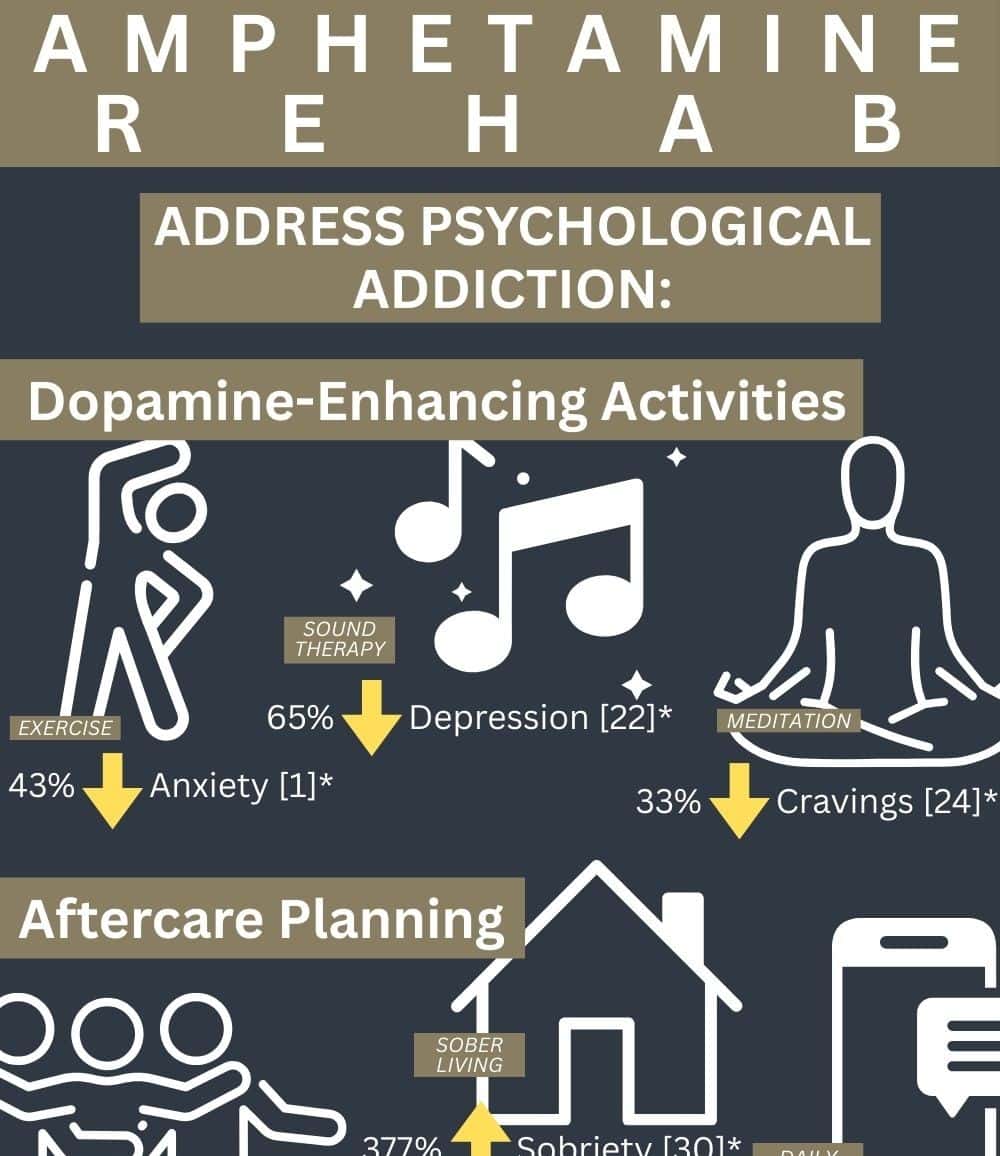
Amphetamine rehabilitation encourages 1 hour of aerobic exercise (e.g. walking, running) or strength training (e.g. using weights or resistance bands) per day to increase dopamine expression by 27.3% and reduce anxiety, depression, and psychotic symptoms (e.g. hallucinations) by 43.2% [1].
Amphetamine rehabilitation provides 25-minute sessions of music and sound therapy using headphones or earbuds in a darkened or dim, quiet room to reduce cravings, anxiety, and depression by up to 65% within 30 days after activating dopaminergic pathways in the mesolimbic reward circuitry [22].
Amphetamine rehabilitation delivers 60 – 120 minutes of weekly guided mindfulness and meditation (e.g. deep breathing, body scan) to increase extracellular dopamine release in the ventral striatum by 65%, resulting in a 32.8% reduction in cravings within 1 month of cessation [23][24].
Sleep Hygiene Plans
Amphetamine rehabilitation addresses circadian rhythm disruptions caused by a 7 - 9% reduction in D2 receptor availability in the caudate and putamen regions after chronic amphetamine misuse (1g daily for >12 months) by [25]:
Educating patients about sleep hygiene practices, including daily physical exercise, taking short naps before 5 p.m., practising relaxation techniques when unable to fall asleep within 20 minutes, and attempting to wake and sleep at similar times each night
Determining whether insomnia is present during treatment (e.g. 2 – 3 nights of sleep disturbances per week for >1 month) and administering 7.5mg zopiclone before bed whilst patients engage in a relaxing presleep routine (e.g. a warm bath, imagery) [26]
Zhu et al (2018) found that 74% were abstinent and sleep disturbances (e.g. night terrors, difficulties falling asleep) decreased by 24% within 6 months of engaging in sleep hygiene practices (e.g. daily exercise, reading) during amphetamine addiction treatment [27].
Some amphetamine treatment facilities provide weekly 30 – 60-minute acupuncture sessions alongside CBT to enhance sleep quality (-4.10 decrease in PSQI scores) and aid recovery, resulting in 71.4% being amphetamine-free after 2 months [28].
Aftercare planning in rehab for amphetamine addiction includes up to 4 years of post-treatment support (e.g. harm reduction, weekly telephone monitoring, linkage assistance), rather than the standard 6 – 12 months, to address the 77% 5-year relapse rate by [29]:
Encouraging ongoing attendance at weekly mutual-help meetings (e.g. Crystal Meth Anonymous) to increase the likelihood of continued abstinence by 26% after engaging in 12-step work and drug-free activities whilst having a sponsor [30]
Liaising with housing/financial services to organise funding and long-term stays in sober living environments to increase the odds of ongoing sobriety by 377% after treatment [30]
Providing weekly continuing care group meetings (or as often as needed) in an outpatient setting to increase the chances of abstinence by 19% after receiving at least 90 days of psychoeducation, family counselling, and regular drug tests [19][30]
Offering motivational interviewing with personalised feedback to strengthen intrinsic (e.g. personally rewarding) motivation because higher levels of recovery motivation increase the likelihood of long-term abstinence by 11% [30]
Liaising With Psychiatric Care
Amphetamine rehabilitation centres liaise with psychiatric care during aftercare planning to address anxiety disorders (e.g. Social Anxiety Disorder, Post-traumatic stress disorder) present in 26.2% 3 years post-treatment by [4]:
Referring patients to mental health services (e.g. CAMHS) to receive 4 – 16 hours of psychiatrist contact per week to mitigate the 210% increased risk of post-treatment suicide attempts by monitoring thoughts of self-harm and developing individualised safety plans (e.g. removing access to lethal means) [4][31]
Coordinating care with primary care providers (e.g. GPs) to prescribe anti-anxiety medication (e.g. propranolol, citalopram) and conduct monthly evaluations to mitigate the 80% increased risk of psychiatric hospitalisation post-discharge [4]
Working with licensed clinical social workers to contact patients daily via text or email for reminders about upcoming appointments, inquiries about medication adherence, and crisis management to reduce the 80 – 120% risk of anxiety-induced relapse [4]
Rebuilding Routines And Goal Setting
Aftercare planning in amphetamine rehabilitation includes rebuilding routines and goal setting to address the 20% reduction in everyday functioning (e.g. communication, household skills, medication management) after 10 years of drug abuse by [32]:
Collaboratively developing individual-specific plans to provide structure and stability whilst encouraging behaviour change and drug-free living to replace a lifestyle dominated by seeking, using, and recuperating from amphetamines
Setting short-term goals using the SMART approach (e.g. attend 90 meetings in 90 days) with regular counselling for clinicians to review goals and make recommendations for the upcoming week [19]
Establishing daily schedules to avoid spending extended periods alone without planned activities (e.g. healthy breakfast, 1-hour of exercise, medical appointment, 12-step meeting) [19]
Some treatment facilities use contingency management to positively reinforce patients who achieve recovery goals (e.g. complete abstinence from amphetamines for 1 week) with up to £15 for every negative urine test submitted, increasing the odds of 12-month abstinence by 2-fold [33].
Harm reduction and building sober support networks
Detox?
Yes
Yes
Structure And Routine
7 - 14 day detox
CBT, exercise, mindfulness, cognitive training
Aftercare with up to 4 years of check-ups
Up to 12 hours of contact p/wk to monitor withdrawal
1-2 therapy sessions weekly
1-year aftercare
Relapse Management?
Yes
Yes
Duration
4 - 12 weeks
Up to 24 weeks
Public Or Private Treatment?
Both
Public
Private Counselling
Mutual Aid Groups
Full Treatment Programme?
No
No
Purpose Of Treatment
To identify triggers and develop coping strategies
Building self-esteem whilst managing stress and low mood
To provide a sense of community
To help patients stay motivated and accountable during recovery
Detox?
No
No
Structure And Routine
1-1 weekly counselling
Typically uses a CBT or motivational approach
Session content tailored to individual needs
Daily or weekly in-person or online meetings with peer-led discussions about:
Mental + physical impacts of previous drug abuse
Recovery experiences/tips
Relapse Management?
Yes
Yes
Duration
12 weeks
Ongoing
Public Or Private Treatment?
Private
Public
How Does ADHD Change Amphetamine Rehabilitation?
Attention deficit hyperactivity disorder changes amphetamine recovery due to poor impulse control, higher 6-month relapse rates (47% vs 26%), and increased depression and anxiety (93% vs 73%) compared to patients without the condition [27][34]:
Screening tools such as ASRS-V1.1 or WURS-25 are required to distinguish whether presenting symptoms (e.g. emotional dysregulation, restlessness) are caused by a neurodevelopmental disorder or amphetamine misuse by focusing on the patient’s childhood recollections
Patients previously taking prescribed stimulants (e.g. 20 – 70mg Lisdexamfetamine) may require non-stimulant medications (e.g. 40 - 120mg atomoxetine) to inhibit the reuptake of norepinephrine and manage impulsivity, hyperactivity, and inattention during treatment [19]
Intensive group therapy sessions are reduced from 3 hours to 60 minutes and 30-minute individual sessions are prioritised to minimise forgetfulness, distractions, fidgeting, and unintentional interruptions [31]
CBT is adapted to treat both conditions simultaneously by managing distractibility, cravings, and mood disturbances whilst focusing on relapse prevention techniques and enhancing motivation to reduce hyperactive and inattentive symptoms by 20% within 2 months [35]
Some amphetamine recovery centres allow patients with Attention-Deficit/Hyperactivity Disorder and severe functioning impairments to continue taking prescribed stimulant medication whilst receiving psychotherapy, although ongoing monitoring and diversion prevention techniques are implemented by:
Administering long-acting (8 – 14 hours) rather than short-acting (4 – 6 hours) formulations due to lower abuse potential
Using medication contracts written by physicians for patients to adhere to a specific treatment plan (e.g. 30mg long-acting lisdexamfetamine once every morning with food)
Educating patients about the benefits and risks of stimulant medication and offering printed materials about substance abuse and diversion to encourage ongoing dialogue during treatment [19]
Abbeycare's treatment for amphetamine addiction addresses Attention-Deficit/Hyperactivity Disorder on a case-by-case basis due to the different types (e.g. inattentive and/or hyperactivity-impulsivity) and severities (e.g. marked impairment in social or occupational functioning) of the condition.
How Does Being An Athlete Change Amphetamine Rehabilitation?
Being an athlete changes amphetamine addiction treatment because:
19.6% have co-occurring anabolic steroid addictions and may experience additional withdrawal symptoms during days 1 – 2 (e.g. headaches, nausea), requiring education about the risks of steroid and amphetamine misuse and treatment for hair loss, acne, and dysuria in some cases [36]
Up to 25% suffer from body dysmorphic disorder (BDD), requiring REBT with ABC-based psychoeducation to reduce drug cravings by 40.44%, irrational beliefs by 31%, and BDD behaviours (e.g. repeated mirror checking) by 35% within 6 months [12][37][38]
Amphetamine rehabilitation changes for 38% of patients who excessively exercise (6 days per week for 2 years) whilst using amphetamines to attract attention, gain a higher social level, and enhance self-esteem because [36]:
Integrated CBT is adapted to focus on modifying egosyntonic and perfectionistic beliefs alongside coping skills and relapse prevention to increase self-confidence by up to 50% within 24 weeks of treatment [38]
45 minutes of weekly problem-solving training with harm minimisation techniques and mindfulness practice is required to reduce dysfunctional attitudes (e.g. impression management, the need to succeed, please others, and gain approval) by 13% within 10 weeks [21]
Clinicians work with patients to develop less-intensive exercise regimes (e.g. 20 minutes of walking vs 1 hour of heavy weight training daily) to minimise stress and aid recovery, rather than focusing on exercise to achieve/maintain a certain physique
Amphetamine Rehabilitation At Abbeycare
Amphetamine rehabilitation at Abbeycare is a 4-week programme that comprises of:
Symptom managed detoxification using SSRI's, antihistamines and NSAID's as appropriate
CBT to address depression, irritability and apathy in amphetamine users
Daily exercise and morning mindfulness sessions to increase dopamine
Ongoing post-treatment support and liaison with community services
About the author
Mischa Ezekpo
Mischa Ezekpo has a Bachelors degree in Psychology from Northumbria
University, and a Masters degree in Childhood Development and
Wellbeing, from Manchester Metropolitan University. Since 2018, Mischa
has written and published work on Addiction, Mental Health, Depression, and Eating Disorders. Content reviewed by Laura Morris (Clinical Lead).