


KEY TAKEAWAYS
What happens in addiction treatment for alcohol dependency:

Understand alcohol rehab at Abbeycare.
Rehab Timeline For Alcohol Dependency
Timeline | Treatment Phase | What Happens |
|---|---|---|
Day 1 | Admission | Physical and psychological assessment Induction Rehab tour and settling in |
Days 1 - 7 | Detox | Medicated detox using benzodiazepines Symptom monitoring for delirium tremens, nausea, fever and tremors Ongoing pastoral support to overcome alcohol withdrawal symptoms |
Week 2 | Late-stage detox | Patients become stable, and medications begin to decrease Psychotherapy begins - individual and group Withdrawal symptom management Patients start to build routines and learn more about alcohol addiction |
Week 3 | Early recovery and stabilisation | Continued support for healthy nutrition and hydration Psychotherapy educates about relapse prevention for life post-rehab Patients engage in rehab activities, such as exercise and art therapy |
Week 4 | Aftercare planning and discharge | Aftercare plans are made Contact with sober-living homes if applicable Plan to reintegrate into society |
Admission
The following admissions process typically occurs when admitting to alcohol rehab*:
Enquiry:
Pre- and post-admission:
*The exact admissions process depends on: insurance availability, the rehabilitation provider, and patients' personal circumstances. Please check with your chosen rehab provider for more information.

Detox
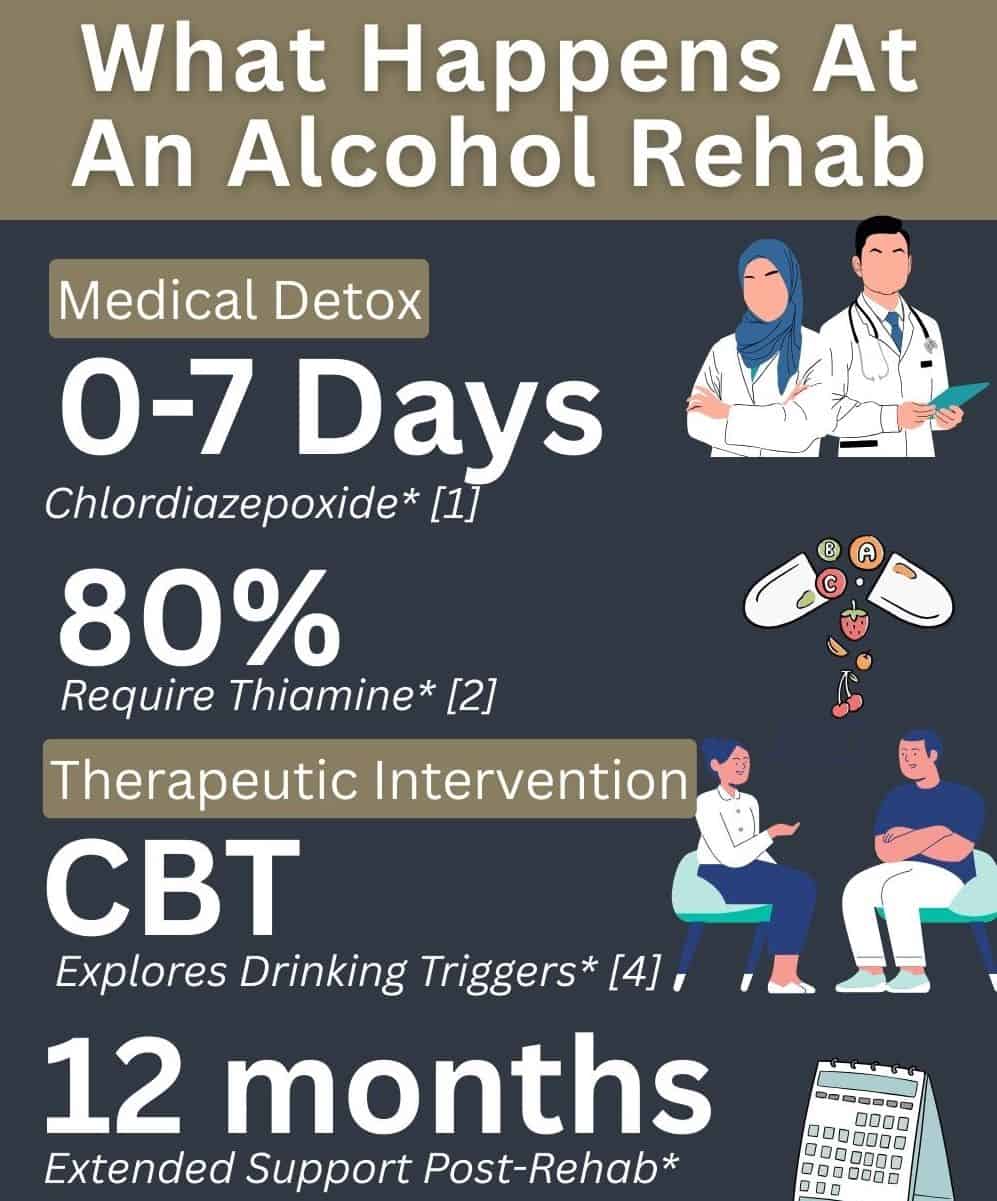
80mg/day of chlordiazepoxide is typically given for 7 days, then slowly titrated to 0mg throughout the programme as needed [1].
Thiamine supplements are a standard precaution against Wernicke's Encephalopathy, as this goes undiagnosed in 80% of alcohol dependency treatment patients [2].
Barrons and Roberts (2008) found that 800mg of carbamazepine is effective in preventing alcohol withdrawal seizures once blood alcohol levels reach <0.15%, though this is off-label prescribing by doctors and not the first line of treatment in UK rehab clinics [3].
Daily monitoring in the first 72 hours of detox is crucial for assessing possible cases of delirium tremens with symptoms such as fever, seizures, and hallucinations - suspected cases will typically be administered lorazepam or diazepam.
Therapy
2-3 group CBT/therapeutic intervention sessions are typically carried out per week and may begin with a brief explanation of the CBT model, how it relates to known alcohol triggers, and behavioural patterns underlying these.
During sessions 2-4, CBT helps to identify underlying causes for drinking alcohol, allowing patients and therapists to identify previously unknown triggers [4].
1-to-1 CBT sessions are sometimes used to explore therapeutic content in depth, though this varies by rehab provider and is not always guaranteed.
Group therapy for alcohol addiction provides an immediate community to support recovery, bringing together patients from all stages of rehabilitation so that new patients always have a role model to look up to.
The end of therapy involves ending the therapeutic relationship, assessing progress, and determining whether supplementary psychological support is advised.
Supplementary Activities
Sitting/reading outside, or engaging in light activities, is encouraged on days 7-10 of detox, but these are not mandatory and can depend on progress made in early recovery.
In weeks 2-3, low-intensity nature-based activities, such as outdoor walks, may be introduced.
Mindfulness-based sessions last 30 minutes to 1 hour and typically begin once alcohol detox is completed after 7-10 days [6].
In week 4, patients may be signposted to community-based projects or support groups, including (but not limited to): local activity clubs, Alcoholics Anonymous, Citizens Advice, and SMART Recovery.
Seifert et al. (2024) found that recovery rates for alcohol rehab increase by 30% when outdoor group activities are completed throughout the programme, so some rehabs try to incorporate these where possible [5].
For specialised holistic rehabs, some clinics may include weekly or bi-weekly acupuncture sessions, as this has been found to reduce readmission rates for alcoholism by 18% [7].
Stuyt et al. (2016) found that consistent acupuncture throughout residential treatment improves alcohol rehab completion rates by 50%; however, not all rehabs offer this as standard, so it needs to be arranged by patients following treatment if wanted [8].
Art therapy is sometimes offered at holistic treatment centres and takes place in individual or group sessions lasting around one hour - please check with your chosen rehab provider to find out more about alternative therapies, as not every clinic will offer it.
Some rehabs may choose a form of artistic therapy as it aims to connect active imagination with underlying emotion leading to alcohol misuse.

Preparing To Leave Alcohol Treatment
In the last 2 weeks of treatment, medical staff begin to integrate follow-up care as part of the treatment plan to assess the need for signposting to supplementary services once inpatient treatment has ended (e.g. outpatient psychotherapy).
Aftercare plans are typically made collaboratively, based on the patient's needs/likes while remaining realistic, building towards long-term goals and relapse prevention plans.
11% of patients say that continued use of telemedicine post-rehab reduces self-reported experiences of depression, so many rehabs aim to keep in contact with clients post-discharge - please check with your chosen rehab provider to find out more [9].
Some rehabs may offer an aftercare programme that provides continued care, such as skills training or workshops - please read more about rehab aftercare here or contact your chosen rehab provider.
Follow-up support from alcohol treatment clinics at 3 months results in a 29.4% reduction in re-admission rates, so many rehabs aim to continue support for 3-12 months following care [10].
When patients choose to stay in contact with clinics, there is a 6.2% increase in self-reported positive evaluations of well-being and stable relationships 12+ months post-rehab [11].
What Changes What Happens In Alcohol Rehabs?
Behavioural Incidents
Incidents that pose a risk of serious harm to self or others may result in the patient's programme becoming suspended at the discretion of clinic staff, and law enforcement may be contacted as required.
Deliberately missing scheduled therapy or failing to collaborate with staff may lead to a temporary loss of privileges, ranging from mobile phone access to TV time, and may prompt staff to question the reasons driving this behaviour.
Aggression or verbal abuse from patients is not tolerated in any rehab clinic, and outcomes from this will be decided based on a situational, case-by-case basis.
Homeless Or Prison-To-Rehab Clients
Being homeless or a prison-to-rehab client changes rehab through signposting appropriate secondary care establishments to teach practical skills for personal hygiene and cooking - these will typically be incorporated into the aftercare plan, but may change depending on the provider.
There is a more significant focus on coordinating housing support for homeless patients, as this results in a 4-fold increased rate of abstinence and a 3-fold increased employment rate following inpatient care [12].
Societal reintegration planning is prioritised in aftercare for this clientele, with more time allocated to liaise with social workers, community groups, and career supporters.
Disruptions To Treatment
Needing to attend court/probation meetings or urgent medical appointments may alter daily schedules in alcohol rehab, as these appointments may need to be prioritised.
Court/probation meetings or urgent medical appointments are accommodated in rehab; however, it's possible these may disrupt the patient's daily schedule.
In some rehab clinics, it's possible to have medical appointments within the rehab clinic to avoid travelling too far outside - this varies depending on the rehab provider and mobile medical staff available; please contact your chosen clinic to find out more.
In cases where external medical appointments are necessary, these are typically scheduled during personal time, though this cannot be guaranteed with last-minute or urgent visits.
Individual keywork sessions missed due to extenuating circumstances may be rescheduled where possible, but this cannot be guaranteed.
Unforeseen personal, work, or family-related issues may mean the alcohol rehab programme has to end abruptly; however, in such cases, future plans to resume rehab will be made when able to do so.
What Happens At An Alcohol Rehab At Abbeycare
When enquiring about alcohol rehab at Abbeycare, we encourage all prospective clients to call or use the live chat to speak with a member of staff who will guide you through the admissions process and help you gauge whether this programme is a good fit for you.
The next step in the process is to book a visit to one of our clinics, where staff will walk you through what it's like to be a patient for alcohol addiction at our rehab centres.
At Abbeycare, it may take 24-48 hours from the first enquiry to admission; however, this depends significantly on the funding route taken (e.g., insurance claims), how busy it is at the time of the enquiry, and other extenuating circumstances.
Alcohol rehab at Abbeycare consists of*:
*All activities outlined by the rehab schedule at Abbeycare may be subject to change

