Alcoholism is a disease characterised by continuous heavy drinking. Until people with alcohol use disorder admit to problems with alcohol and stop drinking, the risk of alcohol use disorder continues which affects both physical and mental health.
Alcohol starts to injure the brain once it reaches the bloodstream.
Excessive consumption can lead to Alcohol-Related Brain Damage, or ARBD, which is a type of brain disorder caused by alcohol consumption. Brain shrinkage caused by alcohol abuse is permanent, as alcohol kills brain cells and grey matter.
For more information and effects click ‘Learn More’.
Family Recovery Compass is a newsletter for friends and family members who feel trapped between supporting a loved one in addiction, and protecting their own wellbeing.
Every week, we tackle one specific situation in addiction family dynamics, and deliver practical decision-making frameworks and exact dialogue scripts – that help you respond with confidence instead of reaction.
Every month, we bring you an unfiltered recovery conversation with someone who’s either experienced addiction firsthand, or works closely with those in recovery.
No sanitised success stories – just practical insights on what actually works in recovery, that you can apply, in your life too.
Recovery capital is the internal and external resource used to begin the recovery process and maintain sobriety. This combines personal, social, and community support to provide a joined-up approach that supports the addict through recovery.
Do you or a loved one need addiction treatment for alcohol or drugs? Thousands blindly walk into addiction treatment in expensive rehab centres and find that the reality doesn’t meet expectations.
If you’re considering rehab treatment, first check our ultimate guide for complete instructions on how to find the right rehab centre for you.
Take-home Naloxone kits help families and loved ones respond quickly in an opioid overdose emergency, until emergency services arrive. Kits contain nasal or injectable forms of Naloxone.
Changes in legislation mean Naloxone kits are now more widely available from pharmacies and drug services, including Abbeycare.
For additional information, click ‘Learn More’ below.
Overcoming alcohol addiction means first ceasing alcohol intake, and taking care of physical and chemical withdrawal symptoms.
Detoxing from alcohol means undergoing withdrawal from alcohol, but with the assistance of prescribed medication and detox phase, to substitute in place of the alcohol itself.
Alcohol rehab focuses on tackling the problems underneath alcoholism, such as grief, trauma, depression, and emotional difficulties, in order to reduce continuing drinking after treatment.
Inpatient services at an alcohol rehab programme provides 24 hour access to specialist care.
Alcohol home detox provides a means of semi-supervised addiction treatment in the comfort of your home. It’s often suitable for those with inescapable practical commitments, or where a reduced budget for treatment is available.
An at-home detox is the most basic detox option available from Abbeycare, and assumes you have support available, post-detox, for the other important elements of long-term addiction recovery.
The term alcoholism refers to the consumption of alcohol to the extent that the person is unable to manage their own drinking habits or patterns, resulting in side-effects that are detrimental to the quality of life and health of the alcoholic, or those around them.
An alcoholic is someone who continues to compulsively abuse alcohol in this way, despite the negative consequences to their lives and health.
Immediately following treatment, the early stages of recovery and abstinence are most vulnerable to lapses.
At Abbeycare, a structured and peer-reviewed aftercare plan is usually prepared whilst still in treatment. This comprises social, peer, and therapeutic resources individuals draw upon, following a residential treatment programme for drug or alcohol misuse.
Clinically managed residential detoxification is:
– A structured detox that uses medication-assisted treatment and regular physical health observations
– Takes place in an inpatient rehabilitation unit or hospital
– Typically lasts from 7-10 days, but in Abbeycare, it is incorporated into a 28-day rehab programme
Family Therapy at Abbeycare Scotland or Gloucester is realistic, compassionate, and appropriate for families and loved ones of addicts.
Family therapeutic interventions in residential rehabilitation have been designed to support those living with or caring for participants entering the Abbeycare Programme.
Support for families in a group setting allows for a safe, constructive, and confidential place to listen and share common experiences.
Inpatient rehab is drug and/ or alcohol treatment in a rehab centre, where patients remain on-site for the duration of inpatient rehabilitation.
It includes detoxification from drugs, therapy (group work and 1-2-1 sessions), and aftercare planning. Inpatient rehabs typically last 28 days, but this varies on an individual basis.
Long-term treatment at Abbeycare has been developed for those suffering from alcohol or drug addiction. Completing a long-term drug and alcohol inpatient programme may be the solution to problematic substance use.
Motivational Enhancement Therapy can be used by trained addiction recovery therapists to elicit internal changes within and promote long-term recovery from substance use disorder.
All the answers to addiction can be found within with this comprehensive and successful therapy concept leads to behavioural changes, reflective listening, self-motivational statements, and a comprehensive recovery process.
Outpatient drug or alcohol rehab is daytime treatment as opposed to living in a treatment facility.
Outpatient treatment is similar to inpatient in terms of the methods used to treat substance abuse. Where they differ is in their approach to recovery.
Abbeycare’s prison to rehab is a 12-week structured rehab programme which involves direct transfer from prison. The suitability of the candidate is decided by prison staff.
Short-term residential treatment programmes are the chance to press the reset button and access a therapeutic programme designed to create recovery from the use of alcohol and drugs.
Feeling stuck in a rut. Want to stop but can’t seem to achieve sobriety?
Click below.
The 12-step programme was created by alcoholics anonymous (AA), and is specifically designed to aid addicts in achieving and maintaining abstinence.
The central ethos behind the programme is that participants must admit and surrender to a divine power to live happy lives. Ideas and experiences are shared in meetings, and help is sought in an attempt to achieve abstinence.
Abbeycare’s policy to respect your privacy and comply with any applicable law and regulation regarding any personal information we may collect about you, including across our website and other sites we own and operate.
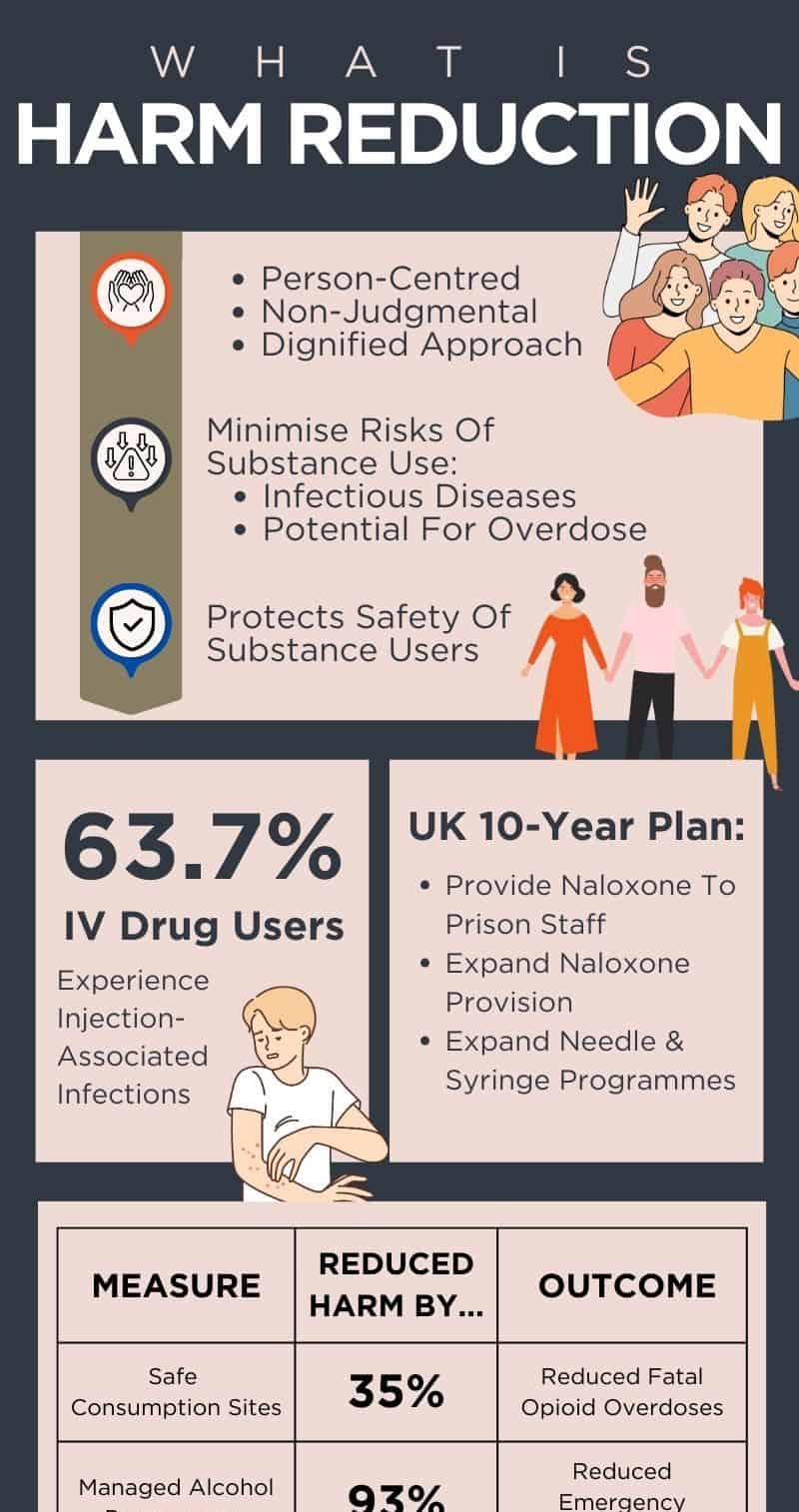
Harm reduction is an approach that aims to reduce the damage caused by drug and alcohol use, without expectations of abstinence.
Harm reduction is a person-centred approach that promotes the health and safety of substance users who are not able or willing to abstain from drugs totally [1].
What Is Harm Reduction?
Harm-reduction strategies minimise the negative risks of substance use, such as infectious diseases and the potential to overdose [2].
Harm reduction promotes the rights of drug users [3].
Harm reduction advocates extol its non-judgmental and dignified approach to care for substance users [4].
How The Meaning Of Harm Reduction Changes According To Setting
Outpatient Clinic/ In The Community
Overdose-related knowledge increases by 24% with naloxone administration training in the community [5].
Skin and needle cleaning practices improve by 18.4% after community outreach programs teach skin and needle cleaning skills, reducing bacterial infections [8].
Drug testing facilities allow users to check the purity of substances but also enable drug dealers to test products [9].
Effective harm reduction therapy is more family and community-oriented for ethnic minority clients, where individualism is secondary to communal culture [10].
A 2004 survey of 436 British substance abuse services found that 40% offered needle exchange services, and 3% provided safe places for ingestion [11].
Rehab Clinic
Abstinence-focused drug and alcohol services risk the perception of failure in harm-reduction users [12].
Hospital
Substance use disorder patients who leave hospital against medical advice stay 65% longer in hospitals with harm reduction programs, receiving more necessary medical treatment [13].
38% of emergency care staff have an unfavourable attitude towards drug addicts who overdose, while 5% have an unfavourable attitude towards accidental poisonings, suggesting the need for staff training to reduce stigmatisation of drug abusers [14] [15].
Academic Papers
Some academic papers argue that harm-reduction strategies are not a durable solution to substance misuse [16].
Overdose rates are rising by 23.7% per year in Vancouver despite the widespread adoption of safe injection sites (SIFs) since 2013; SIFs proponents claim SIFs reduce overdose mortality [17] [18].
Meaning Of Harm Reduction In Different Geographical Locations
Syringe service programs and possession and distribution of fentanyl testing strips are illegal in 11 US states [19].
There is a 57% HIV prevalence among injecting substance users in Dar es Salaam, Tanzania [20].
Drug testing services in the Netherlands have raised public awareness, such as the 2014 Red Alert campaign on the Pink Superman pill; while other countries reported fatalities, no adverse health incidents were reported in the Netherlands [21].
Groups That Change The Meaning Of Harm Reduction Initiatives
Sex Workers
Female sex workers:
Have a 13.5% higher risk of HIV infection than non-sex workers
Consuming drugs intravenously increases the risk of HIV by 0.63% to 2.4%
Reduce needle sharing by 95% after injection risk interventions [22]
Promotion of condoms reduces the incidence of HIV by 93% in sex workers and their clients in low-and middle-income countries [23].
Long-Term Intravenous Drug Users
63.7% of intravenous drug users have had an injection-associated infection [24].
Intravenous drug users usually learn how to inject through trial and error; being taught how to inject safely reduces risks such as swollen limbs and painful missed shots [25].
Homeless Individuals
Safe consumption sites where homeless people can inject in Vancouver resulted in a 35% reduction in the number of fatal opioid overdoses [26].
Managed alcohol programs reduce emergency service use by 93% in homeless people [27].
41% of men who have sex with men report sexualised drug use, increasing their risk of HIV through condomless sex [29].
58% of LGBT+ identifying adolescents report that experiences of homophobia increase their use of alcohol and drugs [30].
Drug use is 69.95% higher in LGBT clubs than in straight or mixed venues [31].
LGBT activism has been interconnected with drug policy, notably in campaigns to legalise medical marijuana to alleviate symptoms during the AIDS crisis, which heavily impacted gay men [32].
How Has Harm Reduction Changed Drug And Alcohol Legislation?
A Manchester University student education program to reduce the harm of drug use was awarded part of a £5 million government grant [33].
Low-and middle-income countries receive 5% of the estimated amount of funding needed for intravenous drug harm reduction services [34].
The UK government’s 10-year drugs plan pledges to expand and improve evidence-based drug harm reduction services:
Provide naloxone to staff in prisons
Expand naloxone provision across the UK
Expand needle and syringe programs [35]
Safe drug consumption services have shut down due to a lack of funding in Canada [36].
Harm Reduction Is Often Confused With
Harm reduction is confused with drug legalisation because it calls for an empathetic approach to drug use rather than criminalising it, but harm reduction favours regulatory approaches [37] [38].
Harm reduction is confused with full recovery programmes, but it encompasses small, achievable steps that align with healthcare goals rather than replacing a full recovery program [38].
Harm reduction is confused with enabling drug use, as critics believe abstinence should be the primary goal, but harm reduction strategies are designed for those whom total abstinence is not an appropriate approach [39] [40].
About the author
Harriet Garfoot
Harriet Garfoot BA, MA has an Undergraduate degree in Education Studies and English, and a Master's degree in English Literature, from Bishop Grosseteste University. Harriet writes on stress & mental health, and is a member of the Burney Society. Content reviewed by Laura Morris (Clinical Lead).