


KEY TAKEAWAYS
Yes, insurance typically covers alcohol rehab.
Coverage depends on:

Types Of Insurance Policies For Alcohol Rehab
Comprehensive Policies
Comprehensive health insurances cover alcohol rehab by paying for both the diagnostic process and residential treatment.
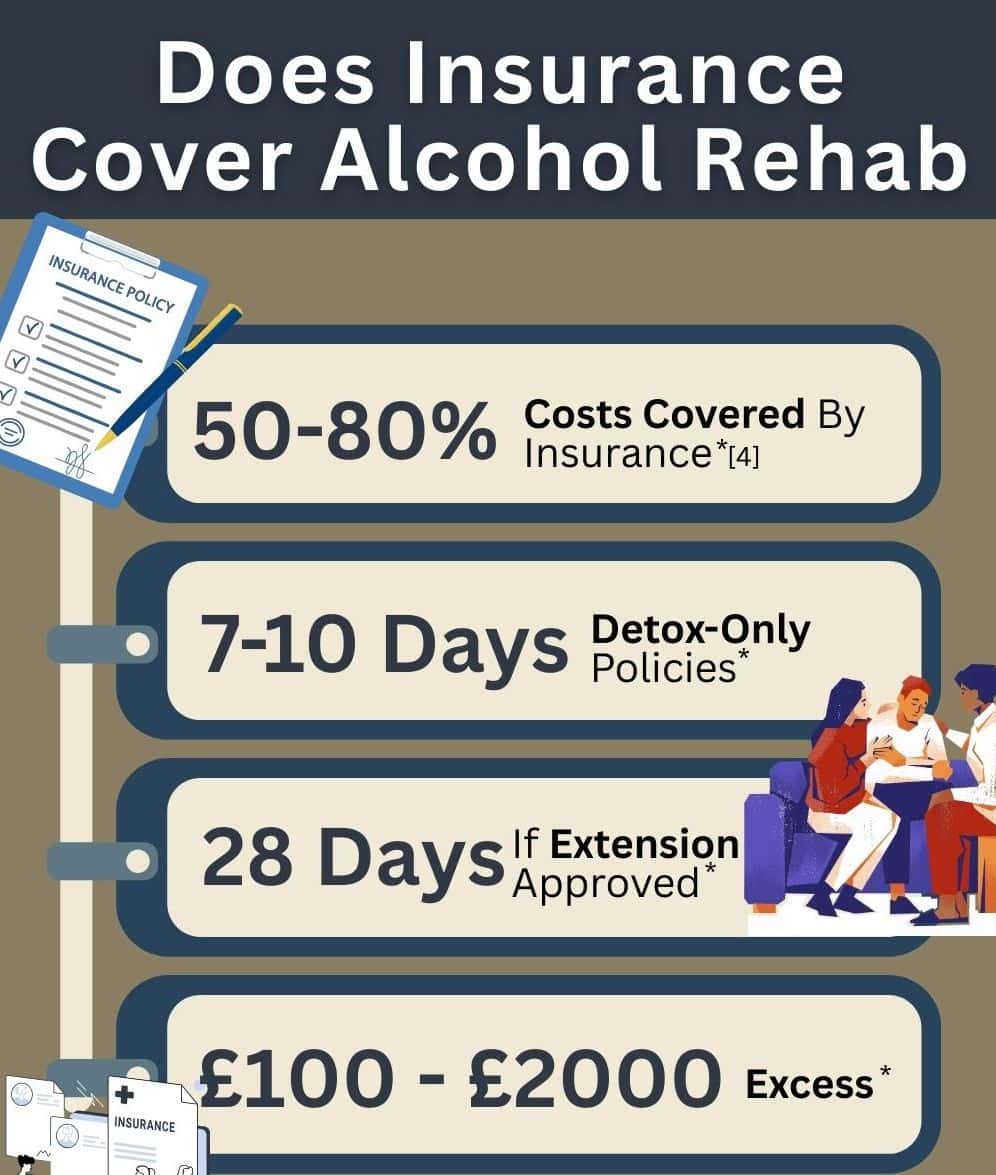
Depending on the policy and insurance provider, the patient may pay an excess of £100-£2,000 (or more), and the remaining amount is typically covered thereafter. [1]
Private alcohol rehabilitation costs between £1000 and £5000 per week, depending on the provider, payment plans, and insurance available [2].
Comprehensive policies typically cover the price of aftercare, such as ongoing mental health support; however, treatment centres such as Abbeycare include this in the total cost of alcohol rehabilitation.
Policies With Add-ons
For insurance policies that do not typically cover alcohol rehab, this is sometimes included as an "add-on" feature that covers mental health services.
Some individuals with complex needs, such as multiple drug addiction or mental health problems, may require extended residential stays and/or supplementary outpatient care - these are not typically covered unless outlined as part of the policy.
Treatment coverage with policy add-ons specific to alcohol rehab includes extended therapeutic services for alcohol addiction, available on Aviva's cover up to £2000, enabling patients to seek mental health treatment in the aftercare process of rehab [3].
Mental health add-ons might enable patients to seek excess funding for prior psychiatric consultations to speed up the process of diagnosing alcohol use disorder, though this varies heavily between providers.
Outpatient Only Policies
Outpatient-only policies do not cover inpatient rehab facilities and may only be used in outpatient providers - detox and symptom management are the same, but there is less continuous supervision.
For policies that only include outpatient treatment, rehab is not viable unless it is self-funded, as this is primarily inpatient-based.
Inpatient policies typically cover 7-28 days; however, outpatient policies can extend to 90 days, depending on the provider and the agreed-upon policy.
An outpatient private health insurance plan for addiction is recommended for those with mild alcohol misuse because it allows patients to continue living at home while receiving medicated treatment and CBT sessions.

Detox Only Policies
Detox-only policies differ from a complete rehab programme by covering medicated detox only; extended rehab or psychotherapy after treatment are not typically covered.
Detox policies with add-ons, such as mental health, may provide CBT sessions for alcohol misuse disorder at an additional price - these are typically carried out after the detox phase and in an outpatient facility.
Typically, detox-only policies cover 7-10 days (£1000-£5000) on an inpatient basis, depending on whether the rehab facility accepts detox-only patients.
Depending on the policy type, some insurance providers, such as Cigna, may cover 50-80% of treatment costs [4].
Not Qualifying For Alcohol Rehab Insurance Vs Existing Policy Being Revoked
The policy would be cancelled due to: | Not Qualifying For Alcohol Rehab Insurance | Existing Policy Being Revoked |
|---|---|---|
Non-disclosure or pre-existing condition | Yes | Yes |
Exceeding insurance coverage limits | No | No |
Lapsed payments | No | Yes |
Attending non-insurance authorised rehabs | No | Yes |
Non-disclosure of medical history | Yes | Yes |
Older age | Yes | No |
Frequent relapse history | Yes | No |
Requiring detox for multiple substances not previously declared | Yes | Yes |

What Changes Whether Insurance Covers Alcohol Rehab?
Abbeycare is not responsible for deciding whether insurance will cover the alcohol rehabilitation programme - this is at the insurance provider's discretion only.
Age
64.8% more older adults tend to seek professional help for alcohol use disorder 10 years after onset compared to younger adults, resulting in higher premiums due to health risks in older adults, such as heart disease [3].
70-year-olds pay, on average, 130% higher premiums on health insurance compared to 50-year-olds due to alcohol use disorder affecting health risks with older age [4].
If the alcohol use disorder was not disclosed before obtaining insurance, some providers see this as a "pre-existing" condition, thus denying coverage.
Older adults are more likely to pay more excess to cover the insurance claims, as those aged 60+ experience 21% more severe alcohol withdrawal symptoms due to old age, requiring professional care and medication [5].
Insurance companies may not pay out for alcohol and drug rehab when there is co-occurring heart disease exacerbated by alcohol misuse disorder and old age, especially when already receiving care under insurance.
If a patient has previously claimed rehab insurance, the provider may limit a second readmission regardless of age or time since the last admission; this is policy-dependent.
Preferred Treatment Type
Rehab programmes primarily based on alternative therapies, such as Reiki for alcoholism, do not fit the criteria under the DSM-5 for alcohol misuse disorder and thus may be rejected on an insurance claim.
Private insurance does not cover rehabilitation that is not regulated by the Care Quality Commission (England) and the Care Inspectorate (Scotland), as insurers cannot guarantee that professional and medical standards are met.
Music therapy is not universally accepted as a form of rehab for those with alcohol dependency; however, this varies depending on the insurance firm, such as providers that allow holistic therapies.
Treatment facilities for alcoholism that do not meet the NICE guidelines are likely to be denied health insurance coverage due to the rehab process lacking evidence-based research and medical care, such as not using benzodiazepines.
How To Find Alcohol Rehab Insurance
Firstly, research the many insurance plans that cover rehab costs for drug and alcohol addiction, and whether these will cover all or part of the alcohol treatment.
Secondly, review the policy details to determine whether it covers detox, a complete 28-day rehab programme, and whether add-ons are available (e.g., extended mental health support).
Next, contact an insurance representative who can explain eligibility and provide a list of treatment centres that accept the insurance company.
Pre-authorisation for rehab treatment is then completed through the insurance provider by doing a medical review, such as evidence of a GP referral, stating the diagnosis of alcohol misuse disorder.
It is essential to request written copies of the policy, procedures, and any future payments required, such as excess fees or add-ons, to avoid hidden costs.
Other Ways To Pay For Alcohol Rehab
Payment Option | Usable At All Rehab Facilities? | Interest-Free? | Needing Specific Employment to Qualify? | Dependent On? |
|---|---|---|---|---|
Insurance | No | Yes | No | Existing policy before entering rehab |
Personal Savings | Yes | Yes | No | How much is saved |
Paying In Installments | No | Depends on the treatment centre | No | Future income |
Credit Card/Loans | Yes | No | No, but sometimes proof of employment is required | Credit score Current and future income |
Employer Assisted Programmes | No | Depends on terms and conditions | Yes | Work contract and job benefits |

